Ordenar por "Actualizado el"
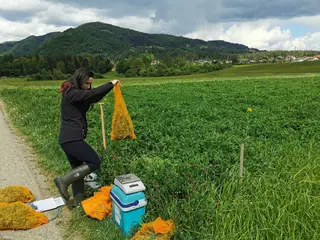
Crimson clover as an overwintering cover crop for nitrogen supply [Eslovenia]
Crimson clover, overwintered as a cover crop, forms a symbiotic relationship with nitrogen-fixing bacteria, capturing nitrogen and thus enriching the soil. This helps reduce the need for synthetic fertilizers and aids in soil erosion control, weed suppression, and improved soil structure.
- Compilador:
- Tamara Korošec
- Publicado por primera vez:
- 2025-10-27 09:34
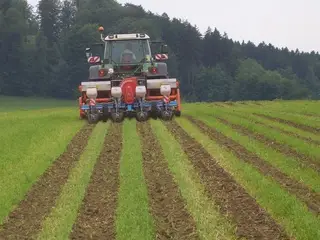
Maize strip tillage [Suiza]
A cropping system for maize which reduces the reworking of the soil to the stripes, in which the seeds are planted.
- Compilador:
- Roman Wyler
- Publicado por primera vez:
- 2017-03-09 14:31
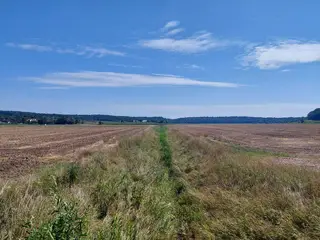
Riparian buffer strips [Eslovenia]
Riparian buffer strips are vegetative zones alongside watercourses. In compliance with EU and Slovenia’s Acts, these protective strips reduce soil erosion, filter pollutants, improve water quality, enhance biodiversity and support climate resilience.
- Compilador:
- Gregor Kramberger
- Publicado por primera vez:
- 2025-07-30 15:41
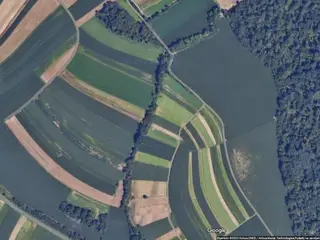
5-Year Crop Rotation [Eslovenia]
Crop rotation is good practice in agricultural production. It comprises alternating different types of crops, usually in a specific order. Crop rotation maintains soil fertility, reduces the risk of diseases and pests, and optimizes nutrient utilization. In Slovenia, a 5-year rotation is proving especially effective.
- Compilador:
- Gregor Kramberger
- Publicado por primera vez:
- 2025-07-30 15:44
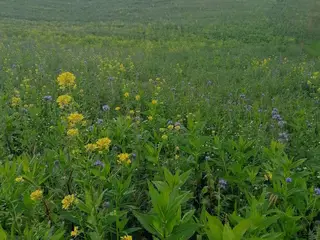
Non-winter-hardy honey-producing cover crops [Eslovenia]
Non-winter-hardy honey-producing cover crops enhance soil fertility, prevent erosion, reduce nutrient leaching, and support biodiversity. These fast-growing, flowering plants are integrated into crop rotation, offering ecological and long-term economic benefits - and are supported by EU agricultural subsidies.
- Compilador:
- Gregor Kramberger
- Publicado por primera vez:
- 2025-07-30 17:04
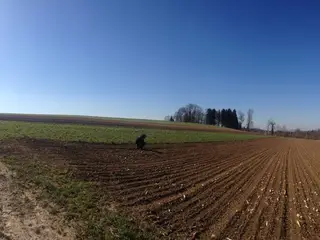
Slope division for erosion control [Suiza]
A field at risk for erosion by water is divided so that a grass strip prevents soil loss and further damage to the field and the streets during a heavy rainfall.
- Compilador:
- Deborah Niggli
- Publicado por primera vez:
- 2017-03-09 19:57
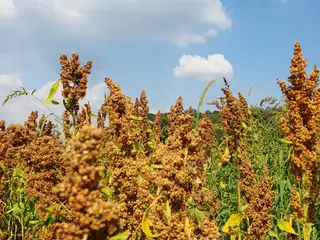
Drought-resistant crops [Suiza]
In response to changing environmental conditions, it can be valuable to adopt new plant varieties that offer benefits such as drought tolerance. The technology described covers one such response in Switzerland.
- Compilador:
- Seraina Lerf
- Publicado por primera vez:
- 2025-03-17 14:49
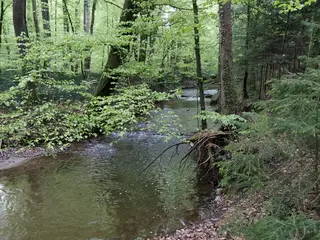
Revitalization of Riparian Zones [Suiza]
The riparian zone is the buffer area between a watercourse and the adjacent land. Healthy riparian ecosystems stabilise the banks, maintain the microclimate, protect against flooding, filter chemicals and improve both biodiversity and water quality.
- Compilador:
- Nives Ramisberger
- Publicado por primera vez:
- 2025-02-24 09:48
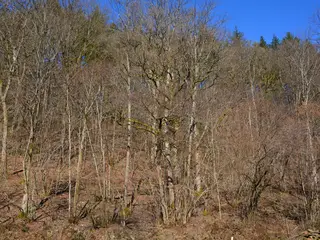
Maintenance of forest cover in headwaters [Bélgica]
Forests in headwater areas benefit water quality and hydrologic cycling. Furthermore, maintaining and restoring the forest cover in headwater catchments offers other, multiple benefits such as increased soil water retention, intercepted pollution pathways, improved soil, maintained biodiversity and captured carbon dioxide.
- Compilador:
- Marie Anne Eurie Forio
- Publicado por primera vez:
- 2024-09-15 09:08
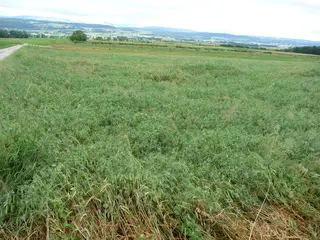
Intercropping of grain legumes with cereals [Suiza]
Intercropping of grain legumes with cereals is a sustainable agricultural practice in Swiss farming. This involves growing grain legumes (such as peas or beans) alongside cereal crops (like barley or wheat) in the same field, reducing crop failure or yield risk, stabilising the grain legumes, promoting biodiversity and enhancing overall crop yield.
- Compilador:
- Basile Brunner
- Publicado por primera vez:
- 2024-09-15 09:09
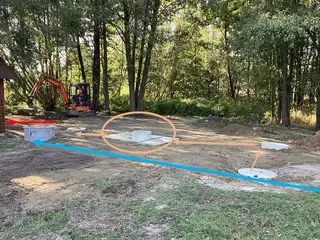
Drainage Biofilter [Chequia]
Biofilters or “bioreactors” connected to agricultural tile drains are relatively inexpensive and space-saving measures with considerable potential to improve the quality of drainage water.
- Compilador:
- Antonín Zajíček
- Publicado por primera vez:
- 2024-03-25 15:47
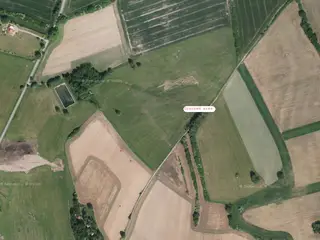
Grassing of Recharge Areas [Chequia]
Grassing recharge zones of agricultural drainage systems significantly improves the quality of drainage water. It can be a useful, effective and relatively cheap measure for improvement of shallow groundwater quality.
- Compilador:
- Antonín Zajíček
- Publicado por primera vez:
- 2024-03-25 15:47
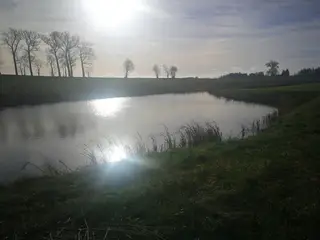
Wetland in the Stabė River [Lituania]
The installation of this wetland contributes to reducing the ecological debt to nature by restoring natural complexes, reaching a balance between environmental and economic interests, and promoting sustainable farming conditions in one of the most important and valuable natural areas of central Lithuania.
- Compilador:
- Jovita Mėžinė
- Publicado por primera vez:
- 2023-06-19 09:51
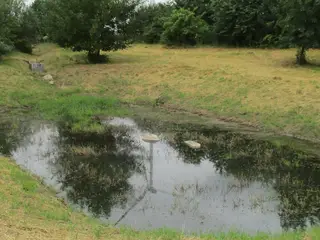
Detention ponds [Alemania]
Detention ponds are artificially excavated basins that collect stormwater runoff and eroded sediment from the upstream catchment. The water stored in these ponds is slowly released into a water body or it infiltrates into the groundwater – or both. Their primary functions are flood control, erosion control and water quality improvement.
- Compilador:
- Felix Witing
- Publicado por primera vez:
- 2023-11-03 09:57
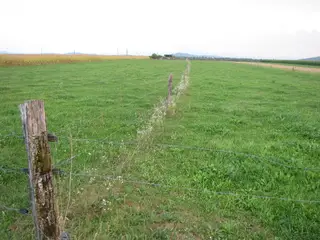
Converting cropland to grazing land [Eslovenia]
Technology is based on changing cropland to grazing land due to shallow soils with high share of rocks. This is the cause for lower yields or loss of yield during drought periods.
- Compilador:
- Matjaz Glavan
- Publicado por primera vez:
- 2017-08-21 15:53
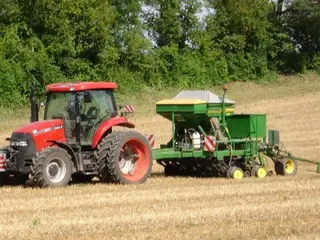
Direct seeding [Suiza]
A cropping system which allows to plant the seeds directly into the soil without ploughing. The soil is covered with plant remainders.
- Compilador:
- Unknown User
- Publicado por primera vez:
- 2017-03-09 14:09
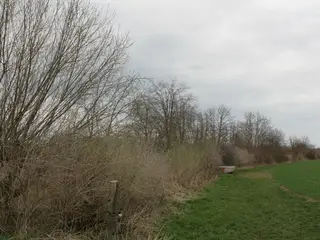
Hedges to subdivide fields and provide environmental benefits [Alemania]
Hedges are structured shrub communities that subdivide fields, reduce soil erosion, and provide valuable semi-natural habitats.
- Compilador:
- Felix Witing
- Publicado por primera vez:
- 2023-08-15 08:53
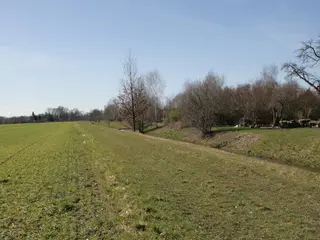
Riparian buffer strip with naturally recovered vegetation [Alemania]
Riparian buffer strips refer to the permanent greening of arable land alongside streams and other water bodies. By slowing down runoff water from the land, they help to protect water bodies from diffuse pollution. Riparian buffer strips have multiple other environmental benefits, but disadvantages also.
- Compilador:
- Felix Witing
- Publicado por primera vez:
- 2023-08-15 08:54
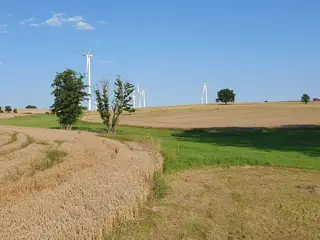
Grassed waterways [Alemania]
A grassed waterway is a strip of grass and other permanent low growing vegetation that is established along in the main drainage line (the thalweg) of an agricultural field to discharge water safely and prevent gully development.
- Compilador:
- Felix Witing
- Publicado por primera vez:
- 2023-08-15 08:54
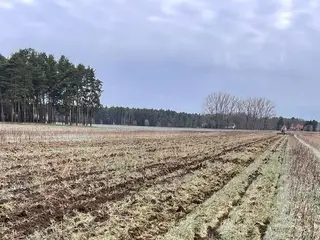
Strip-till [Alemania]
Strip-till is a form of precision farming and conservation agriculture that combines minimum tillage in strips with no-till on the remainder of the field. The soil over the whole field is protected by a growing crop or mulch from sunlight, and especially from the direct impact of raindrops by providing permanent soil cover.
- Compilador:
- Felix Witing
- Publicado por primera vez:
- 2023-08-15 08:54
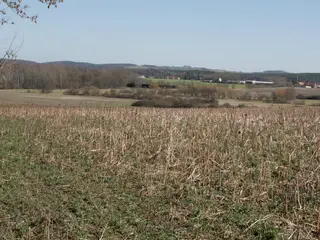
Freezing winter cover crops [Alemania]
Freezing winter cover crops are planted to cover the soil rather than for the purpose of being harvested. They improve soil structure, diversify cropping systems, suppress weeds and pests, and prevent nutrient loss.
- Compilador:
- Michael Strauch
- Publicado por primera vez:
- 2023-08-15 08:54
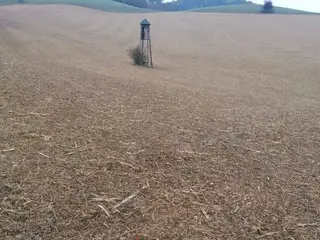
Mulch-till [Eslovenia]
Mulch-till is a method of farming that does not utilise a plough, and thus the soil is not turned over. Furthermore, at least 30% of the cultivated area remains covered with organic residues left over from the previous crop. There are multiple benefits to the soil and carbon dioxide emissions are reduced.
- Compilador:
- Gregor Kramberger
- Publicado por primera vez:
- 2023-07-11 10:39
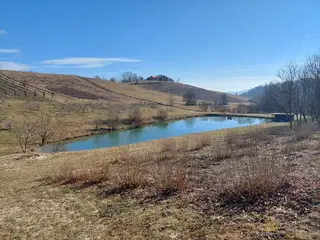
Retention ponds [Eslovenia]
Retention ponds (e.g. flood storage reservoirs, shallow impoundments) are water bodies, storing water to attenuate surface runoff during rainfall events. They provide storage as well as improving water quality. Retention ponds may also be used for irrigation of farmland.
- Compilador:
- Gregor Kramberger
- Publicado por primera vez:
- 2023-07-11 10:39
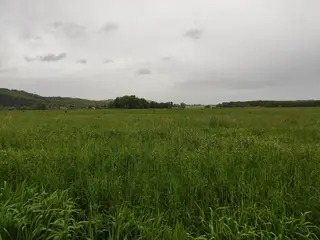
Meadows and pastures [Hungría]
Permanent meadows or pastures are more effective in controlling land degradation than arable cropping. They are especially appropriate in hilly regions on sloping land where the risk of water erosion is high.
- Compilador:
- Brigitta Szabó
- Publicado por primera vez:
- 2023-04-24 10:30
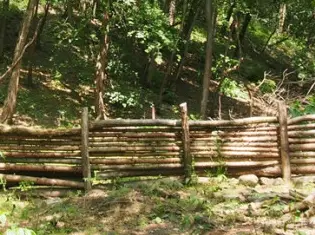
Peak flow control structures (leaky woody dams) [Hungría]
Peak flow control structures are designed to reduce flow velocities and quantities running down from catchment areas. Leaky dams are peak flow control structures that are made of wood and allow low flows to pass through, but hold back high flows, thus providing temporary storage and enhanced infiltration of flood water.
- Compilador:
- Brigitta Szabó
- Publicado por primera vez:
- 2023-04-24 10:31
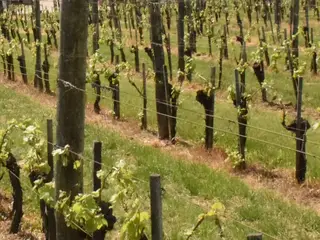
Permanent grass cover in vineyards [Hungría]
Permanent grass cover under grape vines protects the soil surface against erosion and compaction - and provides better conditions for traffic within the rows during mechanised field operations
- Compilador:
- Brigitta Szabó
- Publicado por primera vez:
- 2023-04-24 10:31
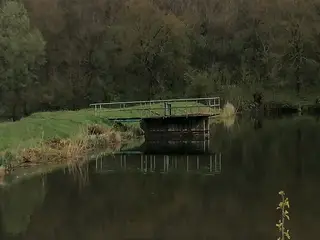
Water retention/sediment capture pond [Hungría]
Sediment capture ponds are constructed and located along networks of ditches which drain watersheds. They slow the velocity of water and cause the deposition of suspended materials. These ponds help to avoid sediment accumulation in the ditches themselves, and can decrease sediment and nutrient pollution of surface water bodies downstream.
- Compilador:
- Brigitta Szabó
- Publicado por primera vez:
- 2023-04-24 11:13
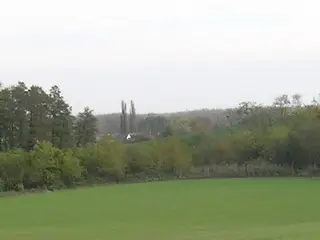
Buffer strips and hedges around cropland [Hungría]
Buffer strips and hedges comprise natural vegetation of grass, bushes or trees. They are sited at the edges of fields, roads and surface water bodies. Their main function is to provide a natural buffer to control nutrient and sediment transport from agricultural fields by promoting water infiltration and slowing runoff, as well as preserving undisturbed green corridors.
- Compilador:
- Brigitta Szabó
- Publicado por primera vez:
- 2023-03-29 09:01
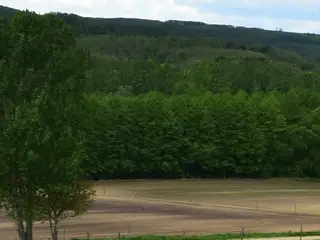
Afforestation of arable land [Hungría]
Afforestation is planting trees on previously non-forested land. Trees hold the soil and reduce runoff, and thus prevent erosion of the most fertile layers. It is an effective way to rehabilitate degraded lands, being a nature-based solution which addresses flood and soil erosion impacts.
- Compilador:
- Brigitta Szabó
- Publicado por primera vez:
- 2023-03-29 09:04
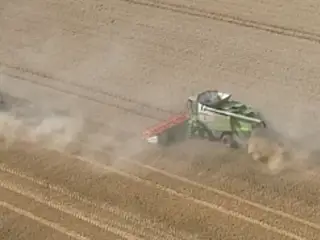
Controlled traffic farming [Hungría]
All machinery traffic uses the same lane network within the field to reduce the total compacted area, to improve connections, and to optimise overlapping of following runs resulting in more efficient use of labour and inputs. Risks from environmental pollution are also reduced.
- Compilador:
- Brigitta Szabó
- Publicado por primera vez:
- 2023-03-29 09:04
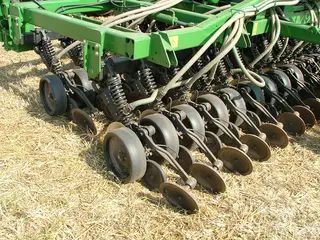
No-till agriculture [Hungría]
No-till agriculture replaces conventional soil tillage in order to reduce costs and labour - and to provide a mulch layer on the soil surface from the residues of the previous crop: this protects the soil surface and its ecology.
- Compilador:
- Brigitta Szabó
- Publicado por primera vez:
- 2023-03-29 09:05
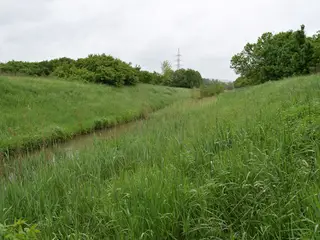
Vegetative riparian buffers [Hungría]
Vegetative riparian buffers are strips of trees, bushes and grass alongside surface water bodies such as streams or ponds. Their main function is to provide a natural buffer strip to filter out nutrient and sediment transported from agricultural fields and prevent it reaching the water bodies - as well as maintaining undisturbed green corridors.
- Compilador:
- Brigitta Szabó
- Publicado por primera vez:
- 2023-03-29 09:06
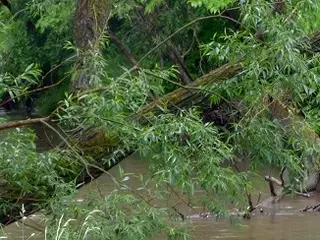
Coarse woody debris to slow streamflow [Hungría]
Accumulating coarse woody debris in stream beds reduces flow velocity and levels of flood peaks. As a consequence the speed and energy of water flow is reduced, allowing greater deposition of sediments. In addition the technology has ecological advantages.
- Compilador:
- Brigitta Szabó
- Publicado por primera vez:
- 2023-03-29 09:07
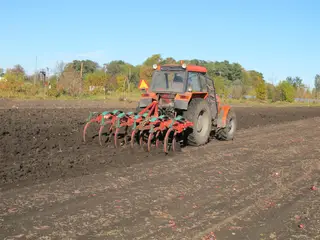
Subsoiling [Polonia]
Subsoiling is defined as tillage below a depth of about 35-40 cm which doesn't invert the soil. It breaks up compacted layers to improve rooting and infiltration. Subsoiling is not needed on light soils, because these are rarely at risk of compaction.
- Compilador:
- Tymoteusz Bolewski
- Publicado por primera vez:
- 2023-03-03 11:53
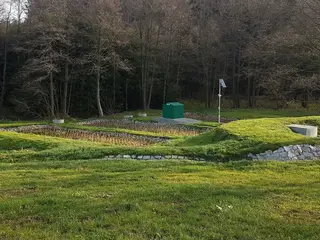
Constructed wetland with tile drainage [Chequia]
A constructed wetland connected to tile drains that slows drainage flow, removes nitrogen and pesticides from drainage waters, and improves biodiversity. Formed from a substrate of matured birch chips and gravel, and is planted with reeds (Phalaris arundinacea) and reed manna grass (Glyceria maxima).
- Compilador:
- Petr Fučík
- Publicado por primera vez:
- 2022-10-10 15:17
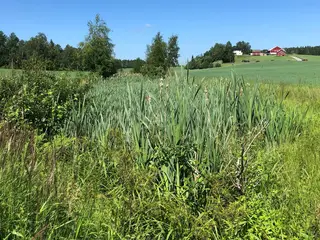
Small constructed wetland [Noruega]
A small constructed wetland is a combination of ponds and vegetation filters, designed mainly to remove sediment and nutrients from streams. It is usually located in first and second order streams in agricultural landscapes.
- Compilador:
- Dominika Krzeminska
- Publicado por primera vez:
- 2022-06-27 18:21
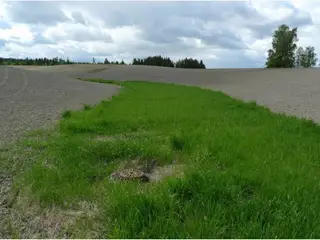
Grassed waterways [Noruega]
Grassed waterways are shallow channels (natural or constructed) with grass cover, used to drain surface runoff from cropland and prevent erosion.
- Compilador:
- Dominika Krzeminska
- Publicado por primera vez:
- 2022-06-27 18:20
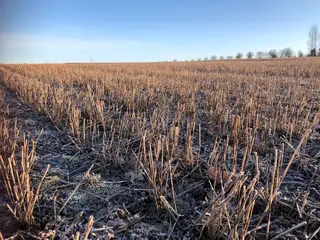
Reduced tillage: no tillage in autumn [Noruega]
Reduced tillage, involving no plowing in the autumn, preserves stubble or plant cover during the autumn and winter to prevent soil erosion, and particle and nutrient loss from cropland to watercourses.
- Compilador:
- Kamilla Skaalsveen
- Publicado por primera vez:
- 2017-03-16 10:45
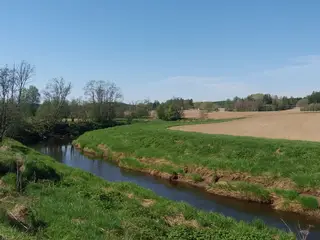
Grass buffer zones alongside waterways in cropland [Noruega]
Grass buffer zones are established along waterways in cropland to reduce the surface runoff rate, and the amounts of sediment, nutrients and pesticides in the runoff.
- Compilador:
- Kamilla Skaalsveen
- Publicado por primera vez:
- 2017-03-16 09:56
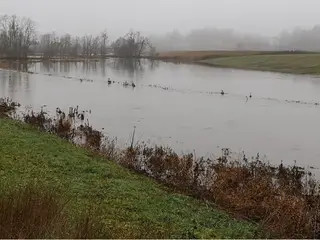
Grass or stubble in areas prone to flooding and erosion [Noruega]
Establishment of grass - or retaining stubble - on arable land that is prone to erosion and flooding to reduce the risk of soil and nutrient losses.
- Compilador:
- Dominika Krzeminska
- Publicado por primera vez:
- 2022-06-27 18:20