EbA Policy Mechanisms for Gender Transformative Action: Fostering Women’s Capacities in Dryland Regions
- Home
- EbA Policy Mechanisms for Gender Transformative Action: Fostering Women’s Capacities in Dryland Regions
About the Project
Dryland regions are increasingly affected by extreme climate events, threatening ecosystems, livelihoods, and water security. Women, who are often primary land users and natural resource managers, are particularly vulnerable to these changes in climate. Yet adaptation measures such as ecosystem-based adaptation (EbA) often remain fragmented and rarely integrate gender and intersectional dimensions.
The project EbA Policy Mechanisms for Gender-Transformative Action: Fostering Women’s Capacities in Dryland Regions works to close this gap. It strengthens gender-responsive EbA and SLM policies at global and regional levels, while supporting inclusive implementation on the ground.
Strengthening Women’s Leadership in Climate Negotiations
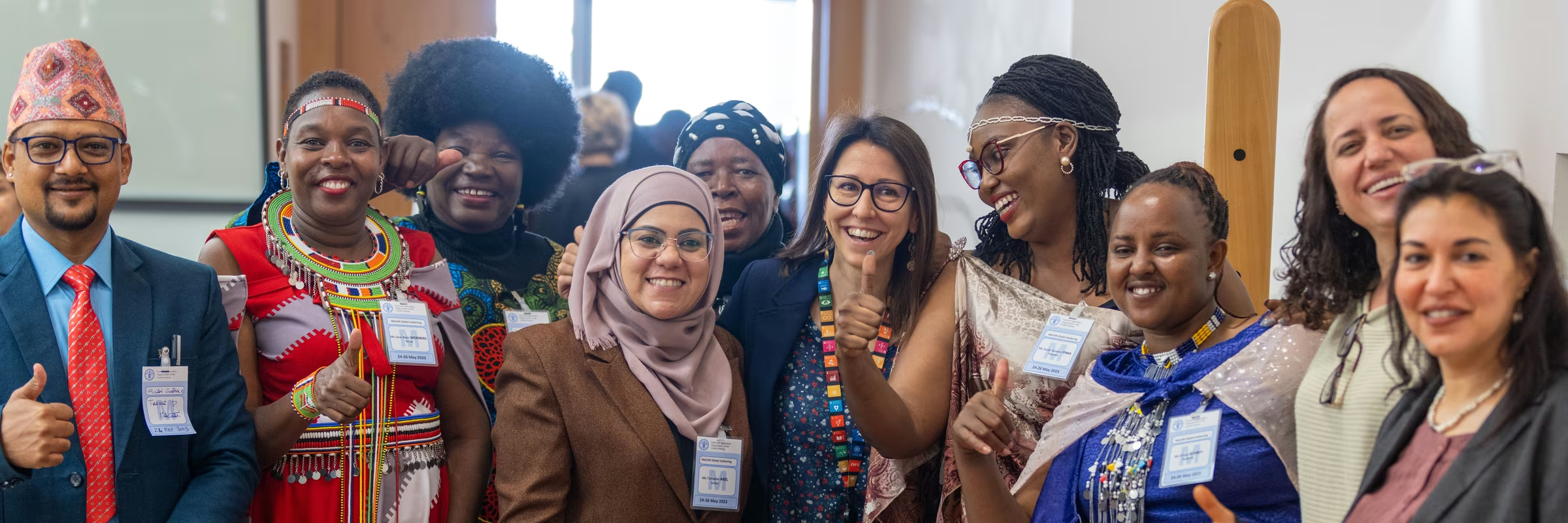
Women from dryland regions play a crucial role in shaping sustainable solutions, but they often face barriers to fully participating in global climate governance. This project supports engagement through targeted capacity-building before, during, and after UNFCCC, CBD, and UNCCD COP processes.
Training activities focus on:
- building negotiation and advocacy skills,
- increasing confidence to speak in global decision-making spaces, and
- enabling meaningful contributions to UNFCCC, CBD, and UNCCD discussions.
By amplifying women’s voices, the project promotes more inclusive and effective climate and environmental governance.
Upscaling Gender Responsive SLM and EbA Practices
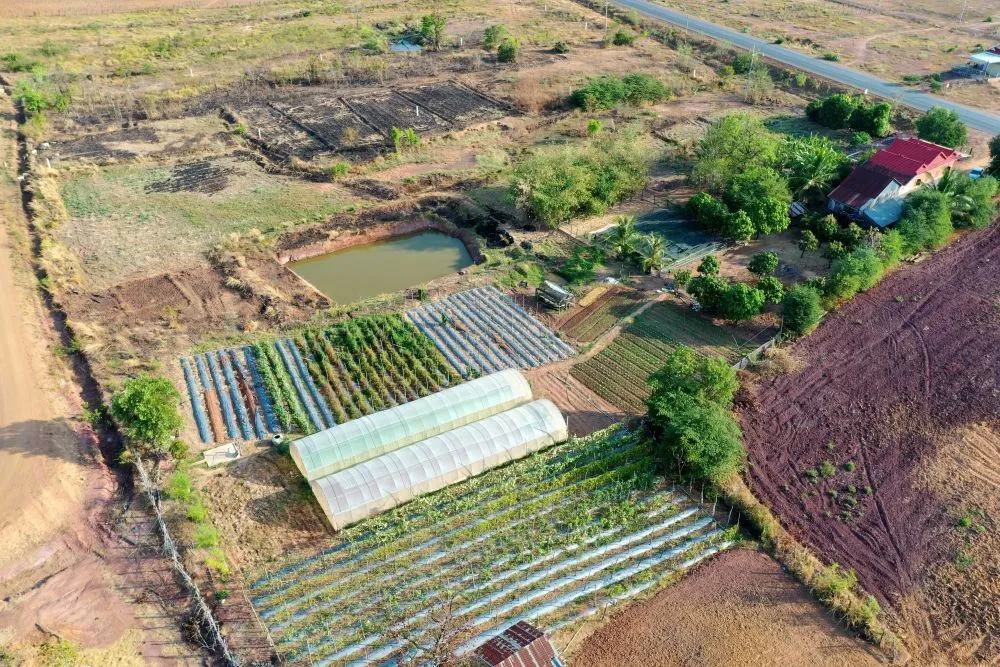
Alongside negotiation support, the project strengthens knowledge exchange and visibility of good SLM and EbA practices across dryland regions.
Key activities include:
- identifying promising SLM/EbA practices implemented across the WeCaN Network,
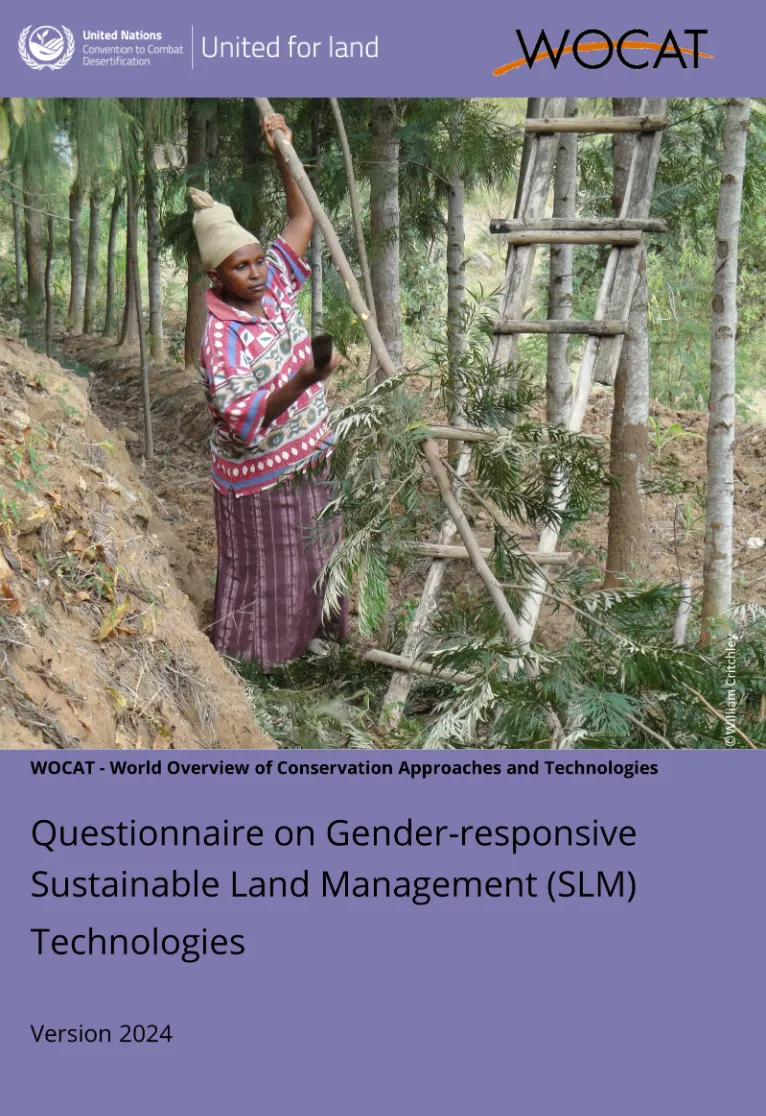
- training in the use of the WOCAT-UNCCD gender-responsive tool, in gender dynamics of SLM/EbA, and WOCAT database management
- applying the WOCAT-UNCCD gender-responsive tool for in-depth field assessment,
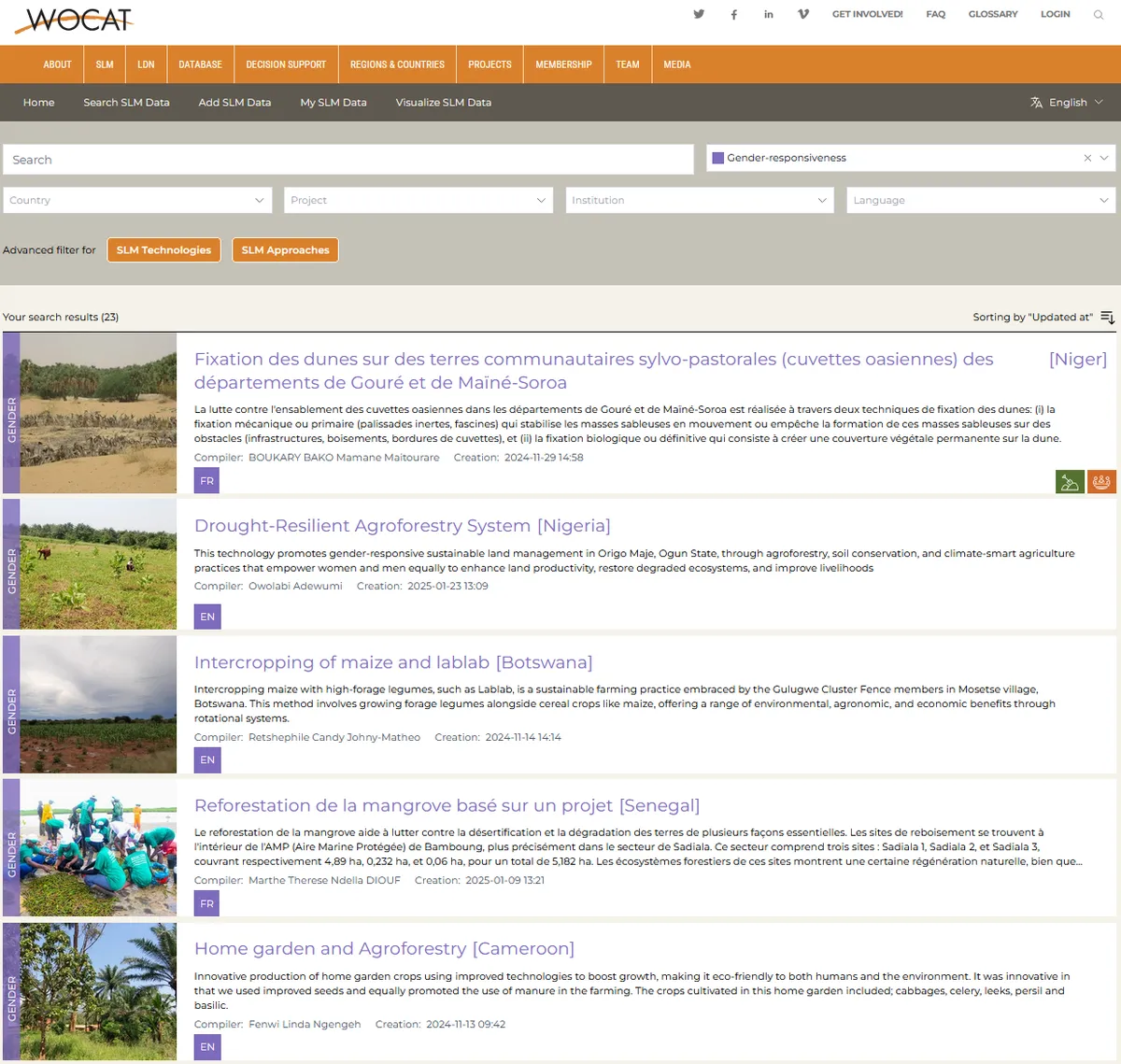
- integrating documented practices into the WOCAT Global SLM Database,
- generating insights that inform practical recommendations and policy advice, and
- presenting good practices, learnings and recommendations at COPs and other Network events
Using the gender-responsive tool adds a clear gender lens to SLM and EbA practices, helping evaluate their benefits for women and men and supporting broader adoption and upscaling.
Through better data, stronger visibility, and shared learning, the project contributes to more resilient, equitable, and sustainable land management in dryland regions.
Partners
Project duration
July 2025-July 2027
Contact

 Switzerland