SLM and Gender
- Home
- SLM and Gender
About WOCAT's Work on SLM and Gender
Gender equality is a key entry point for the adoption, spread, and upscaling of SLM. Yet many women still face barriers that limit their full participation - from unequal access to land and resources to exclusion from decision-making. These inequalities reduce the overall impact and sustainability of SLM and restoration efforts. Closing these gaps helps ensure that both women and men benefit equally and that results last. To support this, the UNCCD and WOCAT partnered in 2020 to assess and strengthen the gender-responsiveness of SLM Technologies and Approaches.
The joint UNCCD-WOCAT project on gender-responsive Sustainable Land Management (SLM) technologies and approaches was launched in 2020 to fill the gap in the availability of gender-disaggregated data necessary for the analysis of technology adoption patterns and the assessment of its differentiated impact on women and men.
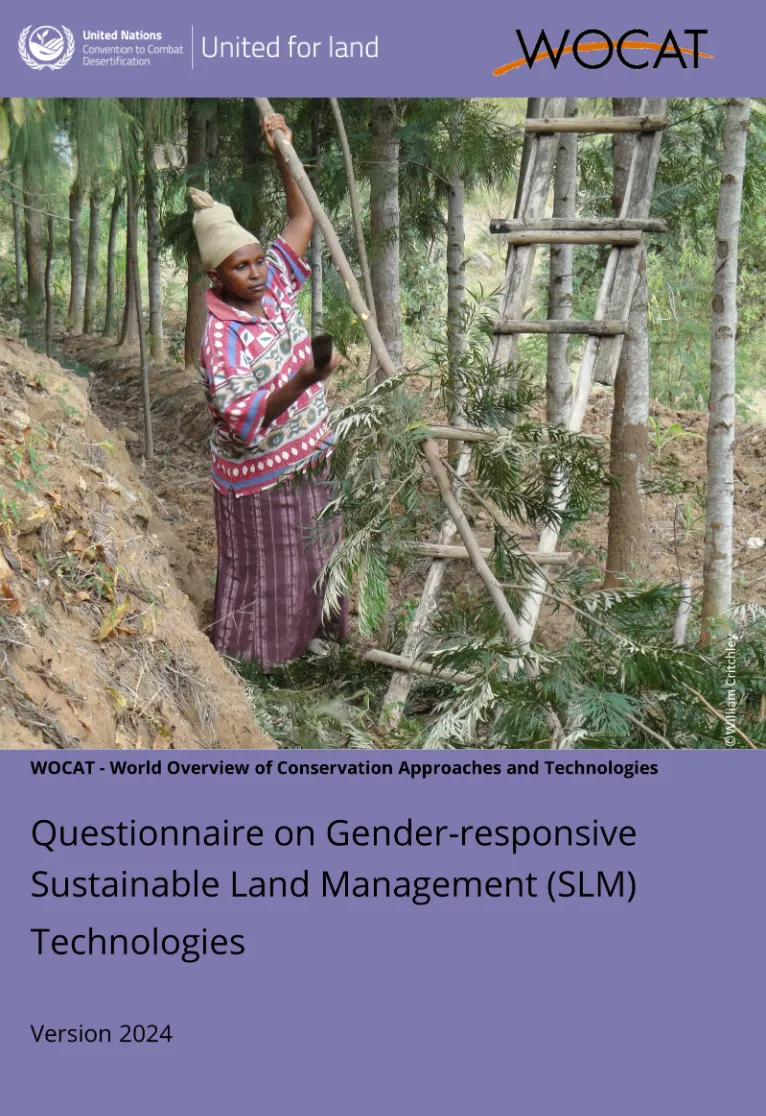
The project produced a gender-responsive SLM tool that supports project planners, designers, implementers and evaluators in collecting gender-disaggregated data and draw recommendations for more gender equality in the context of their SLM programmes and projects by adding a gender lens to SLM Technologies and their related Approaches.
About the Gender-Responsive SLM Tool
The tool contains:
- a Questionnaire on gender-responsive SLM Technologies and Approaches;
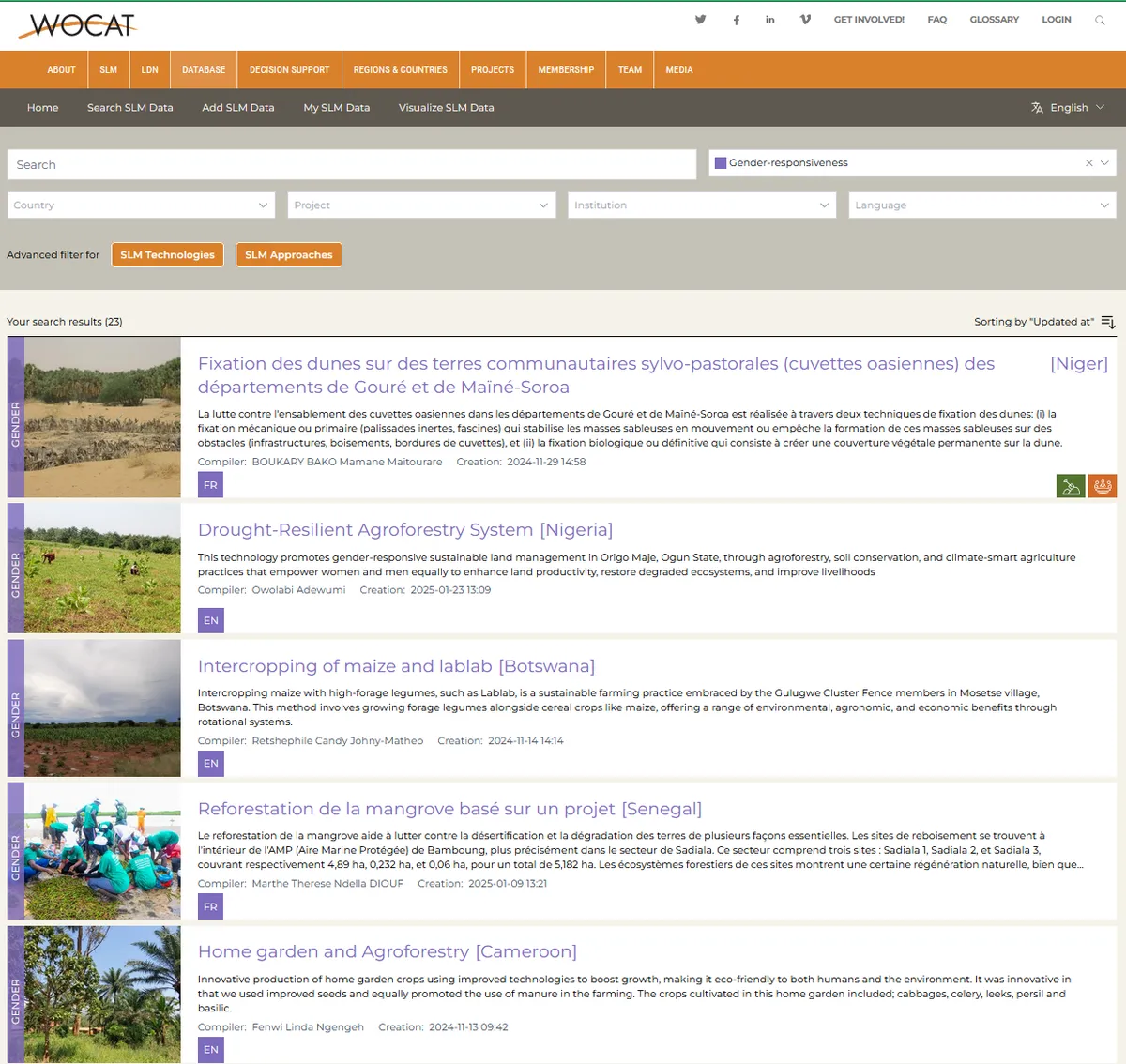
- a dedicated section in the Global WOCAT SLM Database to publish the data and view existing data entries; and
- an easy-to-read, automatically generated summary report.
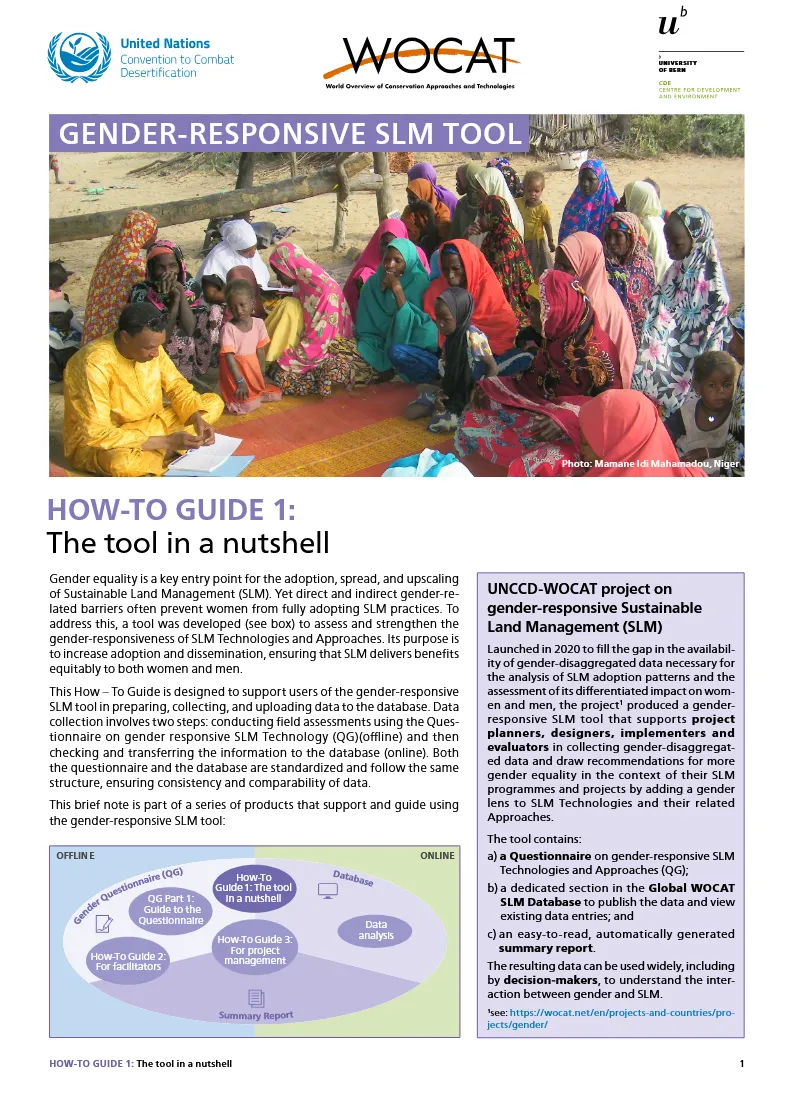
The following capacity building documents were developed to support and guide using the gender-tool:
- How-to guide 1: The tool in a nutshell, designed to support users of the gender-responsive SLM tool in preparing, collecting, and uploading data to the database.
- How-to guide 2: Effective data collection by facilitators, designed to strengthen facilitators’ understanding of gender dynamics in land management and to build their competencies for conducting effective data collection.
- How-to guide 3: Tool application in project management cycles, supporting project planners, designers and implementers in ensuring the programmes and projects benefit both women and men, and deliver more lasting and equitable outcomes.
The project “EbA Policy Mechanisms for Gender Transformative Action: Fostering Women’s Capacities in Dryland Regions” aims to advance gender-responsive ecosystem-based adaptation policies at global and regional levels. The project supports the active participation of women from drylands, including negotiators, in UNFCCC, UNCCD, and CBD COPs and promotes inclusive climate and environmental governance. In parallel, the project works to strengthen the gender-responsiveness of SLM and EbA implementation by identifying, documenting, and analyzing effective practices from dryland regions with the support of the new UNCCD-WOCAT gender-tool.