Sorting by "Updated at"
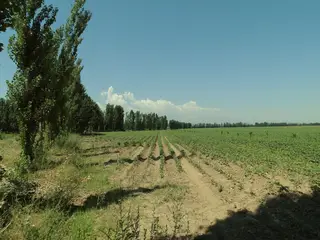
Tree windbreaks within irrigated agriculture in Central Asia [Kyrgyzstan]
Windbreaks of poplar trees (Populus nigra pyramidalis) are a major agroforestry system in irrigated agriculture across Central Asia. Such windbreaks reduce the overall water consumption of irrigated agriculture by 10-20% and increase farm income by 10-15%.
- Compiler:
- Niels Thevs
- First published:
- 2021-05-18 14:09
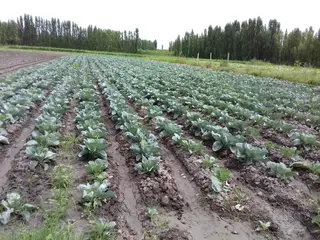
Application of crop rotation in farming conditions [Kyrgyzstan]
Organizing crop rotations as a way to use land efficiently, taking into account the economic interests of landowners and land users, as well as ecological and economic factors.
- Compiler:
- Dzhumabaeva Salamatkhan
- First published:
- 2019-09-23 09:21
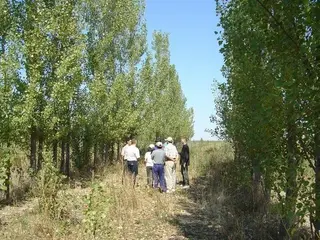
Poplar trees for bio-drainage [Kyrgyzstan]
Poplars planted to lower the ground water table and reduce salinity where irrigation drainage systems have broken down; lucerne cultivated between the tree lines.
- Compiler:
- Abdybek Asanaliev
- First published:
- 2017-04-28 10:41
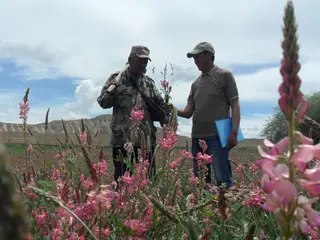
Применение зеленых (сидератов) удобрений для повышения плодородия почв и предотвращения деградации [Kyrgyzstan]
Повышение урожайности сельскохозяйственных растений и улучшение физико-химических свойств почвы через использование зеленых удобрений.
- Compiler:
- Dzhumabaeva Salamatkhan
- First published:
- 2019-09-23 09:22
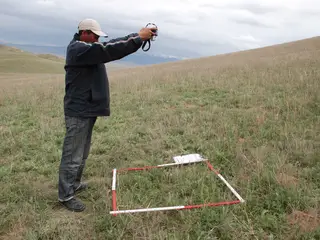
Monitoring the condition of pastures (CACILM) [Kyrgyzstan]
Monitoring the state condition of pastures.
- Compiler:
- Azamat Isakov
- First published:
- 2017-04-28 14:19
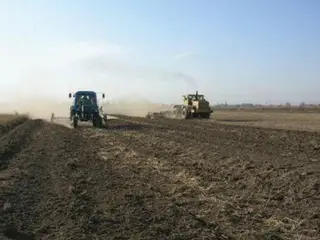
Growing cereals by using minimum tillage (CACILM) [Kyrgyzstan]
A minimum tillage depth of 10-12 cm by a tractor with a ploughshare creates a friable soil layer, facilitates preservation of productive moisture until the agricultural crops’ sowing, as well as eliminates the extreme soil compaction owing to the operation of heavy machinery and tractors.
- Compiler:
- Abdybek Asanaliev
- First published:
- 2016-12-28 12:01
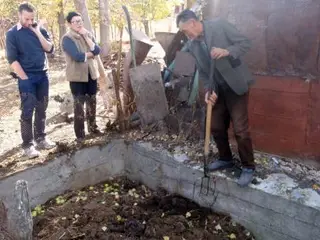
Production and application of biohumus [Kyrgyzstan]
By letting Californian red worms processing fresh manure filled into a trench, biohumus is produced to improve soil fertility in kitchen gardens.
- Compiler:
- Abdybek Asanaliev
- First published:
- 2016-12-28 12:31
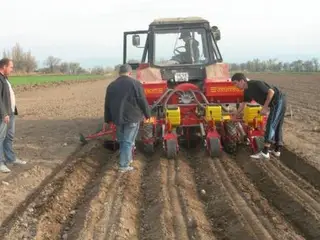
The ridge sowing technology (CACILM) [Kyrgyzstan]
The ridge sowing technology utilizes a special seeder, which is operated with special machinery and at the same time cuts the irrigation furrows and sows crops’ seeds on ridges. This method is primarily improved irrigation water use efficiency, reduced water erosion and more importantly lowers the expenses on irrigation water by 30%.
- Compiler:
- Abdybek Asanaliev
- First published:
- 2016-12-28 11:43
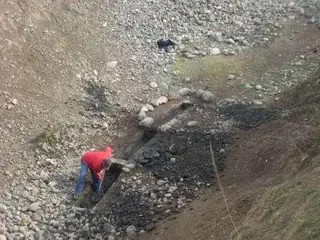
Spring cleaning and creating a water point [Kyrgyzstan]
Cleaning the spring and creating an animal watering point to reduce livestock trampling and erosion
- Compiler:
- Abdybek Asanaliev
- First published:
- 2017-01-04 10:07
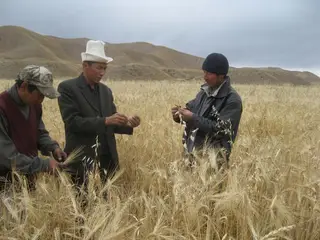
Stimulating the production of winter fodder through micro-crediting [Kyrgyzstan]
Establishing of micro-crediting agencies to support the sustainable production of winter fodder as a system of organizational, economic and technological measures (in the frame of CACILM).
- Compiler:
- Azamat Isakov
- First published:
- 2017-08-07 20:42
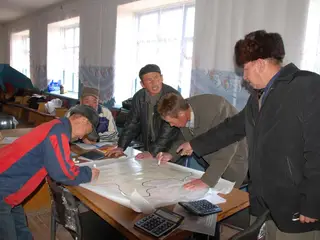
Mapping as a tool for the development of pasture use plans (in the frame of CACILM) [Kyrgyzstan]
Mapping (development of pasture area maps) for the use of pastures with the participation of all stakeholders, as a basis for a balanced distribution of cattle depending on the capacity and seasonality of the pastures (in the frame of CACIM).
- Compiler:
- Azamat Isakov
- First published:
- 2017-08-07 18:51
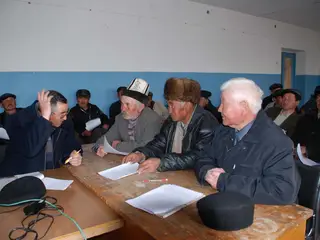
Budget for Pasture Management [Kyrgyzstan]
The budget for pasture management constitutes a necessary amount of funds for the implementation of pasture management activities planned for the year. These activities include the seasonal monitoring of pasture areas, the development of the grazing plan and monitoring of its implementation, activities to restore pasture infrastructure, measures to improve pasture condition, and the maintenance of the Pasture Committee. The means of income for the budget for pasture management are payments made for the use of pastures (in the frame of CACILM).
- Compiler:
- Azamat Isakov
- First published:
- 2017-08-07 18:36
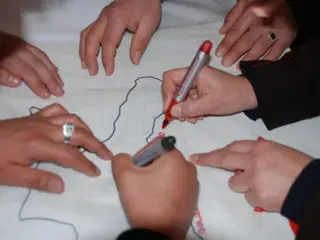
Joint pasture management [Kyrgyzstan]
The aim of this approach is the joint management of pastures t by considering opinions of pasture users with the view of prevention and mitigation of pasture degradation and an improvement in the living conditions of local communities (in the frame of CACILM).
- Compiler:
- Azamat Isakov
- First published:
- 2017-08-07 17:52
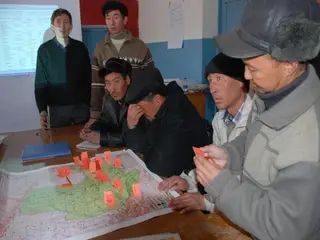
Joint pasture use planning [Kyrgyzstan]
The joint pasture use planning is the involvement of all stakeholders in the process of a balanced distribution of livestock, according to pasture capacities and seasonality of their use (in the frame of CACILM).
- Compiler:
- Azamat Isakov
- First published:
- 2017-08-07 17:11
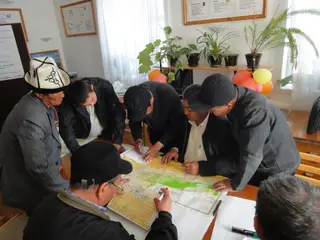
Joint Wildlife Management in the mountain ecosystem of the Naryn region in Kyrgyzstan [Kyrgyzstan]
Joint Wildlife Management based on economic empowerment and assigning hunting (wildlife) grounds to the Association of local hunters and providing her with user rights for game resources leads to a sustainable use of natural resources and biodiversity and wildlife conservation (in the frame of CACILM).
- Compiler:
- Nazgul Esengulova
- First published:
- 2017-08-07 16:52
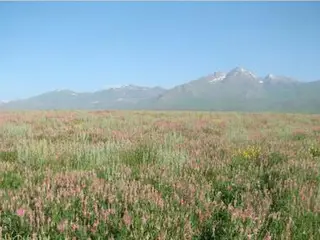
Cultivation of sainfoin on high mountain pastures – Suusamyr Valley (in the frame of CACILM) [Kyrgyzstan]
Conservation of soil fertility through the cultivation of sainfoin (perennial legume plants)
- Compiler:
- Abdybek Asanaliev
- First published:
- 2016-12-27 11:16