Methods & Tools
- WOCAT - Sustainable Land Management (SLM)
- Methods & Tools
WOCAT methods and tools
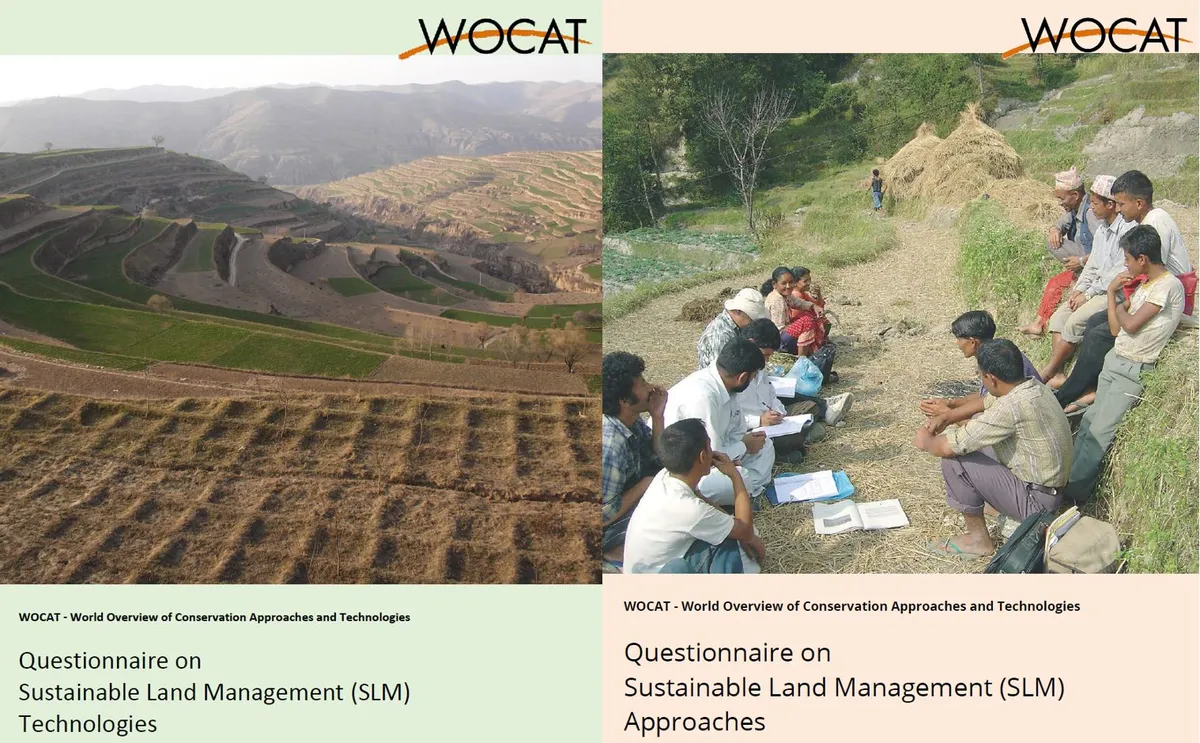
At the local level, SLM practices (SLM Technologies and Approaches) are documented in the field using the WOCAT Questionnaires on SLM Technologies and Approaches. After completing the questionnaire, the data is included in the Global SLM Database.
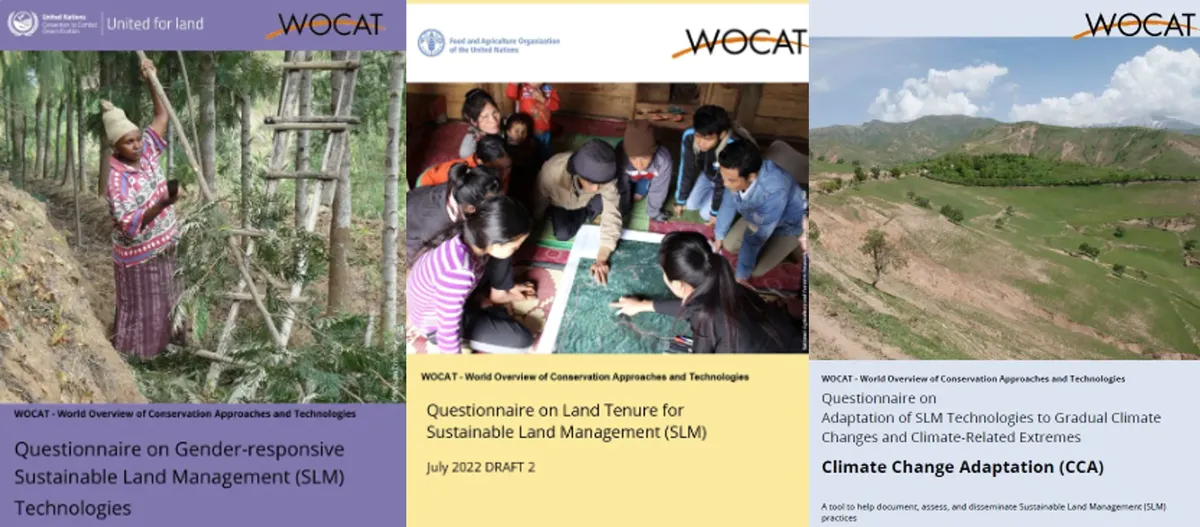
Specific thematic tools are added to the WOCAT questionnaires on SLM Technologies and Approaches to gain further in-depth knowledge on a particular topic.
- Gender-responsive SLM in collaboration with the UNCCD Secretariat.
- Climate Change Adaptation
- Tenure4SLM in collaboration with FAO (not yet integrated in the Global SLM Database)
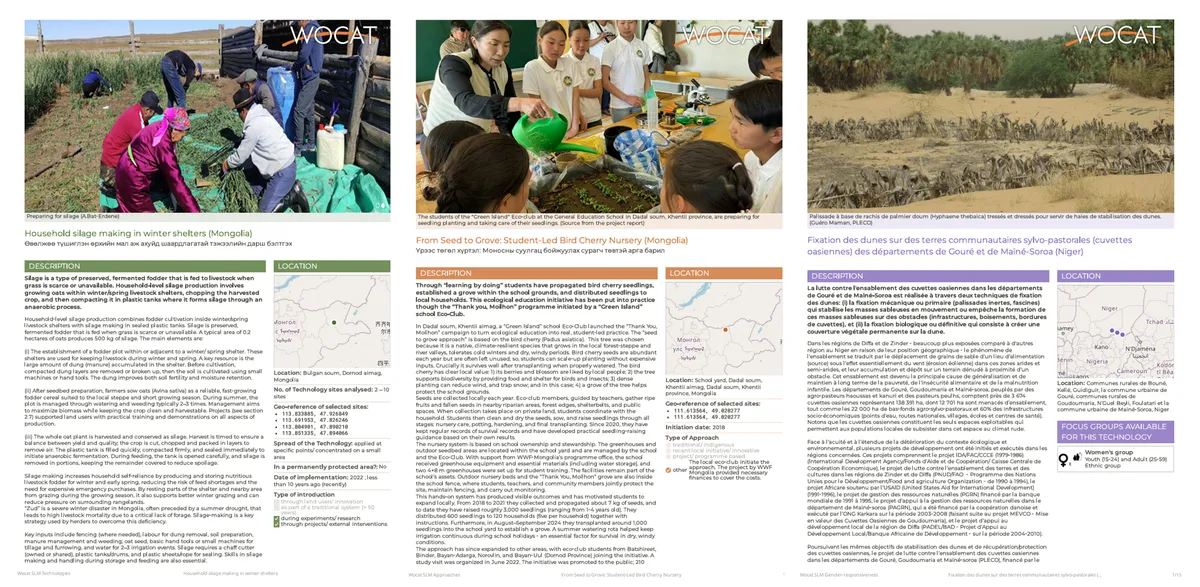
Once the SLM Technology, SLM Approach or gender-responsive SLM data is entered into the Global SLM Database, and after it has been reviewed and published, a user-friendly summary becomes available either for download as PDF or for online viewing in HTML format.
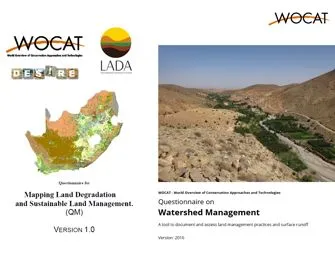
The land degradation and SLM Mapping questionnaire (QM) provides a tool for assessing the spatial coverage of land degradation and SLM at the regional/ national level. It has been developed in collaboration with the FAO/ LADA project.
A watershed and runoff questionnaire and related app (QWM offline) is under development. It is a supplement to the existing WOCAT questionnaires and helps to assess land management within a watershed and its impacts on ecosystem services (mainly runoff).
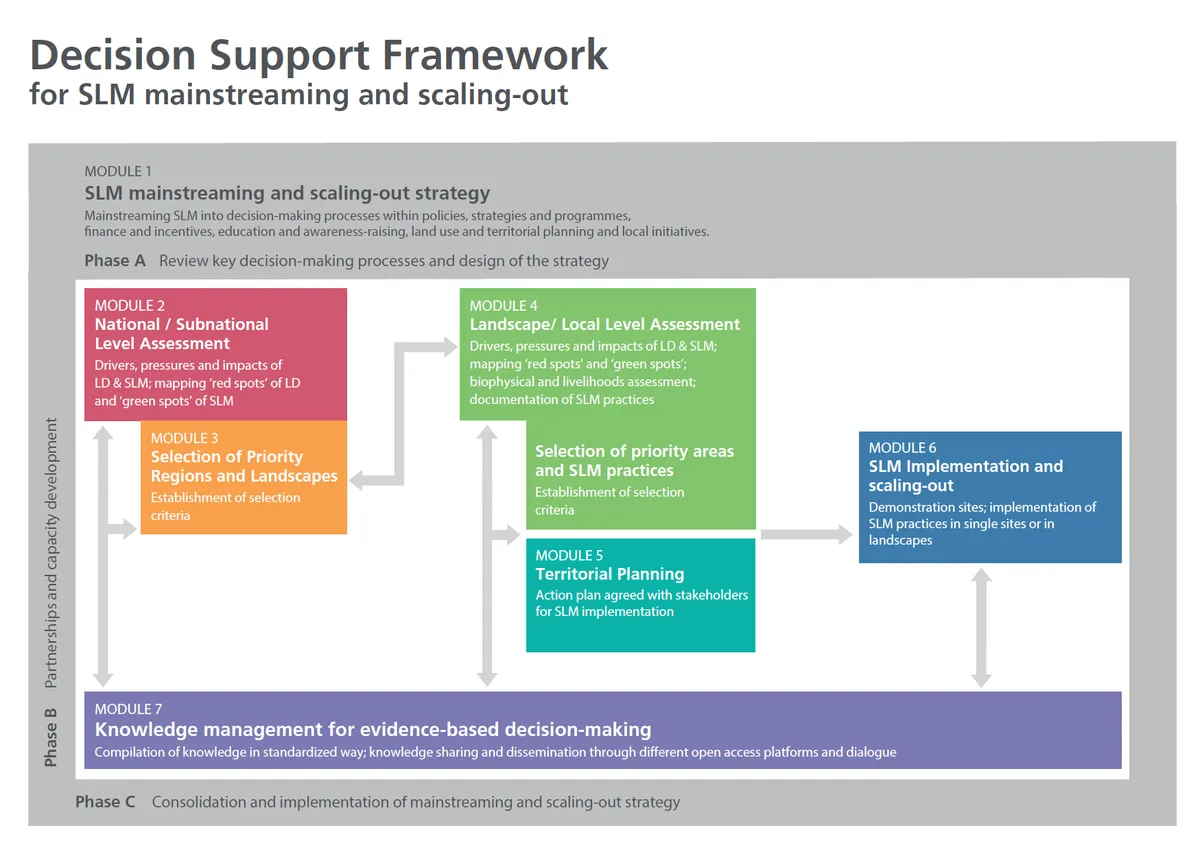
Evidence-based decision support for SLM is one of the main objectives of WOCAT. Together with FAO, WOCAT has developed a methodological framework for Decision Support for Mainstreaming and Scaling out SLM from national to local landscape levels.
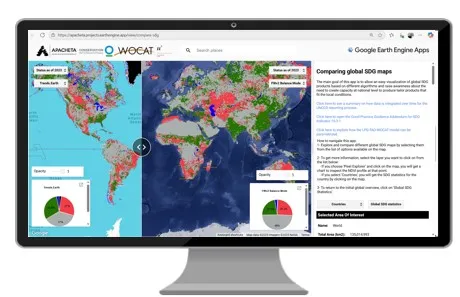
One of the core challenges to achieve Land Degradation Neutrality (LDN) and Integrated Land Use Planning (ILUP) is to spatially identify, and strategically prioritise, the areas to implement actions to avoid, reduce and reverse land degradation.
To achieve this, WOCAT has co-developed Apps with different countries and projects to facilitate informed decision making.
Training Material / Guides
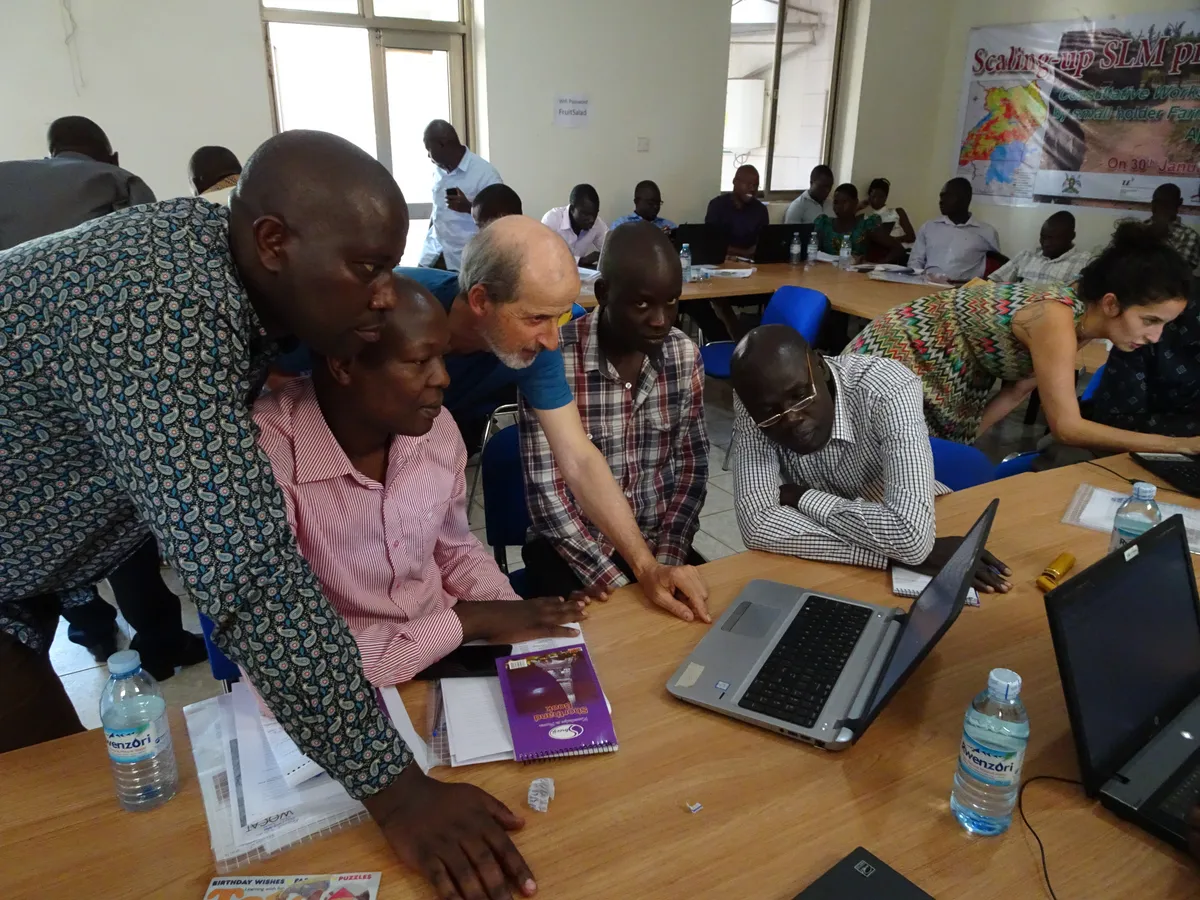
Download SLM training material with presentations on the different tools and methods, and video instructions.
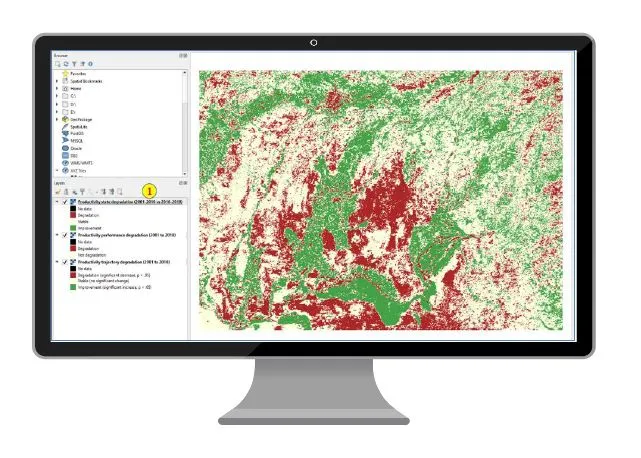
Discover and download the WOCAT LDN training material with presentations on the different tools and methods, and video instructions.
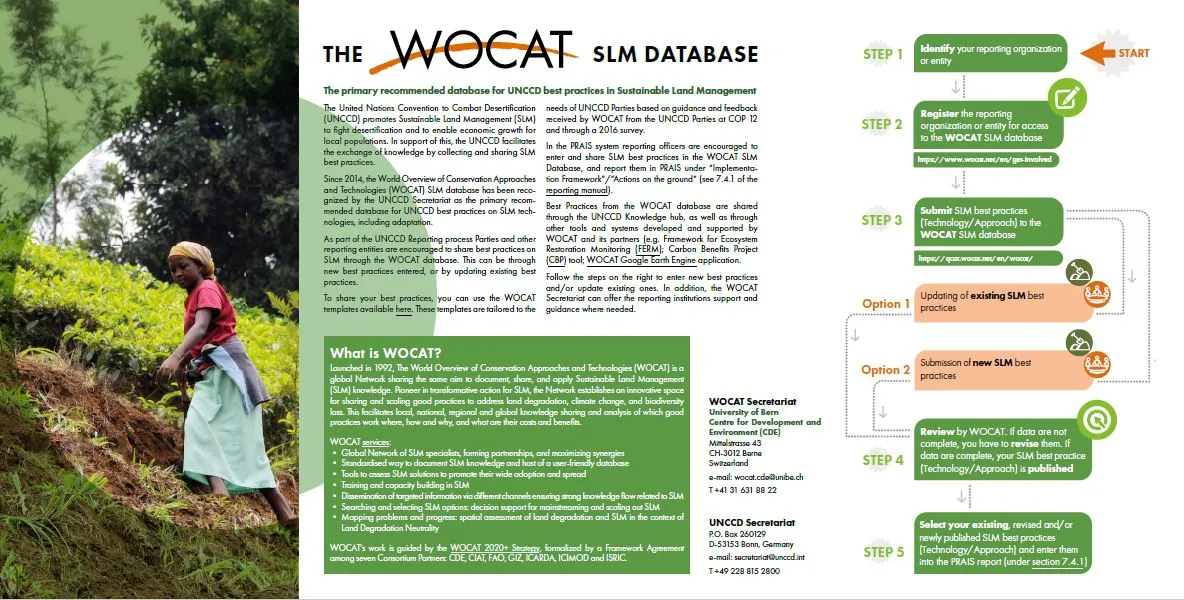
Instructions for UNCCD users to understand the WOCAT process of documentation and evaluation of good practices in SLM in the Global WOCAT SLM Database.
Linked Tools
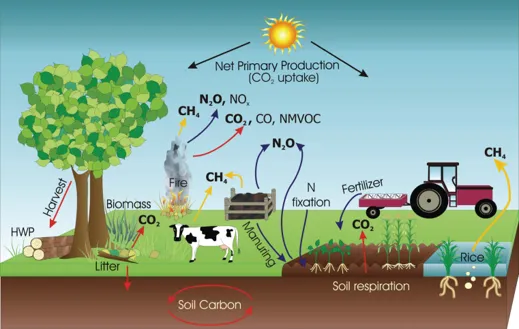
The Carbon Benefits Project (CBP) provides tools for agriculture, forestry and land management projects to estimate the impact of their activities on climate change mitigation (carbon stock changes and greenhouse gas (GHG) emissions). The tools are free to use and user friendly. The CBP modeling tools were developed by Colorado State University and partners under a GEF co-financed project implemented by UNEP.
The CBP tools are linked to the Global SLM Database. You can import WOCAT technologies into the CBP to carry out a GHG assessment of selected technologies with little additional information.
Use of data
Data captured through the WOCAT questionnaires is entered in the Global SLM Database by the compiler who is responsible for the compilation and the data quality. The compiler, resource persons, editors and reviewers are mentioned in the database as well as in any compilation or publication of the data.