Sorting by "Updated at"
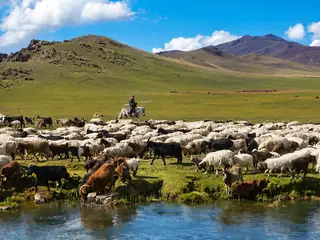
Using KAP and Household Livelihood Surveys for Adaptive SLM and Landscape Restoration [Mongolia]
The Approach combines Knowledge, Attitudes and Practices (KAP) assessments with household livelihood surveys to guide the planning, implementation and adaptive management of sustainable land management (SLM) and landscape restoration in Mongolia. Baseline and follow-up assessments provide evidence for improving stakeholder engagement, capacity development, livelihood support and natural resource management interventions.
- Compiler:
- Undarmaa Dagvasuren
- First published:
- 2026-08-21 09:18
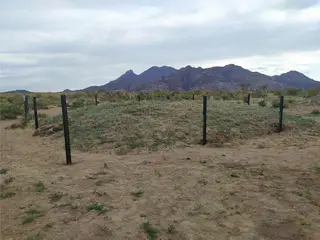
Restoration of Cynomorium songaricum through Host Plant Conservation and Management [Mongolia]
This restoration Technology integrates field-based conservation and laboratory biotechnological approaches to restore and conserve the rare parasitic plant Cynomorium songaricum (Dzungarian Cynomorium). It combines habitat protection, host plant management, seed collection, restoration trials and in vitro propagation to recover natural populations, conserve genetic resources and support the long-term restoration and sustainable management of fragile arid desert ecosystems.
- Compiler:
- Undarmaa Dagvasuren
- First published:
- 2026-08-14 13:09
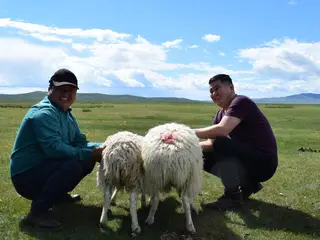
Lamb Fattening Practice for Sustainable Rangeland Management [Mongolia]
This technology is a sustainable herd management approach that reduces grazing pressure on Mongolia’s arid and semi-arid rangelands by improving lamb production and optimizing herd structure. Through supplementary feeding of lactating ewes, early marketing of male lambs, and improved herd management, it increases livestock productivity, enhances herder income, and supports long-term rangeland sustainability.
- Compiler:
- Undarmaa Dagvasuren
- First published:
- 2026-08-13 17:35
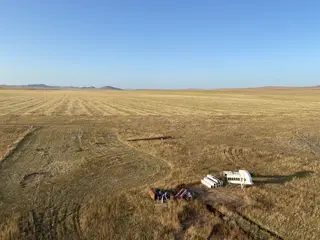
Conservation agriculture to restore abandoned cropland [Mongolia]
This technology aimed to restore abandoned cropland which was used for crop and fodder production during the 1970s-1980s. Since 2016, the farmer applied conservation agriculture and mixed cropping to reduce land degradation, revive cropping practices, increase land productivity for agriculture and enhance soil health.
- Compiler:
- Otgontsetseg Davaanyam
- First published:
- 2024-03-07 14:16
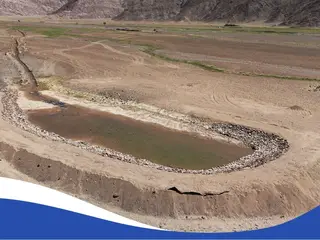
Gravity-fed plastic-lined water retention pond with river headworks [Mongolia]
This Technology is an integrated, gravity-fed surface-water diversion, storage and distribution system that captures part of the seasonal flow of the Uliastai River for use during periods of water scarcity. The stored water supports livestock watering and small-scale irrigation of fodder and pasture areas, while helping reduce pressure on heavily used natural watering points and the risk of further rangeland degradation.
- Compiler:
- Undarmaa Dagvasuren
- First published:
- 2026-08-10 09:00
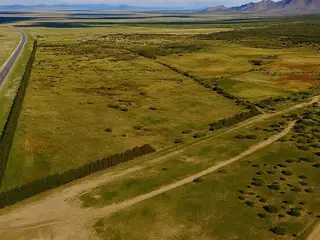
Living Laboratory Approach for Testing and Scaling Dryland Restoration Solutions [Mongolia]
The Elsentasarkhai living laboratory approach integrates long-term field testing, monitoring, training and multi-stakeholder knowledge exchange to validate locally adapted technologies for dryland restoration and desertification control. Proven practices are demonstrated and shared to support their replication and scaling across Mongolia’s degraded drylands.
- Compiler:
- Undarmaa Dagvasuren
- First published:
- 2026-08-07 15:15
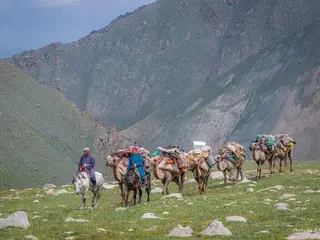
Traditional Seasonal Mobility of Zereg Pastoralists [Mongolia]
The Traditional Seasonal Mobility of Zereg herders is a community-based approach that promotes sustainable pasture management through seasonal livestock migration based on traditional knowledge, collective planning, and adaptive decision-making. It enhances rangeland conservation, livestock productivity, and climate change adaptation while preserving traditional nomadic culture and strengthening local cooperation.
- Compiler:
- Undarmaa Dagvasuren
- First published:
- 2026-08-07 09:47
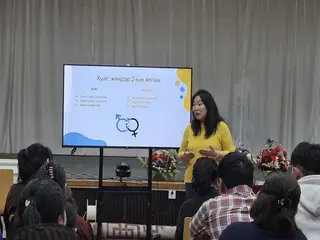
Gender responsive capacity building and mentoring for climate-resilient rural livelihoods [Mongolia]
This project based approach strengthens climate-resilient rural livelihoods among women and young herders in Khovd and Zavkhan provinces through gender-responsive online and face-to-face training, practical demonstrations, and post-training mentoring. It builds skills in low-waste cutting and sewing of Mongolian ger covers and insulation, and in the use of leather and rawhide for value-added products, supporting household use, income generation, and more efficient use of local livestock resources.
- Compiler:
- Undarmaa Dagvasuren
- First published:
- 2026-08-06 13:15

Protection and Sustainable Management of Khoovor Spring [Mongolia]
Khoovor Spring protection is a sustainable land management technology implemented in Dariganga Soum, Sukhbaatar Province, Mongolia. It uses a standardized livestock-exclusion fence, a controlled-access gate, and community-based inspection and maintenance to protect the natural spring source from livestock trampling and contamination. The protected area supports natural vegetation recovery and provides livestock with safer and more reliable access to water.
- Compiler:
- Undarmaa Dagvasuren
- First published:
- 2026-07-30 16:09
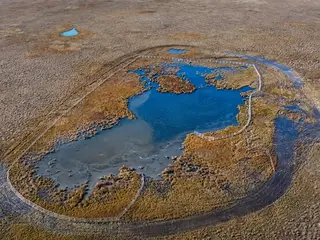
Participatory habitat protection for the white-naped crane [Mongolia]
A participatory habitat protection initiative safeguards key wetlands for the critically endangered white-naped crane. It combines participatory planning, herder-led grazing agreements and youth eco-club monitoring. The initiative restores wetland health, reduces trampling impacts, strengthens local stewardship and awareness, and provides a scalable model for biodiversity conservation.
- Compiler:
- Tserendulam Tseren-Ochir
- First published:
- 2026-06-25 17:06
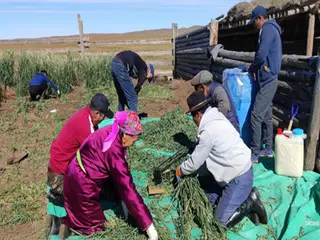
Household silage making in winter shelters [Mongolia]
Silage is a type of preserved, fermented fodder that is fed to livestock when grass is scarce or unavailable. Household-level silage production involves growing oats within winter/spring livestock shelters, chopping the harvested crop, and then compacting it in plastic tanks where it forms silage through an anaerobic process.
- Compiler:
- Mandakh Nyamtseren
- First published:
- 2026-05-11 08:36
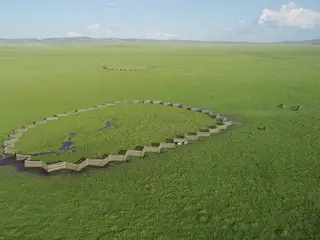
Buryat sheepfold-style fencing exclosures [Mongolia]
Buryat sheepfold fencing is a traditional Mongolian design. It has been adapted to form exclosures to protect springheads and wetland edges from trampling and overgrazing. This modified version was installed around four spring sources feeding the Ulz River to reduce soil compaction, erosion, and water contamination at the most sensitive points.
- Compiler:
- Tserendulam Tseren-Ochir
- First published:
- 2026-06-11 14:45
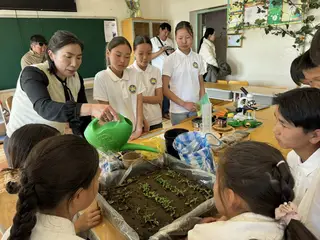
From Seed to Grove: Student-Led Bird Cherry Nursery [Mongolia]
Through “learning by doing” students have propagated bird cherry seedlings, established a grove within the school grounds, and distributed seedlings to local households. This ecological education initiative has been put into practice though the “Thank you, Moilhon” programme initiated by a “Green Island” school Eco-Club.
- Compiler:
- Tserendulam Tseren-Ochir
- First published:
- 2026-06-08 10:59
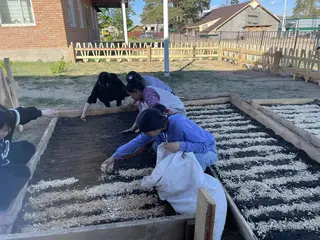
Producing wild cherry seedlings in a schoolyard nursery [Mongolia]
Wild cherry seeds are collected and sown in an open-air nursery within a schoolyard. The planting area is fenced by wooden boards and filled with a humus-rich soil and a light mulch, such as sawdust, is added to retain moisture and control weeds. This practice enhances the survival rate of seedlings – which are planted out in school groves as well as being available for regreening projects.
- Compiler:
- Mandakh Nyamtseren
- First published:
- 2026-05-29 13:14
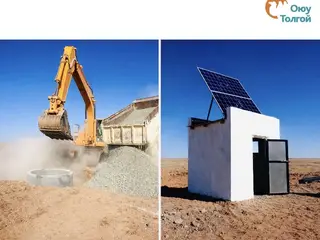
Well rehabilitation and restoration technology [Mongolia]
The improved hand-dug well equipped with a water storage tank and a solar-powered pump is a technology aimed at sustainably improving drinking water supply in the pasturelands of the arid Gobi region. This technology protects the well from flooding, collapse, and contamination, and reduces seasonal fluctuations in water availability, enabling reliable long-term use.
- Compiler:
- Undarmaa Dagvasuren
- First published:
- 2026-07-24 13:36
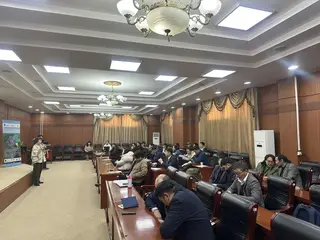
Mentorship programme on conservation agriculture [Mongolia]
The Approach aims to ensure the sustainability of the agricultural sector by training and mentoring young farmers in conservation agriculture to improve soil fertility and health and maintain productivity.
- Compiler:
- Otgontsetseg Davaanyam
- First published:
- 2024-06-26 18:52