Sorting by "Updated at"
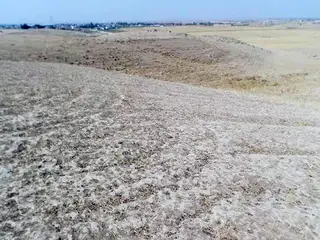
Внедрение нетрадиционных для богарных условий засухоустойчивых многолетних растений в целях повышения продуктивности богарного земледелия и животноводства [Uzbekistan]
Внедрение в состав культур, выращиваемых на богаре, нетрадиционных для богарных условий многолетних засухоустойчивых растений будет способствовать предотвращению развития водной эрозии почв, повышению продуктивности богарных угодий, и обеспечению животноводства дополнительными кормами
- Compiler:
- Rustam Ibragimov
- First published:
- 2023-01-23 10:44
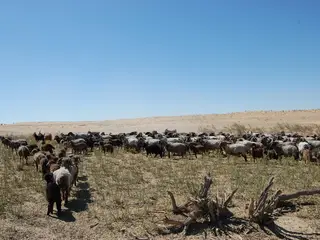
Pasture rotation in the desert areas of Uzbekistan (CACILM) [Uzbekistan]
Improvement of a livestock grazing scheme ensuring the restoration of pasture vegetation and observance of appropriate pasture loading.
- Compiler:
- Rustam Ibragimov
- First published:
- 2017-01-04 10:52
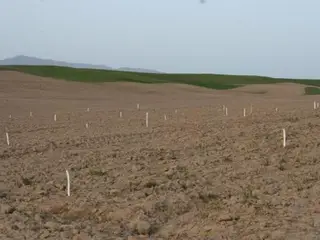
Improvement of land under arid conditions through the creation of pistachio plantations (CACILM) [Uzbekistan]
This technology is aimed at the creation of pistachio plantations on gentle slopes to improve the land’s productivity and to rehabilitate the arid land in the hill zone.
- Compiler:
- Rustam Ibragimov
- First published:
- 2016-12-28 10:53
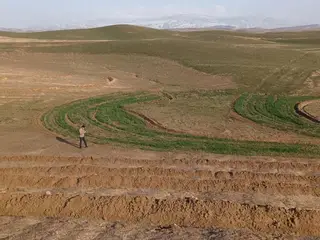
Contour trenches and contour strips [Uzbekistan]
Contour trenches for the cultivation of almond trees, and contour strips for cereals are types of rainwater harvesting structures. They are designed to capture runoff, reduce erosion, and enhance soil moisture—thereby improving land productivity and supporting climate-resilient agriculture in lowland dry areas.
- Compiler:
- Joren Verbist
- First published:
- 2025-07-09 17:31
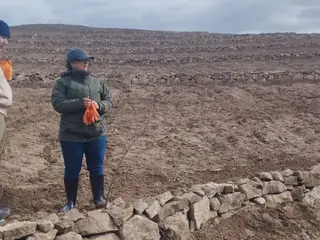
Gradoni Orchard Terraces [Uzbekistan]
Gradoni orchard terraces are intermittent strips of contour-based structures separated by catchments of about 10 metres. They are designed to capture and hold rainwater, reduce erosion, and improve conditions for the cultivation (in this case) of almond and pistachio trees, thereby enhancing land productivity and climate resilience in dryland areas.
- Compiler:
- Joren Verbist
- First published:
- 2025-07-09 17:31
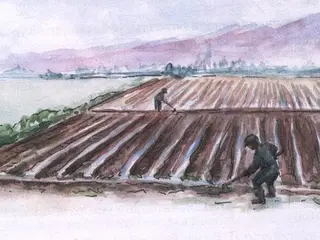
Irrigation using shortened furrows and regulated use of mineral fertilizers [Uzbekistan]
A resource-saving irrigation technology for row crops using shortened furrows, which enables significant savings of irrigation water and improves the efficiency of mineral fertilizer use on irrigated land.
- Compiler:
- Oyture Anarbekov
- First published:
- 2017-08-02 23:56
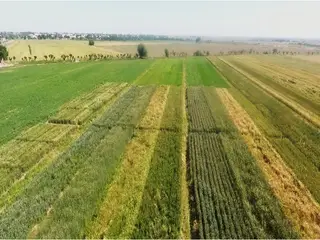
Application of hydrogels for growing agricultural crops under low soil moisture conditions [Uzbekistan]. [Uzbekistan]
The technology of cultivating agricultural crops with the use of hydrogels ensures optimal soil moisture and plant nutrition by accumulating soil water and nutrients and gradually releasing them to the plants, thereby increasing crop yields and improving harvest quality.
- Compiler:
- Rustam Ibragimov
- First published:
- 2023-01-23 10:47
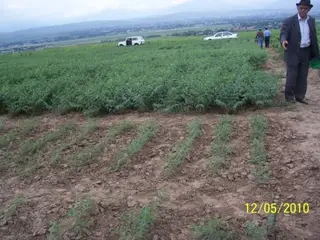
Winter Chickpea Planting in Cold Dry Areas [Uzbekistan]
The use of cold tolerant chickpeas, sown in autumn, significantly benefits farmers by realizing higher profits thanks to smaller amounts of fertilizers required, increased yields, and a better market price.
- Compiler:
- Joren Verbist
- First published:
- 2021-09-01 22:28
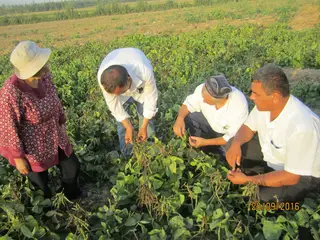
Winter Wheat - Mung Bean Production System [Uzbekistan]
The cultivation of short duration mung bean varieties lead to higher farm-income and improved soil health in Central Asia
- Compiler:
- Joren Verbist
- First published:
- 2022-01-26 15:44
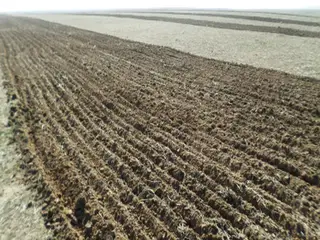
Enriching pastures through phytomelioration [Uzbekistan]
Strip seeding of desert drought-resistant plants on degraded pastures creates an improved and stable structure of pasture phytocoenoses composed of natural and cultivated forage plants, and increases forage potential of desert pastures.
- Compiler:
- Rustam Ibragimov
- First published:
- 2023-01-23 10:47
A Decision Support Tool for integrating stakeholder perspectives through WEFE Nexus [Uzbekistan]
The Decision Support Tool helps decision-makers prioritize sustainable land management practices using the Water-Energy-Food-Ecosystem Nexus, fostering collaboration, facilitating social learning, and balancing diverse stakeholder interests.
- Compiler:
- Joren Verbist
- First published:
- 2024-11-28 11:40
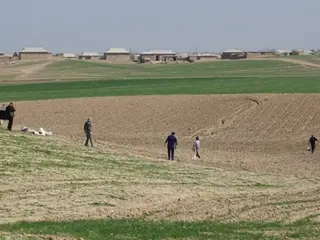
Agroforestry reclamation of rainfed areas [Uzbekistan]
Planting drought-resistant tree species on sloping rainfed areas will increase the productivity of rainfed land and local incomes. Local afforestation of rainfed arable land will provide environmental benefits such as reducing the risk of water erosion, mitigating the impact of climate change by sequestering CO2 in wood biomass and soil, and will also contribute to overall environmental health.
- Compiler:
- Rustam Ibragimov
- First published:
- 2023-01-23 10:44
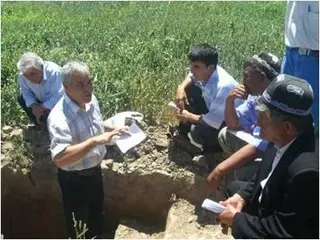
Farmer Field Schools for improved agricultural practices in the irrigation zones of Uzbekistan [Uzbekistan]
The training of farmers in sustainable agronomic and irrigation practices aimed at improving and increasing the productivity of soil (in the frame of CACILM).
- Compiler:
- Rustam Ibragimov
- First published:
- 2017-07-11 14:14
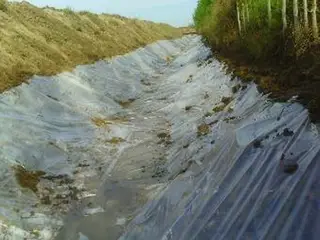
Lining the bottom of the channel with polyethylene film [Uzbekistan]
Covering the bottom of the channel and slopes with polyethylene film reduces water infiltration losses during transportation from the source to the field and increases the water use efficiency from 0.50 to 0.89 points
- Compiler:
- Rustam Ibragimov
- First published:
- 2018-12-03 09:57
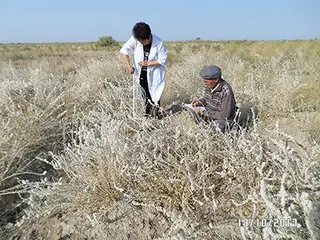
Creation of improved autumn-winter pastures in the foothill zone of Uzbekistan [Uzbekistan]
The Technology allows to introduce new forage crops, to increase the grass density, to develop multicomponent pasture phytocenoses, that provide productivity increase of degraded pastures by 2-3 times without disturbing the vegetation cover
- Compiler:
- Rustam Ibragimov
- First published:
- 2018-12-03 09:50
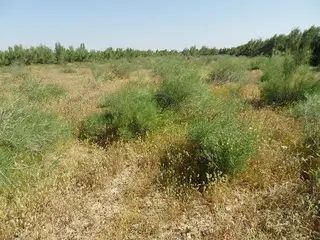
Pasture shelterbelts in the desert zone [Uzbekistan]
Creation of pasture-protective forest shelterbelts promotes ecological and phytocenotic compatibility of natural vegetation and forage plants. The pasture plant community structure improves and the forage capacity of desert pastures increases.
- Compiler:
- Rustam Ibragimov
- First published:
- 2018-12-03 09:57
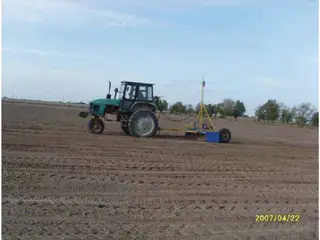
Laser leveling of the fields to increase the efficiency of on-farm use of irrigation water [Uzbekistan]
Preparation of fields for irrigation with the use of a laser planner ensures uniform surface leveling, which provides equal soil moisture throughout the field, provides water savings (20-25%), increased yield by 10%, and reduced greenhouse gas emissions.
- Compiler:
- Rustam Ibragimov
- First published:
- 2019-02-26 14:33
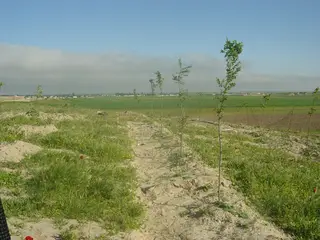
Almond planting on shallow terraces to increase the efficiency of rainfed lands and to prevent erosion [Uzbekistan]
Almonds and other drought-tolerant tree species are planted in rainfed zone, poor in precipitation, on shallow terraces on gentle slopes. Tree plantations prevent the development of soil erosion on the slopes and provide local land users with additional income
- Compiler:
- Rustam Ibragimov
- First published:
- 2018-12-03 09:50
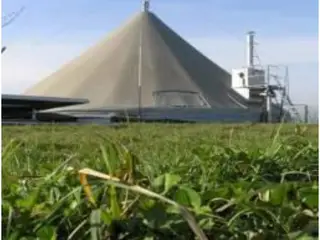
Production of biogas from waste to increase soil fertility [Uzbekistan]
The technology is based on production of biogas from waste as a highly effective environmentally friendly organic fertilizer
- Compiler:
- Rustam Ibragimov
- First published:
- 2018-12-03 09:49
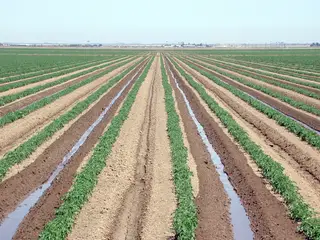
Furrow irrigation with alternating dry and watered (wet) furrows [Uzbekistan]
To prevent large crop losses, it is recommended to water row crops through the furrow. Dry and watered furrows are rotated. Watering is carried out during periods of lack of water (low water).
- Compiler:
- Rustam Ibragimov
- First published:
- 2019-02-26 14:29
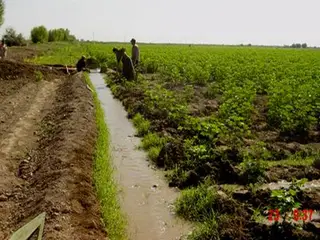
Counter watering method of furrow irrigation [Uzbekistan]
Furrow Irrigation by forced water supply from two sides of the field with the use of single output irrigators - from the beginning and from the end of the furrow or strip (”counter" furrow irrigation) is used for irrigation of cotton and other row crops. The technology is used on low-slope / non-slope lands, which allows to ensure homogenity of moisture, reducing soil salinity in the end part of the field, increasing irrigation water productivity and crop yields
- Compiler:
- Rustam Ibragimov
- First published:
- 2018-12-03 09:50
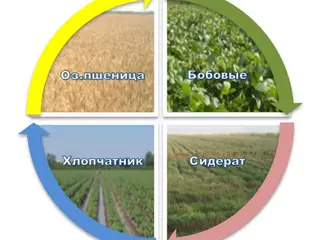
Diversification of crops in salinized soils with the introduction of legumes and green manure [Uzbekistan]
Сrop rotation Improvement through the introduction of legumes after harvesting winter wheat and green manure crops in order to reduce land degradation and increase the productivity of irrigated lands
- Compiler:
- Rustam Ibragimov
- First published:
- 2018-09-11 09:15
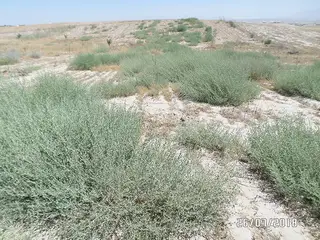
Drought-resistant crops to enhance forage production and prevent erosion in desert areas [Uzbekistan]
Desert fodder plants cultivation in rainfed conditions provides adaptation to drought, creates feed reserves for livestock and prevents the water erosion development
- Compiler:
- Rustam Ibragimov
- First published:
- 2018-09-11 09:22
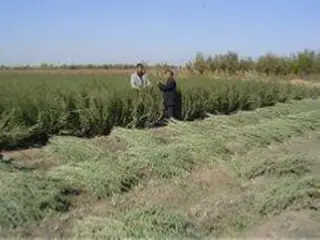
Cultivation of Indigofera (Indigofera tinctoria) to restore marginal lands and to increase local communities incomes [Uzbekistan]
Cultivation of Indigofera (Indigofera tinctoria) is one of the ways to restore degraded saline lands with low agricultural potential, as well as the ability to diversify and increase the income of local communities through the production and sale of natural indigo dye, which is synthesized in the aboveground biomass of the plant
- Compiler:
- Rustam Ibragimov
- First published:
- 2018-12-03 09:50
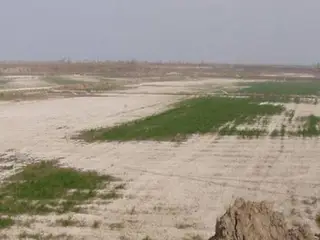
Afforestation for rehabilitation of degraded irrigated croplands (CACILM) [Uzbekistan]
A plantation of salinity-tolerant tree species, mostly having nitrogen fixing and high biodrainage capability, is created in a plot of arable land, out of use due to high salinity and water logging in order to restore productive functions of the land.
- Compiler:
- Rustam Ibragimov
- First published:
- 2017-04-28 10:15
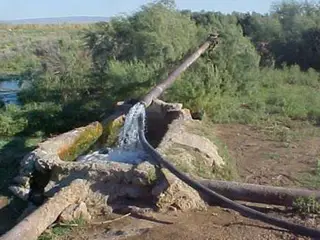
Use of mineralized artesian water to organize irrigated crop farming in the Kyzylkum (CACILM) [Uzbekistan]
Cultivating several food and forage crops in the Kyzylkum desert using mineralized irrigation water from a flowing artesian well
- Compiler:
- Rustam Ibragimov
- First published:
- 2017-04-28 09:26
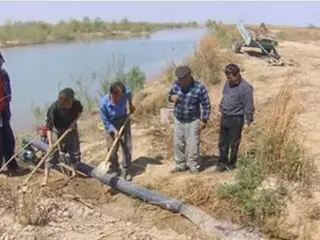
Community-based forestry in Karakalpakstan [Uzbekistan]
The local community created with support of forestry community were involved in the reforestation of degraded areas, belonging to forestry (in the frame of CACILM).
- Compiler:
- Tatyana Khamzina
- First published:
- 2017-07-11 14:03