Sorting by "Updated at"
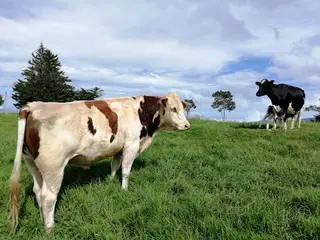
Sistemas silvopastoriles [Ecuador]
Los sistemas silvopastoriles son una forma de combinar árboles o especies forrajeras con pasturas y animales dentro de una parcela. En la parroquia de Nambacola los arboles están dispersos en el potrero, y la distribución varía de 30 a 60 árboles por hectárea. Las especies más utilizadas son el faique, vainillo y porotillo.
- Compiler:
- Pablo Caza
- First published:
- 2021-02-03 13:22
- Labels:
- gef
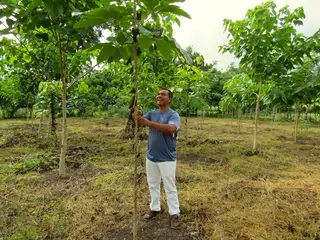
Reforestación Protectora [Colombia]
Reforestación activa y pasiva* gracias a la plantación de especies arbóreas y exclusión del pastoreo, con posibilidad de agroforesteria durante los dos primeros años, acompañando el crecimiento de los arboles con cultivos de subsistencia. Esta tecnología fue diseñada e implementada con el objetivo de proteger las zonas de recarga del acuífero del Municipio de Morroa, Sucre, Colombia.
- Compiler:
- Luisa F. Vega
- First published:
- 2019-02-18 19:29
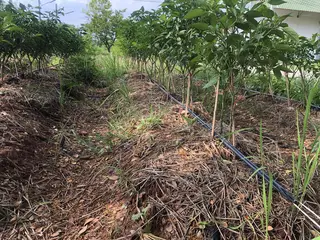
INTEGRATED AGRICULTURE-BASED LAND USE IN AREAS WITH SALINE SOILS [Thailand]
Salinity and associated land degradation in parts of the Northeast of Thailand limits production. Knowledge of saline soil management was integrated into an organic agriculture system: dolomite application adjusted pH levels, manure increased the soil's organic matter, while fermented bio-extracts stimulated root systems. Yields of chili pepper and parsley improved greatly.
- Compiler:
- Laksamee Mettpranee
- First published:
- 2025-04-11 07:44

EXTENSION OF SUNN HEMP AS A SOIL AMENDMENT IN SALINE SOILS [Thailand]
An outreach programme aims to educate farmers about the benefits of ploughing rice stubble into the soil and incorporating green manure crops such as sunn hemp - as well as other sustainable practices. Groups of farmers are formed, and they are assisted by various organisations including the Land Development Department and volunteer "soil doctors".
- Compiler:
- Laksamee Mettpranee
- First published:
- 2025-03-21 10:54

SUNN HEMP AS A SOIL AMENDMENT AND FOR MITIGATION OF SALINITY [Thailand]
Sunn hemp (Crotalaria juncea) has been promoted by the Land Development Department as a green manure plant with the objectives of increasing soil organic matter, improving soil fertility and reducing salinity levels.
- Compiler:
- Laksamee Mettpranee
- First published:
- 2025-02-27 13:32
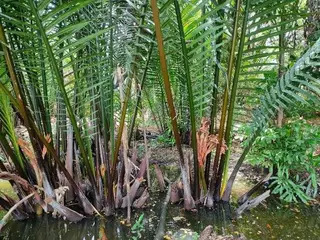
Ked Forest Park: : a Prototype for Community Indigenous Plant Management [Thailand]
An urban community forestry park – the “Ked Forest Park” - has been established by a group of people who wanted to conserve and develop resources and the environment in Phra Pradaeng District. Planting and maintenance of indigenous, edible and medicinal plants are carried out.
- Compiler:
- Areerat Wangkaew
- First published:
- 2025-01-17 09:04

The soil doctor network for integrated farming [Thailand]
A “soil doctor” network in Khon Kaen province has transformed saline areas previously dedicated to rice cultivation into sustainable, integrated farming systems.
- Compiler:
- Areerat Wangkaew
- First published:
- 2025-01-13 09:32

Amendement sableux dans le système oasien [Tunisia]
Amendement sableux consiste à améliorer la fertilité de sol pour améliorer la production.
- Compiler:
- Donia Mühlematter
- First published:
- 2018-05-29 15:22
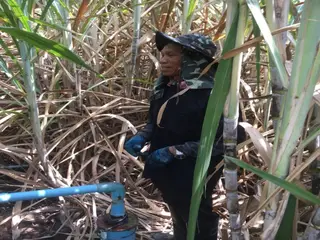
Using shallow wells for crops and lowering the saline groundwater table [Thailand]
Pumping groundwater from shallow wells for agriculture can control the groundwater table in recharge areas. It helps to manage saline aquifers and reduce soil salinity. Such shallow wells range from 25 to 30 meters deep. This technology is very well-accepted by the land users.
- Compiler:
- Kaewjai Oechaiyaphum
- First published:
- 2022-12-05 09:32
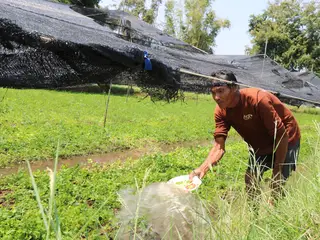
Land Use Change from Rice to Vegetables [Thailand]
Land use change from rice to vegetables was started by a group of farmers with the help of the LDD who provided irrigation from groundwater through a 28m deep bore hole. This enables the groundwater level to be lowered preventing salination in the discharge area lower down.
- Compiler:
- supranee sritumboon
- First published:
- 2019-06-25 08:55
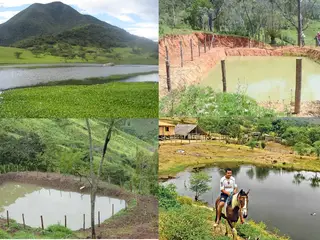
Albarrada [Ecuador]
Son construcciones que poseen muros de tierra bien definidos, sus formas son variadas: rectángulares, cuadradas, circulares, semicirculares, alargada. Se llenan mediante un proceso de lenta acumulación de agua de lluvia directa o proveniente de las escorrentías producidas por la topografía del terreno. También pueden llenarse con el agua de pequeños cauces que se generan en las épocas lluviosas.
- Compiler:
- Pablo Caza
- First published:
- 2021-03-03 16:47
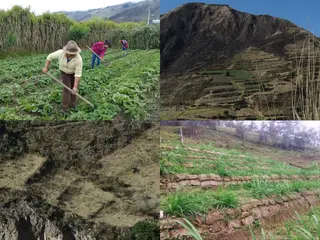
Cultivos en terrazas [Ecuador]
Los cultivos de terraza es uno de los tipos más antiguos de manejo del suelo y de los recursos hídricos para la agricultura a gran escala. Se conoce como cultivo en terrazas a la práctica de cortar un paisaje montañoso en zonas planas con el fin de producir cultivos. Una de las principales razones del uso de las terrazas de cultivo, ha sido para evitar la erosión del suelo, así como para canalizar el agua para el riego.
- Compiler:
- Pablo Caza
- First published:
- 2021-03-03 16:46
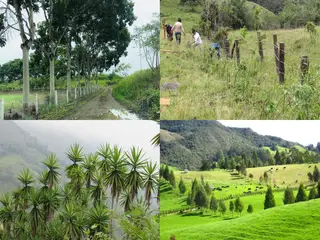
Cortina rompevientos [Ecuador]
Siembra de árboles y/o arbustos de rápido y mediano crecimiento en los linderos de los terrenos para logra reducir la erosión del suelo a causa del viento, y también para proteger a los cultivos.
- Compiler:
- Pablo Caza
- First published:
- 2021-02-03 13:43
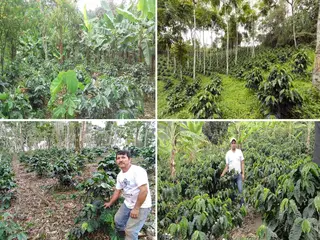
Sistemas agroforestales [Ecuador]
Mezcla de guineo (plátano) con frutales y café en sistemas de producción agroforestal con asociación de guineo (plátano), frutales y café al fin de incrementar la producción previniendo y reduciendo la erosión del suelo
- Compiler:
- Pablo Caza
- First published:
- 2021-02-03 13:59
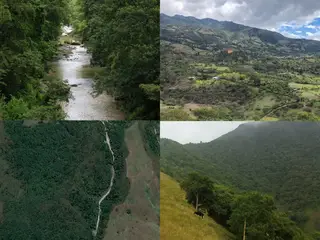
Franja Ribereña [Ecuador]
Las franjas ribereñas se ubican adyacente a los ríos, lagos y embalses, humedales y planicies, y desempeñan importantes funciones ecológicas relacionadas a control de sedimentación, retención de agua, control de inundaciones, control de escorrentía, entre otras. Las franjas pueden constituirse de especies arbóreas, arbustos o pastizales de amplio desarrollo de raíces, follaje denso y balanceado; deben ser nativas del área y tolerantes a las inundaciones y a la depositación de sedimentos.
- Compiler:
- Pablo Caza
- First published:
- 2021-02-03 14:01
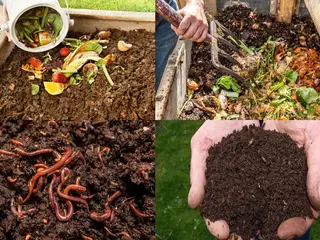
Lombricultura [Ecuador]
Tecnología que consiste en la transformación de los desechos (residuos) orgánicos (estiércol, restos de plantas, etc) en humus, mediante la cría intensiva de lombriz de tierra y la actividad natural de microorganismos. Con esta técnica se genera humus orgánico solido o líquido que sirve para la producción agroecológica u orgánica de cultivos de ciclo corto o perenne.
- Compiler:
- Pablo Caza
- First published:
- 2021-02-03 14:02
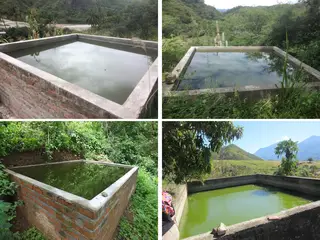
Pilancón [Ecuador]
Práctica ancestral en forma de minireservorio construida para almacenar el agua proveniente de quebradas, vertientes o lluvias para luego distribuirla a las zonas de producción.
- Compiler:
- Pablo Caza
- First published:
- 2021-02-03 13:24
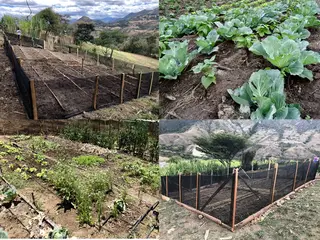
Huerto familiar [Ecuador]
El Huerto familiar es un espacio donde se produce hortalizas y otras especies vegetales de forma orgánica o agroecológica. La producción obtenida es para el autoconsumo familiar y el excedente es comercializado en mercados locales lo cual permite a los agricultores mantener ingresos económicos por la venta de sus productos cultivados. El huerto familiar generalmente está a cargo de las mujeres del hogar.
- Compiler:
- Pablo Caza
- First published:
- 2021-02-03 13:24
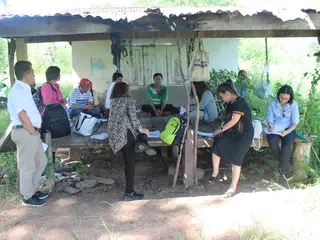
Advisory system for planting Eucalyptus camaldulensis on rice bunds in salt-affected areas. [Thailand]
The Thai government promotes planting of Eucalyptus camaldulensis on rice bunds to lower the saline groundwater level and prevent the spread of salt in soils - through cooperation of farmers, land owners, Siam Forestry Co., Ltd., Subdistrict Administration Organization, Land Development Department, and with specialists/ technical advisors.
- Compiler:
- Areerat Wangkaew
- First published:
- 2019-01-29 17:18
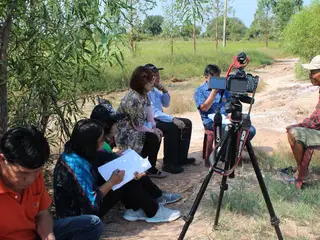
Promotion of Acacia ampliceps on severely salt-affected soil [Thailand]
Planting perennial salt-tolerant trees in the severely salt-affected area in Lam Satad of Chi-Mun watershed was introduced by the Land Development Department at A. Buayai, Nakhon Ratchasima. This project aimed at promoting the planting of Acacia ampliceps on an area of up to 4,665 rai (approx. 745 ha).
- Compiler:
- Phatranit Chuaysanoi
- First published:
- 2019-08-28 17:55
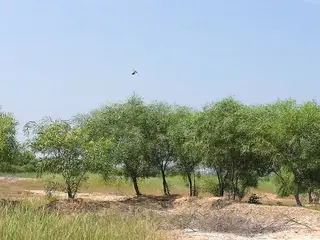
Planting of Acacia ampliceps to control severely salt-affected land. [Thailand]
Acacia ampliceps is a very salt-tolerant species that can grow well in severely salt-affected areas. Land leveling with ditches and dikes is needed, and they are planted along an east-west direction. The technology is very well accepted by land users.
- Compiler:
- Chakkaphan Phaosrakhu
- First published:
- 2019-08-28 18:09
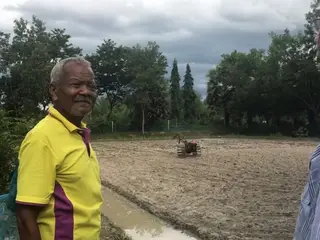
The new theory of agriculture for mixed farming systems [Thailand]
Allocating and managing small-scale farm areas to make them suitable for agricultural production under the highest levels of integration and efficiency.
- Compiler:
- Prapa Taranet
- First published:
- 2019-01-29 17:14
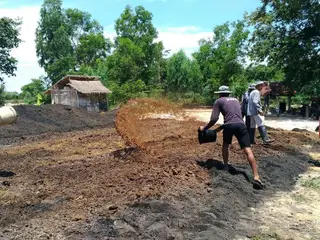
Strengthening Farmers' Self-Grouping Participation in Organic Rice Production [Thailand]
A group of 253 farmers have participated in organic rice production covering an area of 6,000 rai (960 ha) since 1989. The organic rice has been certified as meeting the standards of OACT and IFOAM; more than 3,000 tons/yr have been exported.
- Compiler:
- Yuthasong Namsai
- First published:
- 2019-08-28 18:07
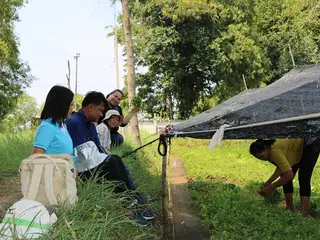
Pumping groundwater for vegetable irrigation to prevent salination [Thailand]
The approach is to develop a simple groundwater pumping model for irrigation, on the basis of cooperation and knowledge sharing between government agencies and farmers, that addresses the risk and prevention of off-site salination.
- Compiler:
- supranee sritumboon
- Creation:
- 2019-01-06 07:25
Planting Eucalyptus on rice bunds to lower saline groundwater [Thailand]
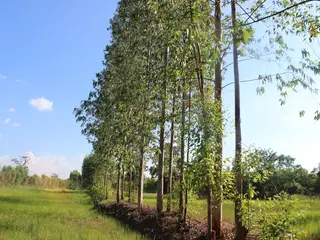
Eucalyptus camaldulensis variety H4 is salt tolerant and has the ability to lower shallow saline groundwater levels; as a result salinity is controlled. Planting eucalyptus on one or two sides of the rice bund in an east-west direction (in single or double rows) at a spacing of 2 m between trees is the most effective technique and well accepted by farmers.
- Compiler:
- Areerat Wangkaew
- Creation:
- 2018-10-03 08:19
Tajamar [Ecuador]
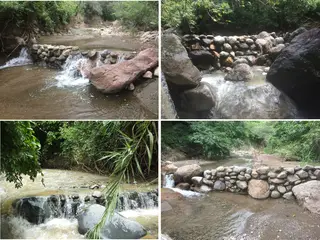
Tecnología ancestral que tienen como objetivo principal la acumulación de humedad en la arena estancada por el dique. La humedad acumulada se infiltra y da paso a la formación de ojos de agua en la época de verano.
- Compiler:
- Pablo Caza
- First published:
- 2021-02-03 13:23
Brush Layering [Lesotho]
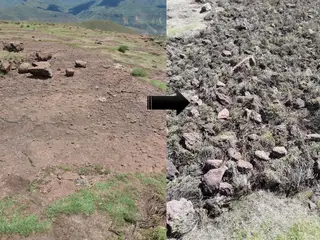
The technology requires removal of invaders as resources for layering. The technology enhances accumulation of silt and moisture storage in dry-lands due to increased organic matter content in the soil from the brush.
- Compiler:
- Matoka Moshoeshoe
- First published:
- 2023-09-07 18:18
In-field rain water harvesting [Lesotho]
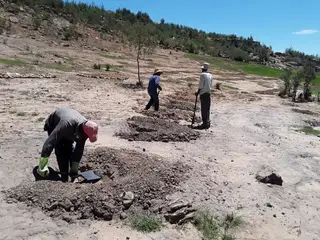
The infiltration pits are constructed on bare lands with the aim to enhance re-vegetation of plant species. The pits help to reduce soil erosion/land degradation as water is now able to infiltrate through the pits because they are constructed in succession. It also improves land productivity and cover as well as soil organic carbon.
- Compiler:
- Matoka Moshoeshoe
- First published:
- 2023-09-07 18:18
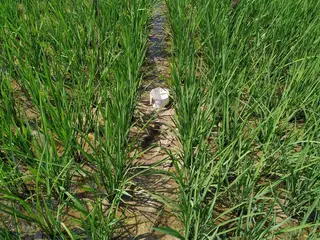
Alternate wetting and drying (AWD) method in rice cultivation [Bangladesh]
Alternative Drying and Wetting (AWD) is a practice in rice cultivation which decrease water use, while having no impact on rice yield. It also decreases the amount of methane into the atmosphere and fuel consumption of water pumps.
- Compiler:
- Mutasim Billah
- First published:
- 2020-08-06 15:13
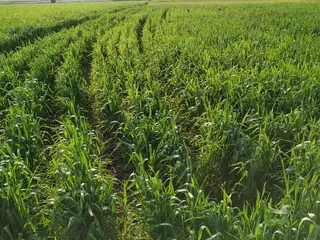
Strip tillage wheat production in degraded terraces of High Barind Tract, Rajshahi [Bangladesh]
Strip tillage wheat cultivation is a climate-smart technology to save water and improve soil health
- Compiler:
- Mutasim Billah
- First published:
- 2020-05-07 13:44
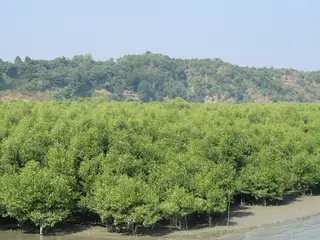
Afforestation with mangrove plants to protect land degradation [Bangladesh]
Mangrove afforestation in newly accreted land along cooastal regions accelerates the process of land stabilization, creates new forest resources, and enriches biodiversity.
- Compiler:
- Fazlay Arafat
- First published:
- 2020-05-04 16:38
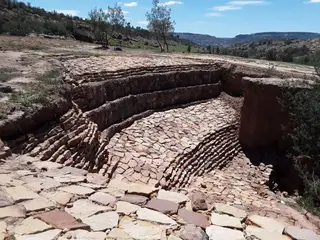
Gully head structure [Lesotho]
The aim of the gully head structure is to help stabilise the gully and prevent/control the gully from expanding further in length due to erosion. In Lesotho, this is constructed using stones.
- Compiler:
- Matoka Moshoeshoe
- First published:
- 2023-09-07 18:19
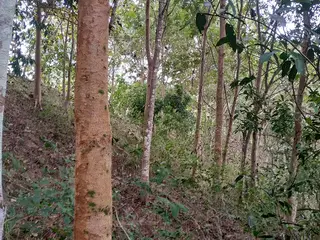
Protection from land degradation through conservation of medicinal plants by involving ethnic communities. [Bangladesh]
The indigenous community in Bolipara village of the Thanchi upazlia (sub-district) of the Bandarban district are reducing or preventing land degradation through the cultivation and conservation of medicinal plants. This practice provides the raw material needed, by local traditional healers, to produce herbal medicines for the indigenous and tribal peoples.
- Compiler:
- Fazlay Arafat
- First published:
- 2020-04-27 14:02
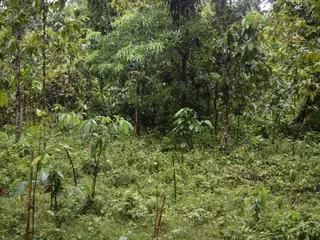
Assisted Natural Regeneration [Bangladesh]
Assisted natural regeneration (ANR) is a simple, low-cost forest restoration method that can effectively convert deforested lands to more productive forests.
- Compiler:
- Fazlay Arafat
- First published:
- 2020-04-22 14:22
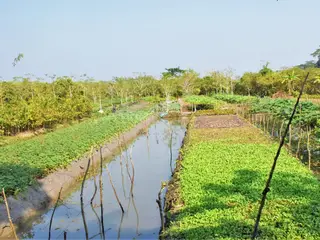
Dyke and Ditch multi-cropping system [Bangladesh]
Landform changes to dyke and ditch to introduce multiple crops.
- Compiler:
- Fazlay Arafat
- First published:
- 2020-04-21 11:18
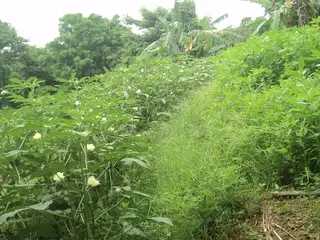
Minimizing soil erosion through Natural Vegetative Strip (NVS) practice in slope cultivation [Bangladesh]
Natural Vegetative Strips (NVS) are narrow strips of naturally growing grasses and herbs intentionally left unploughed along the contours of slope land to serve as buffers that prevent soil erosion during heavy rains.
- Compiler:
- Fazlay Arafat
- First published:
- 2020-04-16 12:47
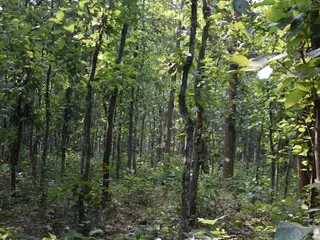
Coppice management of Sal (Shorea robusta) forest [Bangladesh]
The coppice management of Sal (Shorea robusta) tree is a forest management practice to regain the natural forest resources in central and northern parts of Bangladesh.
- Compiler:
- Fazlay Arafat
- First published:
- 2020-04-15 17:53

Creating green shelter-belt through Jhau (Casuarina equisetifolia) plantation in coastal area [Bangladesh]
Creation of green shelter-belt along the coast line through plantation of Jhau (Casuarina equisetifolia) to reduce vulnerabilities and hazards of extreme weather events like cyclones.
- Compiler:
- Fazlay Arafat
- First published:
- 2020-04-09 15:14
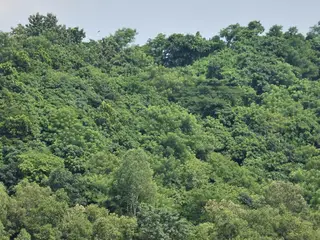
Mixed plantation with slow growing indigenous species to protect land degradation [Bangladesh]
Mixed plantation technique with slow growing indigenous plant species in hill slope, that plays an important role to protect land degradation.
- Compiler:
- Fazlay Arafat
- First published:
- 2020-04-07 14:20
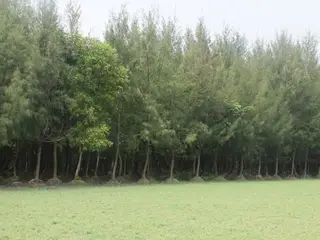
Mound plantation in coastal area with non-mangrove plant species for land stabilization [Bangladesh]
Mound plantation with non-mangrove species to transform mono-culture plantations subsequently into more ecologically resilient, mixed species plantations and as well as to accelerate natural processes of accretion and land stabilization in coastal areas.
- Compiler:
- Fazlay Arafat
- First published:
- 2020-04-06 11:19