Sorting by "Updated at"
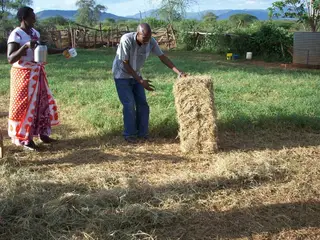
Soil and water conservation through pasture regeneration and hay production [Kenya]
In this new technology the Maasai people set aside some acres of land, fence it and plant grass where the land is bear or allow natural standing grass to germinate then harvest it and store as hay for future use. This also helps in preventing soil erosion and surface run off.
- Compiler:
- SAIKO JOYCE
- First published:
- 2018-05-22 06:32
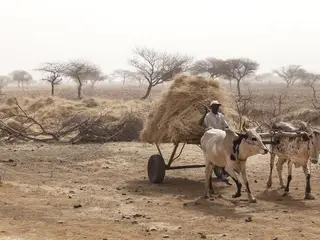
Community participation in large-scale land restoration for Africa’s Great Green Wall programme [Niger]
The Food and Agriculture Organization of the United Nations (FAO) has been using a participatory approach to implement large-scale restoration of degraded land in the Sahel. Communities have been central to the programme. In the framework of the Great Green Wall initiative, adapted and useful native tree species, shrubs, and fodder grasses are planted in agro-sylvo-pastoral land. This is response to community needs and preferences while ensuring that the species and varieties are all ecologically suitable.
- Compiler:
- Vivian Onyango
- First published:
- 2018-04-24 10:17
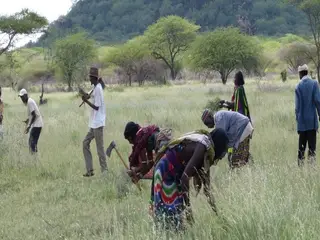
Pastoralist field schools [Ethiopia]
Pastoralist field schools improve livelihoods and resilience of pastoral communities through a process of hands-on experimental and participatory learning. They are "schools without walls" that introduce good agricultural and marketing practices while building on local knowledge. The PFS approach builds heavily on the basic principles of discovery based learning to address a wide range of issues affecting pastoral livelihoods.
- Compiler:
- Giacomo de' Besi
- First published:
- 2018-03-15 17:42
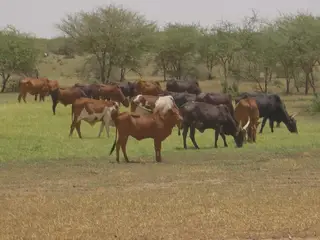
Assisted Natural Regeneration on agro-pastoral, sylvo-pastoral and pastoral land [Niger]
Assisted Natural Regeneration (ANR) in pastoral zones is a simple and low-cost agroforestry technique. It involves locating and preserving shoots from stumps of woody and herbaceous vegetation on communal land used for agro-pastoralism, sylvo-pastoralism or pastoralism. The aim is to accelerate the process of natural regeneration resulting from natural seedlings or from sprouting stumps inherently present in the area.
- Compiler:
- Soumaila Abdoulaye
- First published:
- 2018-03-11 13:50
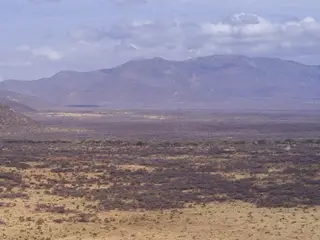
Holistic Rangeland Management combined with high end tourism [Kenya]
The establishment of a community wildlife conservancy facilitates (1) 'holistic rangeland management' refering to a to the implementation of a suite of management practices aimed at sustaining and/or improving rangeland productivity such as 'bunched grazing' (livestock concentrated for short duration intensive grazing), short-term 'bomas' (livestock corrals occupied for ~7 days), clearing invasive species and reseeding with grass to assist land rehabilitation/restoration; and (2) High end tourism and monetary donations facilitated by the Northern Rangelands Trust provide funding for the implementation of improved grazing practices and additional income for the community and the reduction of livestock grazing pressure.
- Compiler:
- Harry Wells
- First published:
- 2018-05-21 20:46

Restoration of game migration routes across the Namib Desert [Namibia]
Seventeen former sheep farms have been joined to form the world’s largest private nature reserve aimed at regenerating biodiversity to support high-quality low-impact tourism, environmental education and research. All farm owners are members of the management association.
- Compiler:
- Ibo Zimmermann
- First published:
- 2018-02-05 11:32
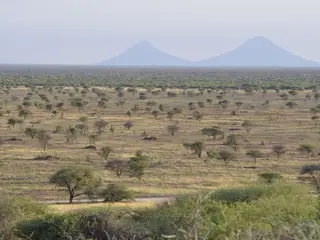
Bush Control and Biomass Utilisation [Namibia]
Public and private stakeholders in Namibia are cooperating in the national Bush Control and Biomass Utilisation programme. There are three components: (1) Creation of an enabling framework, (2) Advisory Services and (3) Value Chain Development.
- Compiler:
- Johannes Laufs
- First published:
- 2018-02-05 11:34
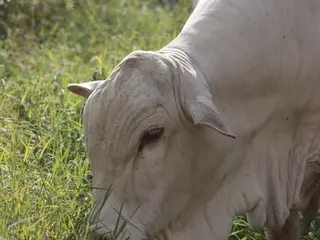
Mugie Resource Sharing and Livestock to Markets Program [Kenya]
Selected livestock are bought from the communities, then fattened and marketed by the Mugie conservancy management on a ‘resource sharing’ basis – generating income for both the conservancy and the community. This encourages the development of local value chains and market-based incentives for better rangeland management and animal husbandry outside the conservancy area. Breeding, agricultural shows and on-going education in sustainable rangeland management provide support for the longer-term.
- Compiler:
- Peter Tyrrell
- First published:
- 2018-05-19 18:09
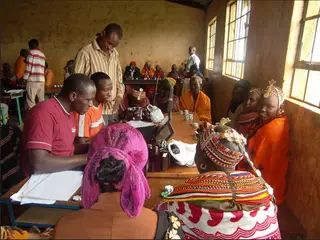
Kenya Livestock Insurance Program (KLIP) [Kenya]
Government of Kenya (GoK) is implementing the Kenya Livestock Insurance Program (KLIP). KLIP is a GoK funded drought insurance program for vulnerable pastoralists located in the Arid and Semi-Arid Lands (ASALs) of Kenya. KLIP’s overall objective is to reduce the risk of livestock mortality emanating from drought. This is intended to help to build resilience of vulnerable pastoralists for enhanced and sustainable food security.
- Compiler:
- Duncan Collins Khalai
- First published:
- 2018-02-05 11:21
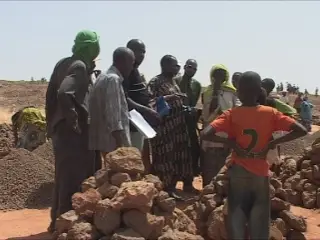
‘Travail contre argent’ de la Cellule Crises Alimentaires/Cabinet du Premier Ministre [Niger]
L'approche 'Travail contre argent' de la Cellule Crises Alimentaires/Cabinet du Premier Ministre est une approche communautaire et participative de réalisation de mesures anti-érosives (technologies de CES/DRS - Conservation des Eaux et des Sols/Défense et Restauration des Sols - ou de gestion durable des terres) à travers des travaux HIMO (Haute Intensité de Main d'Œuvre) rémunérés en faveur des couches sociales vulnérables en insécurité alimentaire.
- Compiler:
- Soumaila Abdoulaye
- First published:
- 2018-03-11 14:33
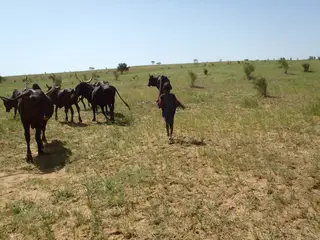
Pastoralism in Niger: monitoring system for movements and spatial adaptation strategies of transhumant livestock keepers [Niger]
This approach, traditional in nature and supported by the National Mechanism for the Prevention and Management of Disasters and Food Crises (DNPGCCA), consists of a Geographical Information System, which integrates the water resources, the movement of populations, and the spatial distribution of grazing land, also in terms of the quantities of forage resources. The objective of the approach is to provide a tool to support the management of pastoralism and the identification, tracking and prevention of potential food crises.
- Compiler:
- Soumaila Abdoulaye
- First published:
- 2018-03-11 14:31
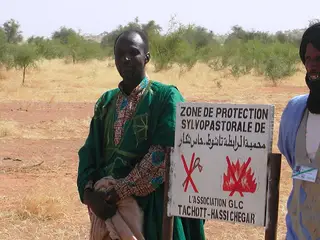
Gestion locale collective des ressources naturelles [Mauritania]
Un transfert de responsabilité de gestion des ressources sylvo-pastorales de l'Etat aux associations des usagers. L'élaboration concertée d'une convention locale définissant les règles de gestion, notamment les conditions d'accès, d'utilisation et de contrôle des ressources partagées dans l'espace retenue. La mise en œuvre de la convention par un système de surveillance et des aménagements physiques utiles à la protection et à la régénération des ressources naturelles.
- Compiler:
- Karl-Peter KIRSCH-JUNG
- First published:
- 2018-03-11 14:29
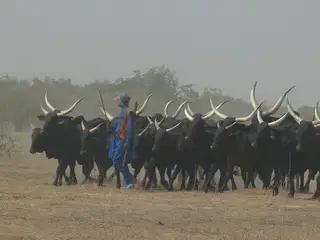
Management of transboundary transhumance [Niger]
Management of transboundary transhumance in order to create the conditions for conflict-free access to resources for livestock keeping in Niger and northern Benin.
- Compiler:
- Issaka DAN DANO
- First published:
- 2018-02-05 11:56
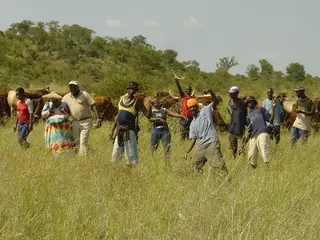
Community grazing management [Namibia]
Agreement among community members to jointly manage their communal grazing area by combining their livestock into a single herd. The herd is managed and moved according to an agreed growing season plan that provides sufficient recovery for perennial grasses, and a non-growing season plan to graze in a way that prepares soil and plants for the next season. Regenerating rangeland productivity and well-being is the goal.
- Compiler:
- Ibo Zimmermann
- First published:
- 2018-02-05 11:29
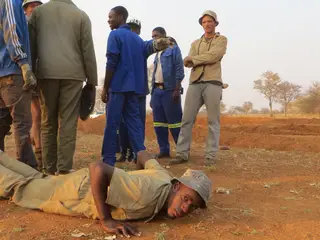
Arrangements to convert degraded rangeland into fruitful landscape [Namibia]
Making arrangements between a commercial farmer and agriculture students to raise the productivity of rangeland - through managing runoff to grow multipurpose trees and bushes.
- Compiler:
- Ibo Zimmermann
- First published:
- 2018-02-05 11:31
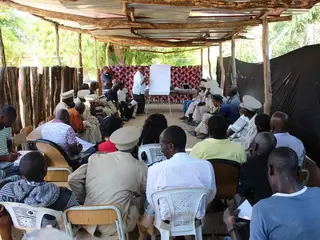
Restoration of traditional pastoral management forums [Angola]
The transhumance pastoral communities of Southern Angola traditionally held gatherings of chieftains and community leaders to discuss management of commonly held pastoral resources. However, the conflicts of the last century led to the breakdown in traditional governance and the majority of the traditional management systems were abandoned. The RETESA Project has supported their recovery as a way to reduce land degradation and improve local livelihoods.
- Compiler:
- Nicholas Euan Sharpe
- First published:
- 2018-02-05 11:15
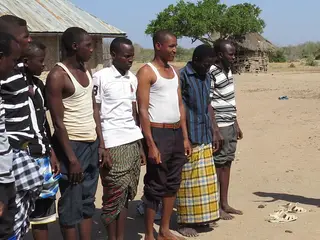
Stabilization Through Conservation ('StabilCon') approach [Kenya]
The 'StabilCon' approach is a non-aggressive, low-intensity stabilization model that seeks to reconcile the needs of both humans and their natural environment. To achieve this, StabilCon aims to co-develop two mutually beneficial elements: sustainable natural resource management and human security in rural areas.
- Compiler:
- Harry Wells
- First published:
- 2018-05-22 07:56
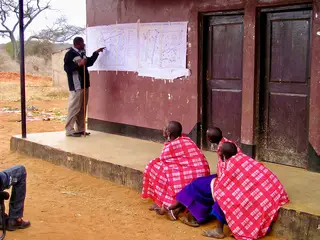
Joint village land use planning [Tanzania]
Joint village land use planning is a process facilitated by Tanzania's land policy and legislation. It supports the planning, protection and management of shared resources across village boundaries. It is an important tool towards land use planning and better rangeland management. This case study provides an example from a cluster of villages in Kiteto District, Tanzania.
- Compiler:
- Fiona Flintan
- First published:
- 2018-02-26 10:55
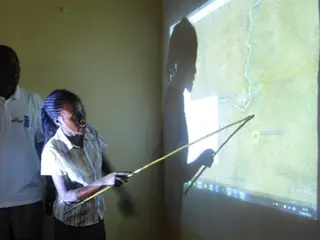
Participatory mapping, database building, and monitoring of rangeland resources [Kenya]
Participatory mapping and monitoring of vegetation types and other natural resources in the rangelands. This involves convening stakeholder groups, reviewing conditions of rangeland, water and other resources under changing climatic conditions.
- Compiler:
- IBRAHIM JARSO
- First published:
- 2018-05-13 17:44
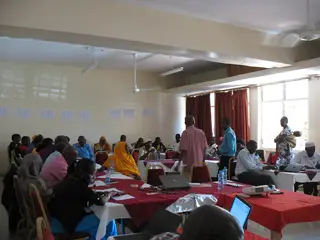
Inclusive strategic planning for water, energy and climate change in the rangelands [Kenya]
Inclusive strategic planning for water, energy and climate change in the rangelands at county, sub-county, ward and location levels. This involves convening stakeholder groups and reviewing databases to prepare for future needs for rangeland, water and other resources under changing climatic conditions.
- Compiler:
- IBRAHIM JARSO
- First published:
- 2018-05-13 16:47
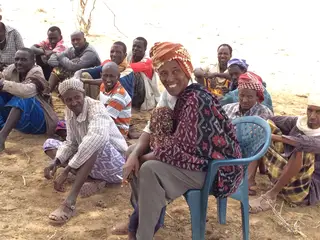
Empowering Dedha institutions in governing the natural resources of Isiolo rangelands [Kenya]
This approach – driven by communities and supported by various agencies - aims to revive and strengthen the traditional natural resource management institutions of Boran pastoralists in Northern Kenya. The traditional system, which was devised by the Boran pastoral community and honed over centuries to suit the challenges of the rangelands, has been steadily eroded by external factors and formalised systems after the emergence of the nation-state.
- Compiler:
- IBRAHIM JARSO
- First published:
- 2018-05-13 18:11
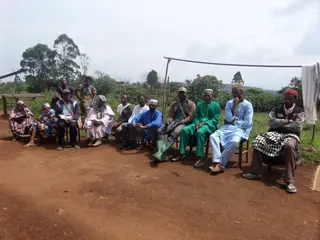
Promoting farmers and pastoralists consultations in managing rangelands. [Cameroon]
Dialogue platforms bring together rangeland users including farmers, pastoralists/agro pastoralists to learn, discuss and implement low stake conflict mitigation strategies and mutually beneficial alliances.
- Compiler:
- Blasius Azuhnwi
- First published:
- 2018-02-05 11:18
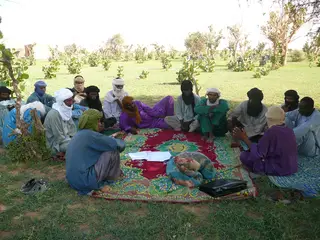
Champ Ecole Pastorale [Niger]
Le Champ Ecole (CE) Pastorale, une école «sans murs», est un cadre de rencontre et de formation pour un groupe de 20 à 30 éleveurs de la zone pastorale du Niger, qui se déroule sur une aire de pâturage communautaire, tout au long de l'année. C’est un lieu d’échange d’expériences et de connaissances où des producteurs éleveurs qui partagent les mêmes intérêts, recherchent, discutent et prennent des décisions sur la gestion des troupeaux et des ressources naturelles en partant de leur situation réelle.
- Compiler:
- Soumaila Abdoulaye
- First published:
- 2018-03-11 20:57
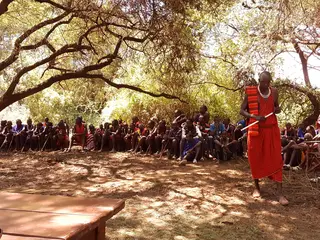
Community-based rangeland management in the southern Kenyan rangelands [Kenya]
Olkiramatian Group Ranch strengthened the capacity of its community governance structures and began to engage in more rigorous implementation of seasonal grazing plans. This was based on traditional ecological knowledge and rangeland management practices. The group ranch incorporated conservation, research, and joint rangeland management planning with neighboring communities.
- Compiler:
- Lance W. Robinson
- First published:
- 2018-03-13 16:50
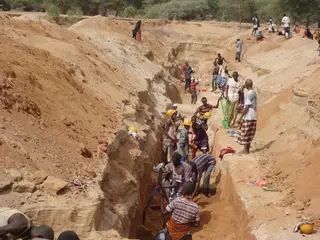
Sub-Surface Dams (SSD) [Kenya]
These are constructions stretching across the sand filled dry riverbed, down towards the impermeable floor of the riverbed. They are totally submerged into the ground. For example by fully covering after construction by sand. This are done along dry rivers with huge sand deposits, which has high yield potential and where water can be easily extracted. The aim is to raise groundwater tables and increase the storage capacity for water withdrawals.
- Compiler:
- Guyo Roba
- First published:
- 2018-05-22 07:41
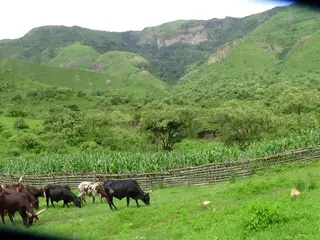
Alliance Farming [Cameroon]
Alliance farming refers to collaboration between crop farmers and pastoralists, who agree to use the same land and related resources (crop residues as fodder for pastoralists; dung as fertilizer for crop farmers) for their mutual benefit.
- Compiler:
- Blasius Azuhnwi
- First published:
- 2018-02-05 11:17
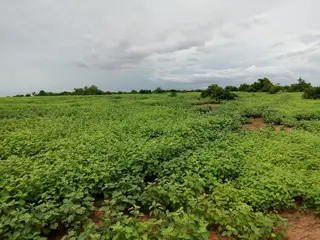
Restoration of grazing land invaded by Sida cordifolia [Niger]
Restoration of grazing land invaded by Sida cordifolia through the seeding of Hibiscus sabdariffa, for sustainable access to grazing areas and for reduced conflicts between farmers and livestock keepers.
- Compiler:
- Issaka DAN DANO
- First published:
- 2018-02-05 11:55
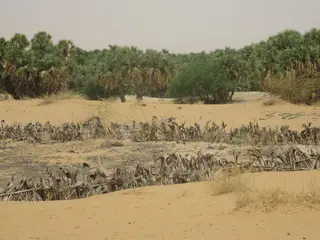
Fixation des dunes sur des terres communautaires sylvo-pastorales (cuvettes oasiennes) des départements de Gouré et de Maïné-Soroa [Niger]
La lutte contre l'ensablement des cuvettes oasiennes dans les départements de Gouré et de Maïné-Soroa est réalisée à travers deux techniques de fixation des dunes: (i) la fixation mécanique ou primaire (palissades inertes, fascines) qui stabilise les masses sableuses en mouvement ou empêche la formation de ces masses sableuses sur des obstacles (infrastructures, boisements, bordures de cuvettes), et (ii) la fixation biologique ou définitive qui consiste à créer une couverture végétale permanente sur la dune.
- Compiler:
- Soumaila Abdoulaye
- First published:
- 2018-03-11 20:58
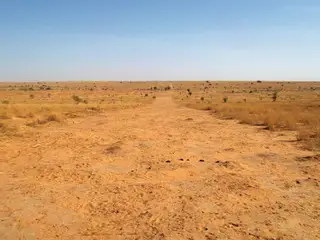
Firebreaks [Niger]
Firebreaks are strips from which dry vegetation – straw - is removed in order to stop the progression of fire into the large areas of grazing land. They are of paramount importance for protecting and securing available grazing.
- Compiler:
- Soumaila Abdoulaye
- First published:
- 2018-03-13 11:46
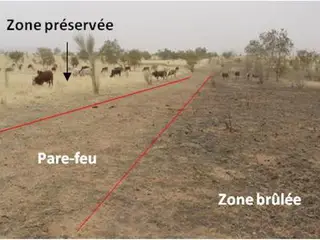
Ouverture manuelle de pare-feux [Mauritania]
Chantiers annuels de l'aménagement de pare-feux manuels s'appuyant sur la mobilisation de la main d'oeuvre locale pour désherber les troncons retenus dans un schéma de pare-feux avec le « chariot pare‐feux » (herse) ou avec des branchages tirés par traction animale ou mécanique (voiture) et à l'aide de houes et des rateaux .
- Compiler:
- Karl-Peter KIRSCH-JUNG
- First published:
- 2018-03-11 14:26
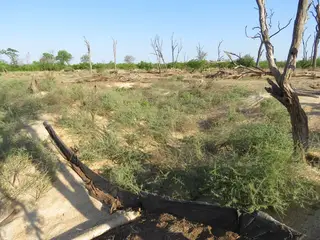
Reshaping of gully erosion through integration of silt fences, erosion blankets and brush packing [South Africa]
The rehabilitation of active gully erosion by re-sloping the banks of the gully in an effort to manage the energy of the water entering the system. Bare soil is protected from erosion by covering it with erosion blankets, brush packing and the establishment of silt fences.
- Compiler:
- Dirk Pretorius
- First published:
- 2018-02-05 12:11
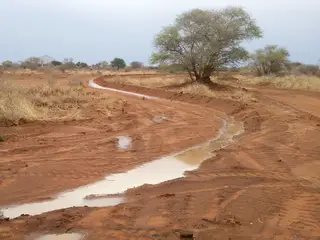
Infiltration ditches and ponding banks [Namibia]
Construction of contour ditches and ponding banks/ bunds to trap rainwater for infiltration. Improved growth of plants and replenishment of groundwater is promoted, while safely discharging excess water to avoid erosion. Integrated with other technologies that treat the root causes of rangeland degradation - rather than a stand-alone technology.
- Compiler:
- Ibo Zimmermann
- First published:
- 2018-02-05 11:30
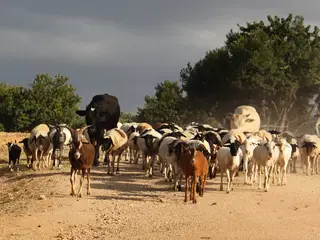
Il Ngwesi Group Ranch Grazing with Holistic Management Principles [Kenya]
A group ranch belonging to the Masai (traditionally, nomad pastoralists) has applied "Holistic Management" grazing principles. The principles consist of separate, planned grazing in villages during the rains, then “bunching” and moving of all animals in herds during the dry season. Denuded land is recovered by a "Boma” technology: i.e. strategic corralling of animals overnight, and reseeding.
- Compiler:
- Michael Herger
- First published:
- 2018-02-05 11:26
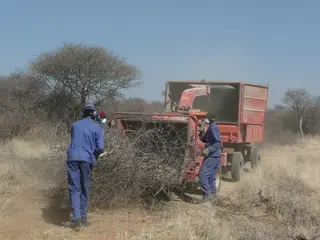
Bush Thinning and Biomass Processing by Manual or Mechanised Means [Namibia]
In Namibia, excess bush is harvested to reduce competition with other plants, especially grasses. Bush can be thinned manually (e.g. with axes), semi-mechanised (e.g. chainsaws) or fully mechanised (e.g. customised equipment). After cutting, the bush is left to dry and then processed into chips or other products.
- Compiler:
- Johannes Laufs
- First published:
- 2018-02-05 11:33
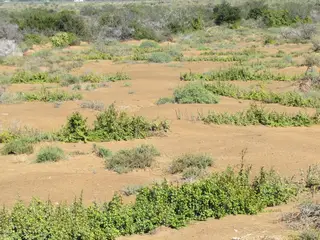
Spekboom (Portulacaria afra) planting within riplines for thicket biome restoration [South Africa]
The restoration of the thicket biome in the Eastern Cape is assisted by planting ‘spekboom’ (elephant bush) (Portulacaria afra), an indigenous succulent plant within contour lines/riplines on degraded hillslopes. The increased vegetation cover reduces runoff and soil loss.
- Compiler:
- Dirk Pretorius
- First published:
- 2018-05-19 16:55
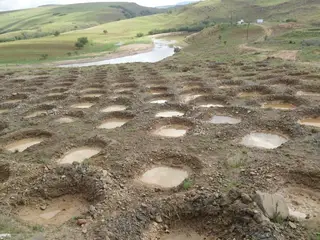
Pitting to restore degraded catchment of Mount Fletcher Dam [South Africa]
To improve infiltration and vegetation cover, by creating small pits on bare soil, which capture runoff and reduce erosion.
- Compiler:
- Dirk Pretorius
- First published:
- 2018-03-21 11:36
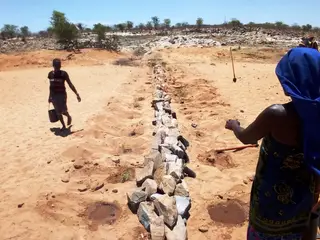
Community supported pasture and rangeland rehabilitation works [Angola]
Rehabilitation of rangelands involves selection of key pasture and fodder species, and their reintroduction into strategic areas through stakeholder participation. The technology is also supported by communal management plans, which were created to address the root causes of land degradation.
- Compiler:
- Nicholas Euan Sharpe
- First published:
- 2018-02-05 11:13
Rangeland Restoration by cutting invasive species and grass reseeding and managing grazing [Kenya]
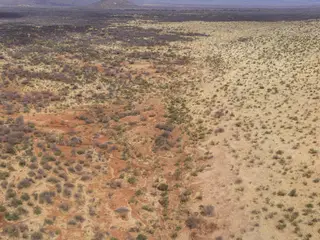
This 'Rangeland Restoration' technology is part of a 'Holistic Rangeland Management' approach. It involves clearing of invasive vegetation (predominantly Acacia reficiens) and reseeding with grass (Cenchrus ciliaris) and allowing resting and reduced grazing pressure to rehabilitate degraded communal grazing land.
- Compiler:
- Harry Wells
- First published:
- 2018-05-22 07:57
Split Ranch Grazing Strategy [Botswana]
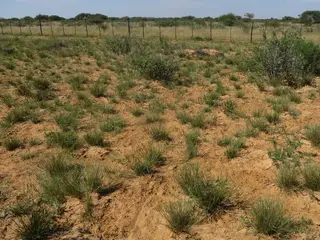
Split Ranch Grazing involves grazing half the available area for a full year - concentrating livestock. The consequent grazing pressure maintains the grassland in an immature, high-quality state, while resting the other half, allowing optimal recovery from the previous full years grazing. The technology is simple, requiring less fencing than more complex systems, without compromising sustainability or ecological function. These concepts can also be used for management in pastoral-wildlife systems to create habitat heterogeneity (short and tall grassland).
- Compiler:
- Richard Fynn
- First published:
- 2018-02-05 11:16
Combined herding for planned grazing [Namibia]
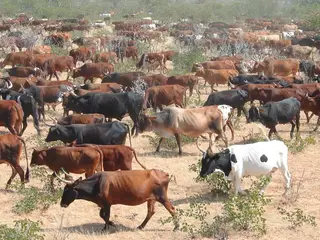
Daily combining of livestock from all households into a single herd to be driven to different designated portions of the communal grazing area. Grass can then recover by replenishing its reserves before being re-grazed some months later.
- Compiler:
- Ibo Zimmermann
- First published:
- 2018-02-05 11:29