Sorting by "Updated at"
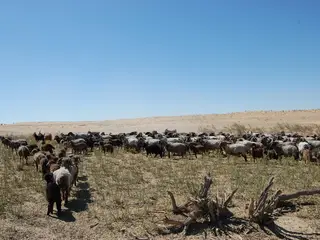
Pasture rotation in the desert areas of Uzbekistan (CACILM) [Uzbekistan]
Improvement of a livestock grazing scheme ensuring the restoration of pasture vegetation and observance of appropriate pasture loading.
- Compiler:
- Rustam Ibragimov
- First published:
- 2017-01-04 10:52
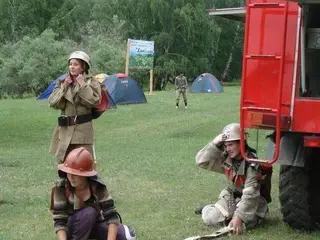
Establishment of educational ranger stations to involve youth in nature protection activity [Kazakhstan]
Establishment and activity of educational ranger stations on the basis of forestry units and secondary schools to involve youth in nature protection activity to conserve, restore and study unique natural features of the Kazakh Altai (in the frame of CACILM).
- Compiler:
- Azhar Yeszhanova
- First published:
- 2017-08-03 16:28
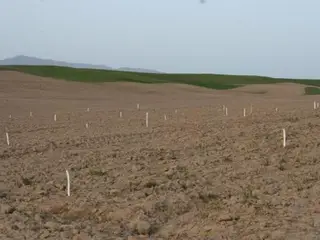
Improvement of land under arid conditions through the creation of pistachio plantations (CACILM) [Uzbekistan]
This technology is aimed at the creation of pistachio plantations on gentle slopes to improve the land’s productivity and to rehabilitate the arid land in the hill zone.
- Compiler:
- Rustam Ibragimov
- First published:
- 2016-12-28 10:53
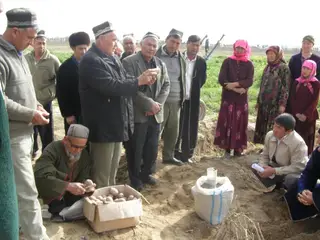
Central Asian Countries Initiative for Sustainable Land Management (CACILM) [Tajikistan]
Farmer Field Schools (FFS) are held to fill farmer's gaps in knowledge on the use of sustainable agricultural technologies, efficient irrigation water use and prevention of land degradation using trials tailored to local conditions.
- Compiler:
- Firdavs Faizulloev
- First published:
- 2017-07-06 10:51
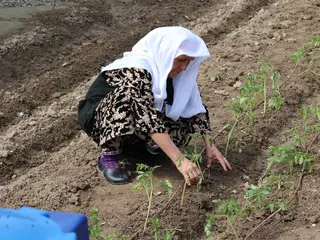
Drip irrigation for kitchen gardens in dry areas [Tajikistan]
Promotion of low-pressure drip irrigation kits among vulnerable women-led households in dry agrolandscapes of Southern Tajikistan has helped to fight desertification, improve food security and enhance economic opportunities.
- Compiler:
- Daler Domullodzhanov
- First published:
- 2022-02-14 09:32
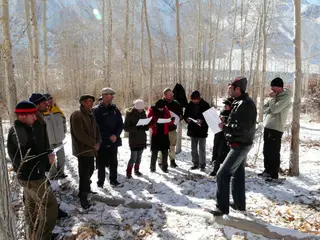
Joint Forest Management (JFM) [Tajikistan]
Protection and rehabilitation of state forests based on joint long term agreements set up between the State Forestry Agency, and local forest users (in the frame of CACILM).
- Compiler:
- Roziya Kirgizbekova
- First published:
- 2017-07-06 11:18
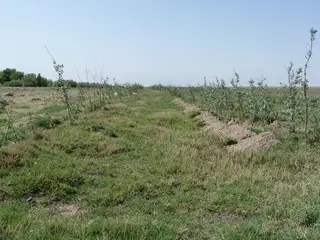
Shelterbelts with Russian Silverberry for the protection of irrigated fields [Tajikistan]
Shelterbelts are used to protect irrigated land from deposition of sand and to reduce wind speed
- Compiler:
- Firdavs Faizulloev
- First published:
- 2017-01-04 13:51
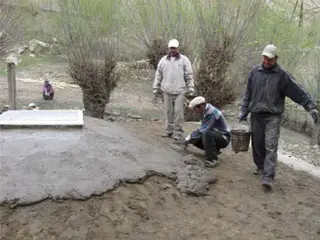
Reduced pressure on forest resources by improved thermal insulation in private houses [Tajikistan]
Thermal insulation of private houses with energy efficient products to reduce the fuel-wood demand and pressures on the natural environment.
- Compiler:
- Roziya Kirgizbekova
- First published:
- 2017-01-04 11:51
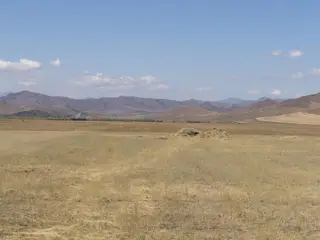
Creation of a perennial grass seed area (CACILM) [Kazakhstan]
Improvement of pastures through planting perennial legumes, cereals and grasses and creating seed banks.
- Compiler:
- Konstantin Pachikin
- First published:
- 2016-12-28 09:25
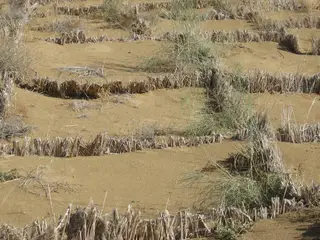
Stabilization and afforestation of sand dunes around settlements in the Karakum Desert (CACILM) [Turkmenistan]
The stabilization of shifting sands by installing means of mechanical protection and planting shrubs around settlements in the Central Karakum
- Compiler:
- Nikolay Zverev
- First published:
- 2017-06-06 10:52
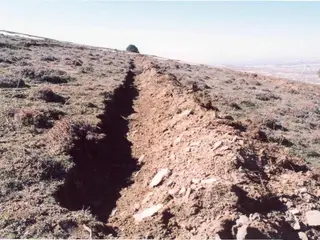
Planting forest on mountain slopes using moisture accumulating trenches (CACILM) [Turkmenistan]
Collecting rainwater in artificial trenches on hill and mountain slopes for the accumulation of water in the soil around the roots of trees planted in the trenches
- Compiler:
- Nikolay Zverev
- First published:
- 2017-06-06 14:29
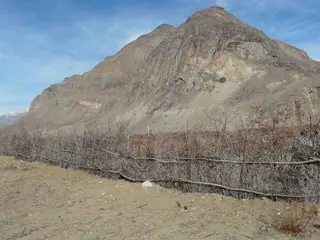
Establishment of living seabuckthorn fences for the protection of reforestation sites (CACILM) [Tajikistan]
Protection of reforestation sites (willow, poplar and fruit trees) through living seabuckthorn perimeter fencing on Joint Forestry Management plots.
- Compiler:
- Roziya Kirgizbekova
- First published:
- 2016-12-27 16:47
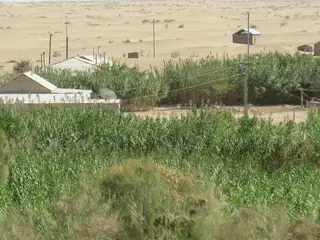
Growing Arundo reeds (Arundo donax L.) to create buffer zones around households (CACILM) [Turkmenistan]
Farming techniques for growing arundo reeds in order to protect households from wind and dust and other economic purposes.
- Compiler:
- Nikolay Zverev
- First published:
- 2017-06-06 11:53
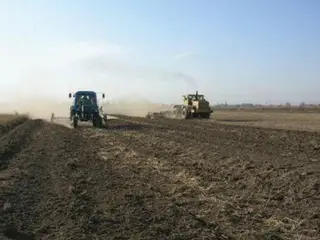
Growing cereals by using minimum tillage (CACILM) [Kyrgyzstan]
A minimum tillage depth of 10-12 cm by a tractor with a ploughshare creates a friable soil layer, facilitates preservation of productive moisture until the agricultural crops’ sowing, as well as eliminates the extreme soil compaction owing to the operation of heavy machinery and tractors.
- Compiler:
- Abdybek Asanaliev
- First published:
- 2016-12-28 12:01
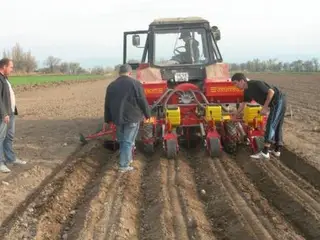
The ridge sowing technology (CACILM) [Kyrgyzstan]
The ridge sowing technology utilizes a special seeder, which is operated with special machinery and at the same time cuts the irrigation furrows and sows crops’ seeds on ridges. This method is primarily improved irrigation water use efficiency, reduced water erosion and more importantly lowers the expenses on irrigation water by 30%.
- Compiler:
- Abdybek Asanaliev
- First published:
- 2016-12-28 11:43
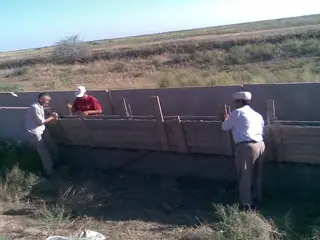
Off-season irrigation of fields and pastures as a mechanism for pasture improvement under climate change conditions in Southern Kazakhstan (CACILM) [Kazakhstan]
Early irrigation of fields and pastures to retain soil mоisture during the dry season in Southern Kazakhstan (in the frame of CACILM).
- Compiler:
- Azhar Yeszhanova
- First published:
- 2017-05-26 14:48
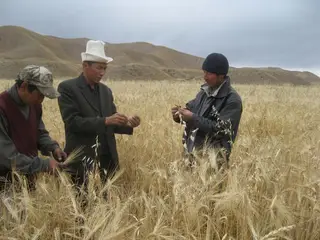
Stimulating the production of winter fodder through micro-crediting [Kyrgyzstan]
Establishing of micro-crediting agencies to support the sustainable production of winter fodder as a system of organizational, economic and technological measures (in the frame of CACILM).
- Compiler:
- Azamat Isakov
- First published:
- 2017-08-07 20:42
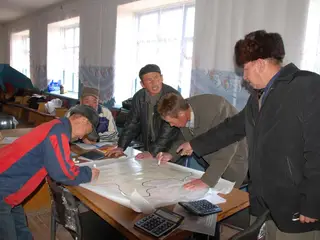
Mapping as a tool for the development of pasture use plans (in the frame of CACILM) [Kyrgyzstan]
Mapping (development of pasture area maps) for the use of pastures with the participation of all stakeholders, as a basis for a balanced distribution of cattle depending on the capacity and seasonality of the pastures (in the frame of CACIM).
- Compiler:
- Azamat Isakov
- First published:
- 2017-08-07 18:51
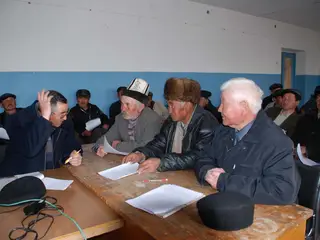
Budget for Pasture Management [Kyrgyzstan]
The budget for pasture management constitutes a necessary amount of funds for the implementation of pasture management activities planned for the year. These activities include the seasonal monitoring of pasture areas, the development of the grazing plan and monitoring of its implementation, activities to restore pasture infrastructure, measures to improve pasture condition, and the maintenance of the Pasture Committee. The means of income for the budget for pasture management are payments made for the use of pastures (in the frame of CACILM).
- Compiler:
- Azamat Isakov
- First published:
- 2017-08-07 18:36
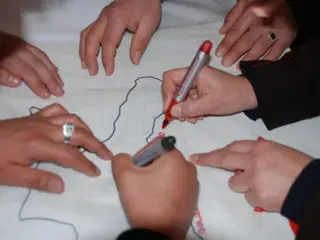
Joint pasture management [Kyrgyzstan]
The aim of this approach is the joint management of pastures t by considering opinions of pasture users with the view of prevention and mitigation of pasture degradation and an improvement in the living conditions of local communities (in the frame of CACILM).
- Compiler:
- Azamat Isakov
- First published:
- 2017-08-07 17:52
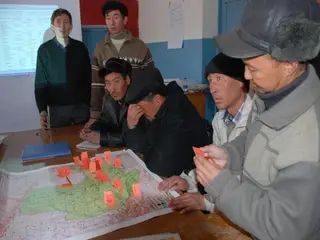
Joint pasture use planning [Kyrgyzstan]
The joint pasture use planning is the involvement of all stakeholders in the process of a balanced distribution of livestock, according to pasture capacities and seasonality of their use (in the frame of CACILM).
- Compiler:
- Azamat Isakov
- First published:
- 2017-08-07 17:11
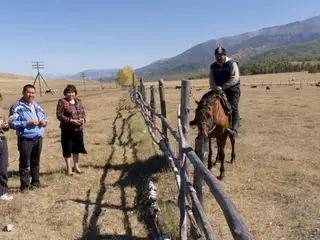
Rangeland management through the restoration of distant stock-breeding systems and the drastic improvement of rangelands [Kazakhstan]
The restoration of degraded rangelands and the improvement of their productivity through the organization of distant stock-breeding and the introduction of pasture rotation (in the frame of CACILM).
- Compiler:
- Konstantin Pachikin
- First published:
- 2017-08-03 15:44
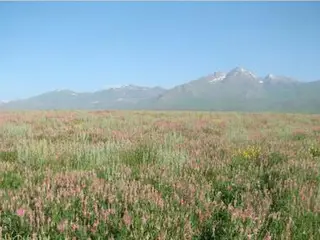
Cultivation of sainfoin on high mountain pastures – Suusamyr Valley (in the frame of CACILM) [Kyrgyzstan]
Conservation of soil fertility through the cultivation of sainfoin (perennial legume plants)
- Compiler:
- Abdybek Asanaliev
- First published:
- 2016-12-27 11:16