Sorting by "Updated at"
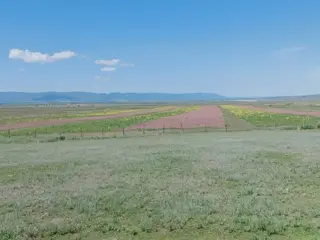
Fundamental Improvement of Low-Productivity Pastures through Strip Planting of Perennial Drought-Resistant Grasses in the Foothill Semi-Desert Zone of Southeastern Kazakhstan [Kazakhstan]
Radical improvement of low-yield pastures by strip placement of perennial drought-resistant grasses in the conditions of the foothill-semi-desert zone of south-eastern Kazakhstan
- Compiler:
- Kulyash Iskandarova
- First published:
- 2023-02-24 12:17
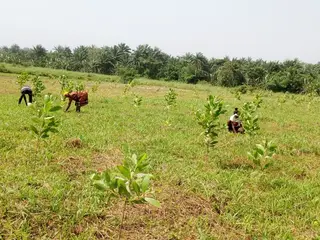
Drought-Resilient Agroforestry System [Nigeria]
This technology promotes gender-responsive sustainable land management in Origo Maje, Ogun State, through agroforestry, soil conservation, and climate-smart agriculture practices that empower women and men equally to enhance land productivity, restore degraded ecosystems, and improve livelihoods
- Compiler:
- Owolabi Adewumi
- First published:
- 2025-06-23 08:37
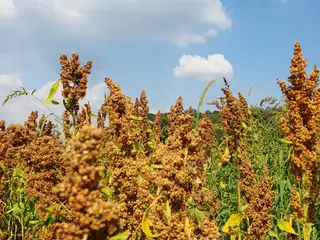
Drought-resistant crops [Switzerland]
In response to changing environmental conditions, it can be valuable to adopt new plant varieties that offer benefits such as drought tolerance. The technology described covers one such response in Switzerland.
- Compiler:
- Seraina Lerf
- First published:
- 2025-03-17 14:49
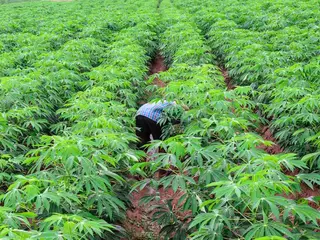
Production of Cassava - a Drought Tolerant Crop [Benin]
Production of cassava (Manihot esculenta) helps to address drought and improves food security.
- Compiler:
- Gatien AGBOKOUN CHRISTOPHE
- First published:
- 2023-08-07 15:20
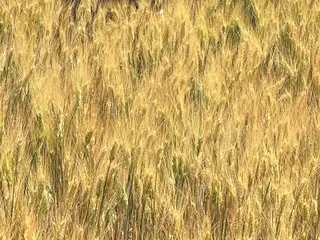
Drought tolerant durum wheat variety: Jawahir [Morocco]
Jawahir, an improved durum wheat variety, serves as a resilient solution to the challenges of climate change in dry areas by offering disease and pest resistance, drought tolerance, higher grain and straw yields, as well as cost savings, thereby enhancing farmers' income and sustainability.
- Compiler:
- Joren Verbist
- First published:
- 2023-09-21 16:28
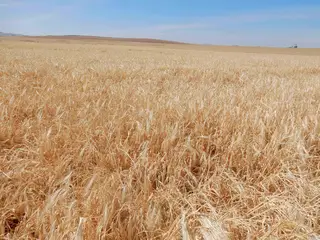
Drought tolerant barley variety: 'Kounouz' [Tunisia]
The introduction of 'Kounouz,' a drought-tolerant barley variety, has significantly enhanced farm income and reduced production risks for small-scale farmers in Tunisia.
- Compiler:
- Joren Verbist
- First published:
- 2023-10-24 13:47
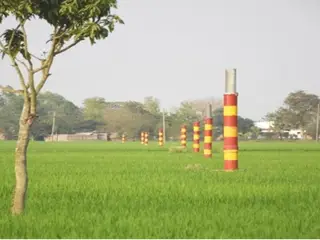
Halting seasonal drought in Barind through efficient water resource management [Bangladesh]
Introduction of sustainable water usage to prevent impacts of seasonal droughts in Barind region, Bangladesh
- Compiler:
- Jalal Uddin Md. Shoaib
- First published:
- 2021-12-20 12:34
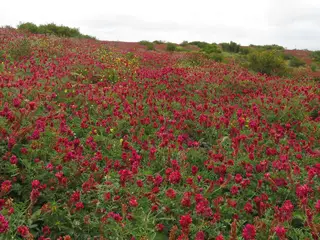
Native Drought-Tolerant Forage Species for Enhanced Dryland Pasture Restoration [Tunisia]
The technology utilizes a drought-tolerant native forage legume, Hedysarium coronarium, to restore degraded soils by covering the soil, fixing nitrogen, improving biodiversity and increasing water infiltration while fodder quality and availability is improved.
- Compiler:
- Joren Verbist
- First published:
- 2021-09-01 22:28
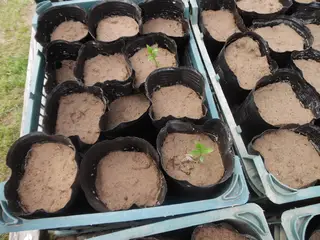
Production of drought-resistant fruit seedlings by women's groups. [Tajikistan]
Drought-resistant fruit seedlings are being produced by vulnerable, women-led households in backyard nurseries. These will be planted out in agroforestry plots within the dry agrolandscapes of Southern Tajikistan.
- Compiler:
- Daler Domullodzhanov
- First published:
- 2022-03-02 09:33
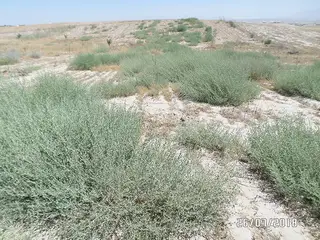
Drought-resistant crops to enhance forage production and prevent erosion in desert areas [Uzbekistan]
Desert fodder plants cultivation in rainfed conditions provides adaptation to drought, creates feed reserves for livestock and prevents the water erosion development
- Compiler:
- Rustam Ibragimov
- First published:
- 2018-09-11 09:22
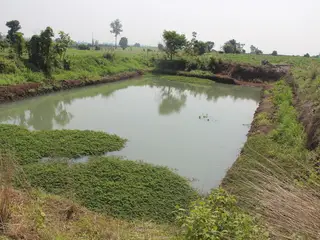
On-farm ponds to alleviate the potential impact of seasonal droughts and for increasing crop cultivation and aquaculture [Cambodia]
Digging ponds on farms to harvest rain water used for irrigating crops during drought provides a means for addressing a lack of water at the start of crop cultivation, both before the start of the rainy season and after the end of the rainy season. The main objective of this practice is to increase the duration of the potential growing seasons for crops. A pond with a storage capacity of 2,412 cubic meter of water can potentially irrigate crops year-round in an area of at least 1.6 hectares, including during the dry-season.
- Compiler:
- Nary Lay
- First published:
- 2018-01-23 11:52
UNCCD PRAIS
Practice
Ago-Horticultural Intervention in the Wasteland as a Part of Desertification, Land Degrdation and Drought| [India]
- Compiler:
- UNCCD PRAIS
- Creation:
- 2012-05-15 08:15
UNCCD PRAIS
Practice
Drought Proofing Perennially Drought Prone Villages [India]
- Compiler:
- UNCCD PRAIS
- Creation:
- 2010-06-28 11:23