Sorting by "Updated at"
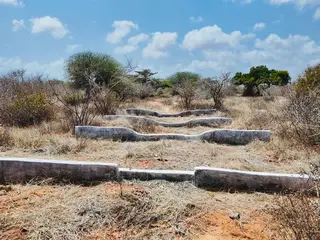
Soil and water conservation and pasture management through check dams and fencing [Somalia]
A soil and water conservation and pasture management technology implemented through area closure, fencing, and installation of check dams to control erosion and rehabilitate degraded rangelands.
- Compiler:
- salad ali
- First published:
- 2026-04-26 11:02
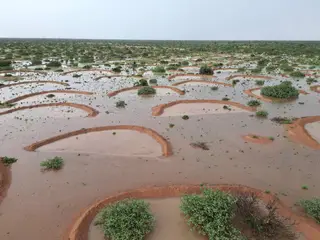
Soil and Water Conservation through Half-Moon Structures [Somalia]
The micro half-moon catchment (Bila Bilo) of Beyra is a soil and water conservation technology that harvests runoff, reduces erosion, and improves water infiltration in dryland areas. By capturing sediments and retaining soil moisture, it creates fertile micro-sites that support vegetation regeneration, land restoration, and climate change adaptation.
- Compiler:
- Faruq Dahir
- First published:
- 2026-04-26 11:02
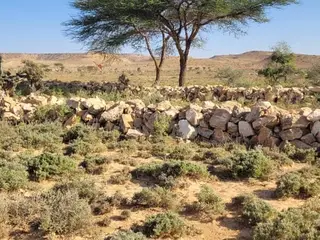
Rock Check Dam for Gully Erosion Control [Somalia]
Rock check dam is a small, low barrier built across gullies, or seasonal waterways to Reduce erosion, Increase water infiltration into the soil, etc Check dams are often used to restore degraded land, improve pasture, and support year-round grazing by helping water soak into the ground rather than washing soil away.
- Compiler:
- Nasteho Omar
- First published:
- 2026-04-26 11:02
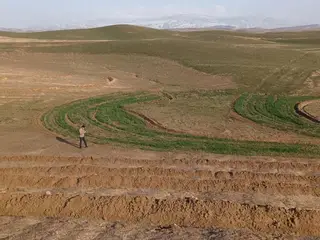
Contour trenches and contour strips [Uzbekistan]
Contour trenches for the cultivation of almond trees, and contour strips for cereals are types of rainwater harvesting structures. They are designed to capture runoff, reduce erosion, and enhance soil moisture—thereby improving land productivity and supporting climate-resilient agriculture in lowland dry areas.
- Compiler:
- Joren Verbist
- First published:
- 2025-07-09 17:31
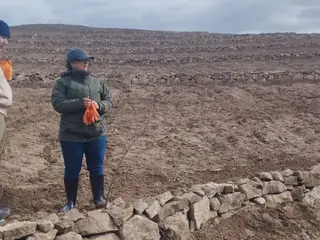
Gradoni Orchard Terraces [Uzbekistan]
Gradoni orchard terraces are intermittent strips of contour-based structures separated by catchments of about 10 metres. They are designed to capture and hold rainwater, reduce erosion, and improve conditions for the cultivation (in this case) of almond and pistachio trees, thereby enhancing land productivity and climate resilience in dryland areas.
- Compiler:
- Joren Verbist
- First published:
- 2025-07-09 17:31
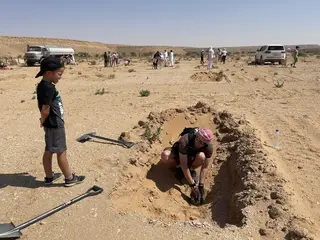
Tree Plantation Pits in Arid Zones [Saudi Arabia]
Tree plantation pits are water harvesting structures which capture rainfall runoff for trees and shrubs. They receive supplementary water until seedlings are well established. Species planted are indigenous, and provide both shade and honey.
- Compiler:
- Eric Lacroix
- First published:
- 2024-11-14 15:11
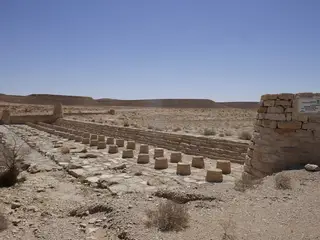
Cross-Wadi Water Harvesting Structures [Saudi Arabia]
Cross-wadi structures are built from local stone to slow the flow of runoff. These water harvesting walls reduce the severity of storm flow, causing sedimentation and a rise in the water table level. Productive trees can be planted as a result.
- Compiler:
- Abdalhaleem Hassaballa
- First published:
- 2026-04-23 08:17
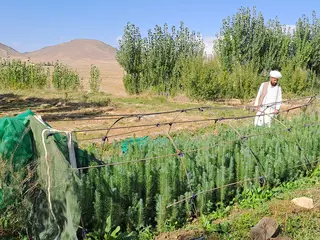
Restoration in the High Conservation Value Forests (HCVF) through community-led initiatives in Paktya [Afghanistan]
An integrated community-led initiative has been established to restore the degraded forests in Paktya province. This initiative focuses on setting up nurseries and incorporates both indigenous and scientific knowledge to cultivate climate-resilient species, such as Cedrus deodara and Pinus gerardiana. These efforts have enhanced the community’s knowledge and skills in sapling production and transplantation, leading to significant improvements in the productivity of these key species, which holds substantial ecological, social, cultural and economic values.
- Compiler:
- Mohammad Wazir Ahmadzai
- First published:
- 2025-03-17 08:45
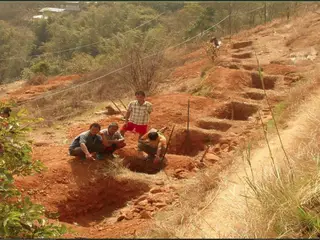
Springshed Revival through Trenches and Checkdams [Bhutan]
Springshed revival through trenches and check dams is associated with a nature-based solution approach to reviving more than 20 springsheds. These were widened with the occasional construction of check dams to prevent rill erosion from the newly revived spring waters.
- Compiler:
- Karma Wangdi
- First published:
- 2024-04-03 14:02
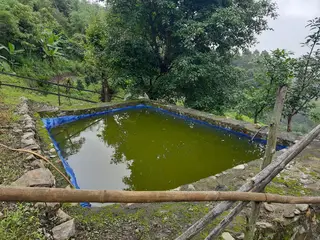
Low-Cost Plastic-Lined Water Harvesting Pond [Bhutan]
Low-cost plastic-lined water harvesting ponds collect and store rain and overland flow water for agricultural and domestic purposes in the dry season. They are both economic and efficient.
- Compiler:
- Nima Dolma Tamang
- First published:
- 2024-03-26 12:22

The Half-Moon Technique [Benin]
The half-moon technique is designed to enhance water retention and soil infiltration. This is achieved by constructing crescent-shaped mounds around the base of trees. A compass can be used to outline a semi-circle with a diameter of 4 meters. The soil within this outlined area is then excavated and used to form a ridge.
- Compiler:
- Gatien AGBOKOUN CHRISTOPHE
- First published:
- 2023-10-13 09:28
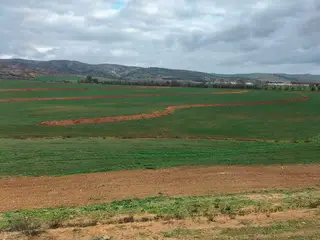
Mechanical Benches [Tunisia]
Mechanical bench terraces are a landscaping technique employed on sloping terrain. These are essentially mechanically constructed earthen levees or embankments established along contour lines.
- Compiler:
- Wafa Saidi
- First published:
- 2023-09-19 08:51
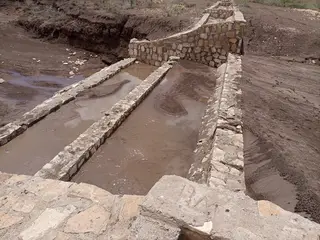
Double Basin Masonry Check Dam [Ethiopia]
A double basin masonry check dam is a physical structure that helps to stop gully formation or further development of gullies in dry valleys. It rehabilitates small to a medium-sized deep gullies that are eating into the heart of adjacent land.
- Compiler:
- GERBA LETA
- First published:
- 2023-04-27 18:22
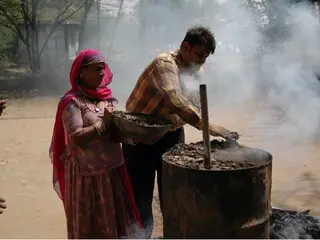
Sustainable Biochar Production Through Agroforestry Systems And Its Application [India]
Biochar is a carbon-rich, solid material derived from a wide range of biomass or organic waste through a thermochemical method. It is an organic charcoal material that is the final product of pyrolysis, or high-temperature burning of agricultural biomass without oxygen. Surplus crop residues, agricultural waste, and wood from sustainable sources are used as feedstock (raw material). Such biochar production is linked with agroforestry plantation and agriculture to improve soil health and ensuring sustainable feedstock availability.
- Compiler:
- Santosh Gupta
- First published:
- 2023-11-26 15:01

Individual Dry-Stone Basins [Tunisia]
Individual dry-stone basins are a traditional runoff water collection technique built in dry stone around the trunk of trees, mainly olive trees.
- Compiler:
- Wafa Saidi
- First published:
- 2023-09-19 08:50
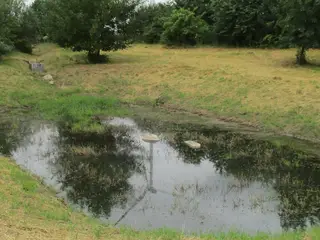
Detention ponds [Germany]
Detention ponds are artificially excavated basins that collect stormwater runoff and eroded sediment from the upstream catchment. The water stored in these ponds is slowly released into a water body or it infiltrates into the groundwater – or both. Their primary functions are flood control, erosion control and water quality improvement.
- Compiler:
- Felix Witing
- First published:
- 2023-11-03 09:57
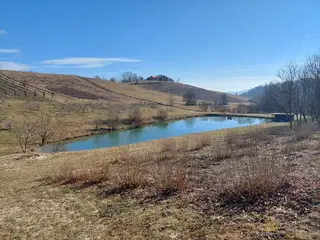
Retention ponds [Slovenia]
Retention ponds (e.g. flood storage reservoirs, shallow impoundments) are water bodies, storing water to attenuate surface runoff during rainfall events. They provide storage as well as improving water quality. Retention ponds may also be used for irrigation of farmland.
- Compiler:
- Gregor Kramberger
- First published:
- 2023-07-11 10:39
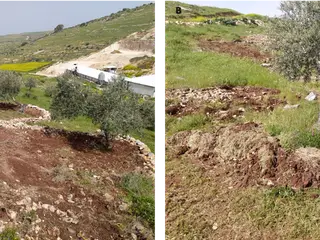
Rainwater Harvesting for Olive Production [Palestine]
Microcatchment water harvesting captures, stores and allows safe overflow of excess surface runoff collected during heavy rainfall events. The intercepted and deep-infiltrated water enhances soil moisture at/around the microcatchment structure. This eventually boosts plant productivity in dry areas, mitigates land degradation, and benefits the local farming communities’ livelihoods
- Compiler:
- Joren Verbist
- First published:
- 2023-05-25 12:11
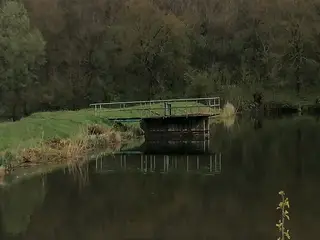
Water retention/sediment capture pond [Hungary]
Sediment capture ponds are constructed and located along networks of ditches which drain watersheds. They slow the velocity of water and cause the deposition of suspended materials. These ponds help to avoid sediment accumulation in the ditches themselves, and can decrease sediment and nutrient pollution of surface water bodies downstream.
- Compiler:
- Brigitta Szabó
- First published:
- 2023-04-24 11:13
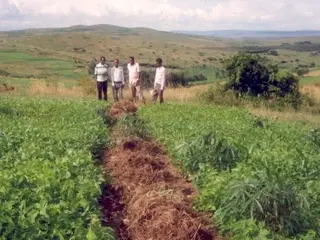
Improved trash lines [Uganda]
Weeds and crop residues laid in bands across the slope of annual crop fields to conserve soil and water, and to incorporate organic matter into the soil after decomposition.
- Compiler:
- Unknown User
- First published:
- 2017-04-24 09:30
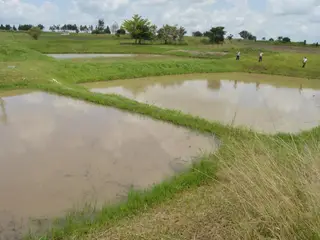
FISH FARMING (AQUACULTURE) FOR INCOME GENERATION AND WATER CONSERVATION [Uganda]
Fish farming, commonly referred to as aquaculture, is one of the common practices promoted by small, medium and large scale farmers in Amuru District, Northern Uganda. Labour, hoes, wheelbarrows, spades and slashers are used for establishment. The technology is established on a gently sloping physical environment located mainly at the valley bottom for purposes of obtaining food security and household income.
- Compiler:
- betty adoch
- First published:
- 2022-11-02 10:00
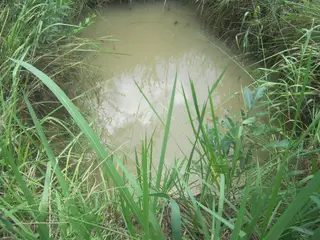
SPRING GROUND WATER RESERVOIR FOR WATER SUPPLY AND FISH PRODUCTION [Uganda]
Spring ground water reservoir to supply water for the fish pond during dry season to be harvested throughout the year.
- Compiler:
- betty adoch
- First published:
- 2022-10-24 13:10
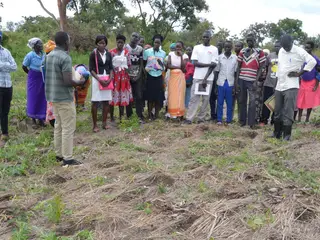
Conservation Farming Basins In Annual Crops For Water Conservation [Uganda]
CF basins are constructed in the field to act as water storage containers. Water is conserved within the basins and plants can survive with this conserved water during periods of little rainfall and dry spells.
- Compiler:
- Sunday Balla Amale
- First published:
- 2020-04-16 13:52
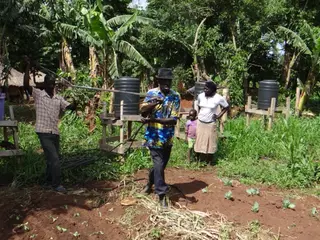
Home Garden Drip Irrigation [Uganda]
Plastic tanks of 50 to 100 liters of water with taps are placed on high platforms. Perforated plastic tubes allow water to flow and drip irrigate vegetable patches. Home gardening, once established can be carried out throughout the year.
- Compiler:
- betty adoch
- First published:
- 2022-09-11 18:28
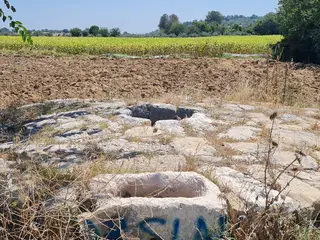
Traditional Cisterns [Türkiye]
Cisterns are water collection structures which form part of a cultural heritage dating back some 2000 years. While cisterns are commonly used to store drinking water, in the sloping fields of Tarsus they serve as a form of water insurance structure for orchards during dry periods.
- Compiler:
- Erhan Akca
- First published:
- 2022-08-30 09:08
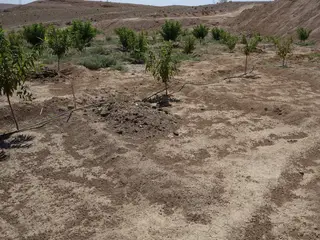
Récupération d'eau de pluie dans les plantations arboricoles avec irrigation en goutte à goutte par des buttes en terre. [Morocco]
Des buttes en terre sont accumulées de manière à infiltrer l'eau de pluie dans les point ou les arbres fruitiers poussent, ceci afin de diminuer la demande en eau d'irrigation par goutte à goutte.
- Compiler:
- Stefan Graf
- First published:
- 2017-09-26 16:29

Runoff Pond Al Yakloum [Lebanon]
The Al Yakloum pond collects runoff from a local catchment and water is led through a channel system alongside a farm road. Sandy particles are captured in a sediment trap before runoff enters the pond. The pond provides water to approximately 5 ha of orchard - which is irrigated through a precision system.
- Compiler:
- Nicola D'Alberton
- First published:
- 2022-08-02 08:29
Earth dam for stockwater [South Africa]
Construction of earth dams to provide stock water
- Compiler:
- Jannie Nel
- First published:
- 2017-04-14 13:57
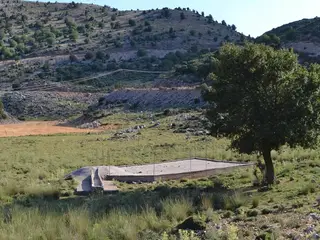
Integrated water-harvesting and livestock water-point system [Greece]
Integration of a cement pan and collection well system for water harvesting and a trough serving as a livestock water point.
- Compiler:
- Ioannis Daliakopoulos
- First published:
- 2017-03-14 10:49
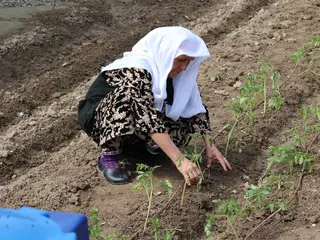
Drip irrigation for kitchen gardens in dry areas [Tajikistan]
Promotion of low-pressure drip irrigation kits among vulnerable women-led households in dry agrolandscapes of Southern Tajikistan has helped to fight desertification, improve food security and enhance economic opportunities.
- Compiler:
- Daler Domullodzhanov
- First published:
- 2022-02-14 09:32
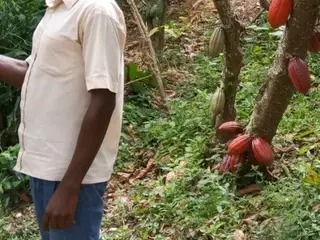
Trenches in a Cocoa Plantation for Soil and Water Conservation [Uganda]
Trenches commonly referred to as contour trenches and running perpendicular to a slope increase water infiltration and reduce soil erosion as a way of conserving soil.
- Compiler:
- Sarah Babirye
- First published:
- 2022-01-03 10:14

Roof top rainwater harvesting stored in a polythene lined earth retention tank. [Tajikistan]
The use of an earth tank lined with a polyethylene sheet to retain rainwater collected from the roof of the house.
- Compiler:
- Daler Domullojonov
- First published:
- 2017-03-14 14:35

Natural spring catchment protection [Tajikistan]
The construction of a natural spring catchment pit for the collection and distribution of uncontaminated ground water.
- Compiler:
- Giuseppe Bonati
- First published:
- 2017-03-21 13:45
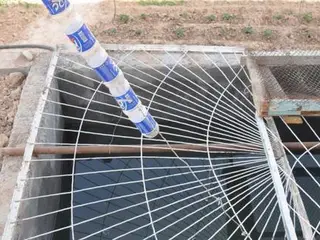
Roof Top Rain Water Harvesting - Concrete Tank [Tajikistan]
The roof top rain water harvesting system using a concrete tank was designed to improve household access to water for irrigation of kitchen garden plots during the hot and dry summer months.
- Compiler:
- Sa'dy Odinashoev
- First published:
- 2017-03-16 14:22
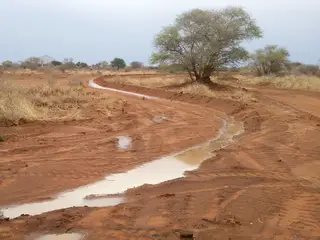
Infiltration ditches and ponding banks [Namibia]
Construction of contour ditches and ponding banks/ bunds to trap rainwater for infiltration. Improved growth of plants and replenishment of groundwater is promoted, while safely discharging excess water to avoid erosion. Integrated with other technologies that treat the root causes of rangeland degradation - rather than a stand-alone technology.
- Compiler:
- Ibo Zimmermann
- First published:
- 2018-02-05 11:30
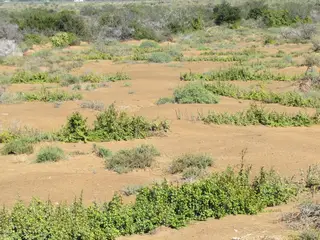
Spekboom (Portulacaria afra) planting within riplines for thicket biome restoration [South Africa]
The restoration of the thicket biome in the Eastern Cape is assisted by planting ‘spekboom’ (elephant bush) (Portulacaria afra), an indigenous succulent plant within contour lines/riplines on degraded hillslopes. The increased vegetation cover reduces runoff and soil loss.
- Compiler:
- Dirk Pretorius
- First published:
- 2018-05-19 16:55
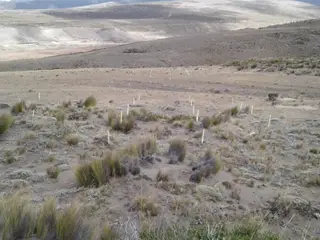
Prácticas de restauración y manejo sostenible en los páramos de La Esperanza [Ecuador]
La práctica nace ante la necesidad de la población de restaurar esta área y recuperar la cobertura vegetal. Es así que se implementó un ensayo de restauración en donde se aplicaron varios tratamientos (asociaciones) para recuperar la cobertura vegetal. La práctica de manejo sostenible aplicada a la Asociación de La Esperanza tiene un enfoque investigativo, en donde se espera generar resultados que permitan una mejor aplicación de las medidas de restauración en áreas de páramo.
- Compiler:
- Raul Galeas
- First published:
- 2021-07-28 08:35

Rehabilitación del sistema de abrevaderos en la comunidad de Santa Lucia Arriba. [Ecuador]
La práctica consiste en la rehabilitación de un sistema de abrevaderos ubicado en la Comunidad de Santa Lucía Arriba, con la finalidad de disminuir las presiones antrópicas derivadas de las actividades agropecuarias de la zona hacia el área natural que aún se conserva en la comunidad.
- Compiler:
- Raul Galeas
- First published:
- 2021-07-28 08:36
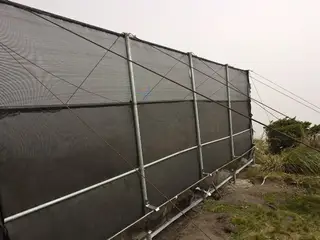
Implementation of a fog water capture system in a conservation area in the community of Shaushi. [Ecuador]
The practice consists in the installation of a water capture system, coming from the fog of the Cerro Shaushi zone, that allows to cover the need of water for domestic consumption of the inhabitants of the upper zone of the Community of Shaushi.
- Compiler:
- Raul Galeas
- First published:
- 2021-07-28 08:37
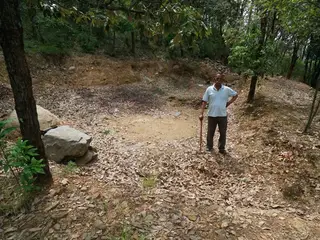
Recharge Ponds and Recharge Trenches [India]
Recharge ponds (Chaals or khals) and recharge trenches (khanti) are common methods to catch the surface runoff and increase the infiltration to recharge groundwater and aid in natural spring recharge in the middle mountain regions.
- Compiler:
- Jaclyn Bandy
- First published:
- 2022-08-02 17:46