PHILCAT
Philippine Conservation Approaches and Technologies
- Home
- PHILCAT
About PHILCAT
The Philippine Conservation Approaches and Technologies (PHILCAT) was
formally organized in September 23, 1999 through a Special Order issued
by the Secretary of Agriculture. It aims to document and promote SWC
(Soil and Water Conservation) approaches and technologies to ensure
broader adoption and contribute in preventing land degradation. Chaired
by the Bureau Soils and Water Management, it was reconstituted in April
27, 2007 to enhance participation of more organizations. To further
strengthen PHILCAT, a new Special Order was issued in January 20, 2011
with 18 members consisting of national government agencies (NGAs) and
non-government organizations (NGOs). PHILCAT is a nationwide initiative
of the Philippines. Its general aim is to develop sustainable land
management (SLM)
decision support tools for combating land degradation, and the effects
of climate change.
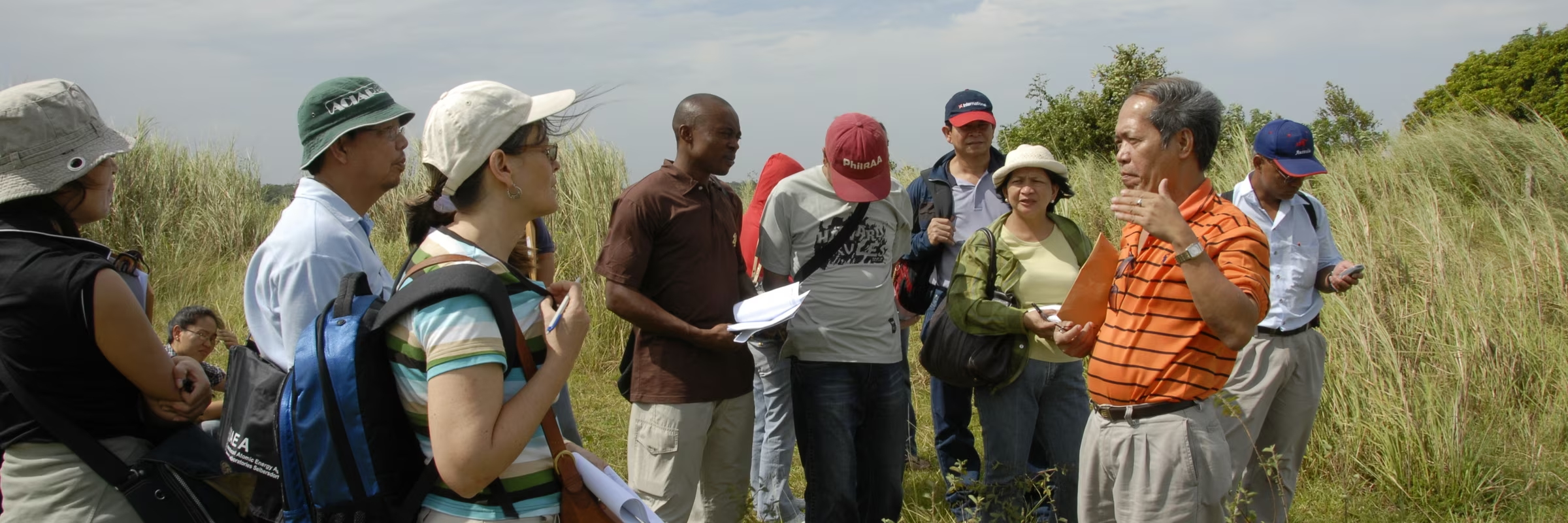
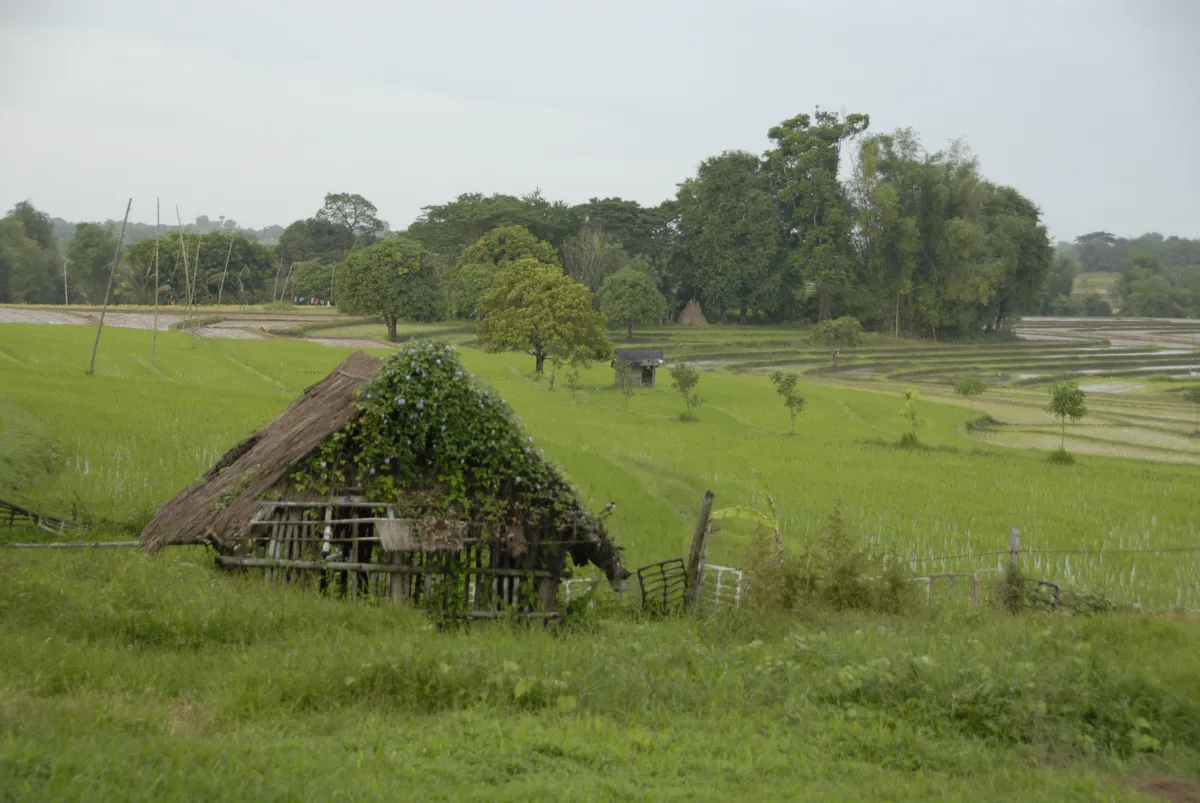
The project focuses on five ecosystems of the Phillipines: 1) Cordillera Administrative Region (CAR) - Benguet, 2) Region III - Central Plain of Luzon, 3) Region IV - Southern Luzon, 4) Region VIII – Leyte, 5) Region X – Bukidnon.
Focus of the initiative
The Philippine Conservation Approaches and Technologies (PHILCAT) was
formally organized in September 23, 1999 through a Special Order issued
by the Secretary of Agriculture. It aims to document and promote SWC
(Soil and Water Conservation) approaches and technologies to ensure
broader adoption and contribute in preventing land degradation. Chaired
by the Bureau Soils and Water Management, it was reconstituted in April
27, 2007 to enhance participation of more organizations. To further
strengthen PHILCAT, a new Special Order was issued in January 20, 2011
with 18 members consisting of national government agencies (NGAs) and
non-government organizations (NGOs). PHILCAT is a nationwide initiative
of the Philippines. Its general aim is to develop sustainable land
management (SLM)
decision support tools for combating land degradation, and the effects
of climate change.
The project focuses on five ecosystems of the Phillipines: 1) Cordillera Administrative Region (CAR) - Benguet, 2) Region III - Central Plain of Luzon, 3) Region IV - Southern Luzon, 4) Region VIII – Leyte, 5) Region X – Bukidnon.
Objectives
The PHILCAT project concentrates on five main objectives which will be reached through their various outputs:
Objective 1: To document available SLM and climate change adaptation best practices and success stories
- Guidelines and protocols to select SLM best practices completed
- SLM best practices identified and selected from the 5 strategic ecosystems through the conduct of seminar-workshop in the identified SLM centers.
- SLM best practices are documented using WOCAT questionnaires on technologies and approaches, and mapped/tagged
Objective 2: To increase capacity and awareness of local partners on SLM and climate change adaptation strategies.
- Trained project staff and local partners on the application of WOCAT tools and methodologies.
- Well-informed local partners regarding SLM as climate change adaptation options.
Objective 3: To develop SLM knowledge management and decision support tools using WOCAT methodology.
- Documented SLM best practices are entered in the WOCAT database.
- Summarized report of SLM best practices generated from the WOCAT database.
Objective 4: To strengthen the PHILCAT in its advocacy and activities related to SLM.
- PHILCAT institutional members’ active participation and contribution in the project implementation and WOCAT activities.
Objective 5: To communicate and disseminate results to land users, SWC advocates and specialists, and policy and decision makers to facilitate broader adoption.
- Knowledge products on SLM are disseminated for local use; active website accessible to public.
Achievements
From July 2013 to June 2015 PHILCAT was able to secure funds and
implement their project "Development of Decision Support Tools on
Sustainable Land Management to Address Abiotic Stresses in Areas
Vulnerable to Climate Change". The utilization of the WOCAT
questionnaires QT and QA was central to this project implementation.
Prior to the documentation activities there were two trainings with 50
participants conducted and five workshops with each 40 participants
held. The documentation of four approaches and nine technologies was
completed in July 2015 and the data was entered into the WOCAT database.
PHILCAT is also participating in regional and international events on the topic of SLM such as the "FAO expert consultation on SLM " in Bangkok (September 2015) and the WOCAT launch event "A knowledge management platform goes new" in Mexico (March 2015).
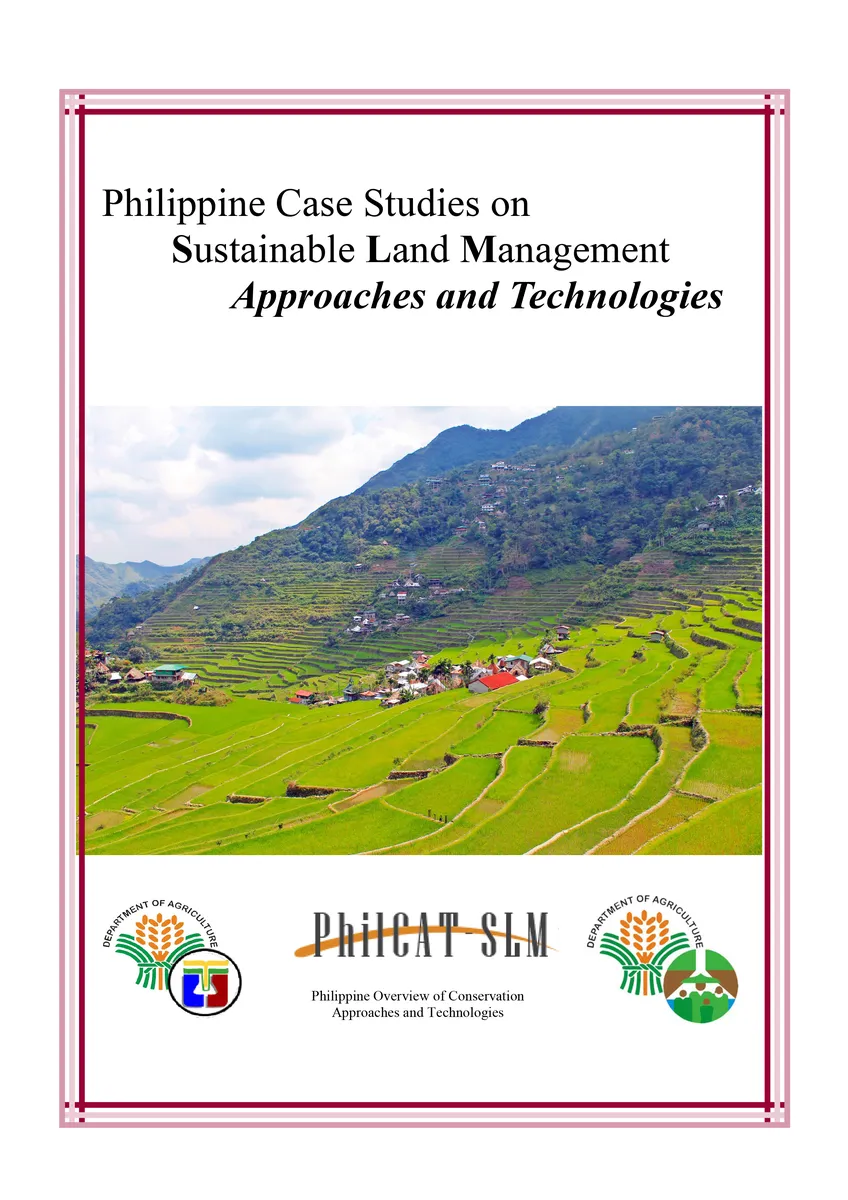
Within the project "Development of Decision Support Tools on SLM to Address Abiotic Stresses in Areas Vulnerable to Climate Change" a compendium of SLM best practices was prepared and materials for dissemination to land users and policy and decision makers were established. After the project termination the sustainability of the gains of the project was guaranteed by these activities.
Currently, PHILCAT is part of the FAO project "Decision support for mainstreaming and scaling up SLM (DS-SLM)".
Publications
Contact Person
 Philippines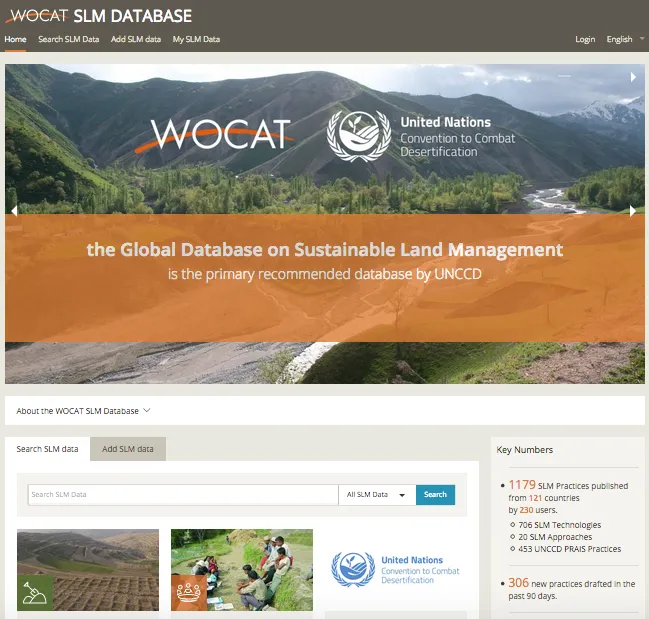
PHILCAT has documented SLM practices in the Global SLM Database.
Involved Organisations


Benguet State University (BSU)
Central Luzon State University (CLSU)
Conservation Farming Movement Inc. (CFMi)
Department of Agrarian Reform - Bureau of Land Development (DAR-BLD)
Department of Agriculture - Agricultural Training Institute (DA-BAR)

Department of Environment and Natural Resources - Forest Managment Bureau (DENR-FMB)

Department of Science and Technology - Philippine Council for Agriculture, Aquatic and Natural Resources Research and Development (PCAARRD)

National Irrigation Administration (NIA)
Philippine Society of Soil Science and Technology (PSSST)

Senate Legislative Support Service (SENATE)
University of the Philippines Los Baños (UPLB)

Visayas State University (VSU)
World Agroforestry Centre - International Centre for Research and Agroforestry (WAC-ICRAF)
Xavier University - Sustainable Agriculture Research Centre (XU)