Trier par "Mis à jour le"
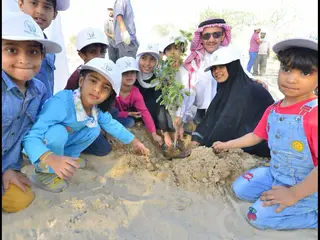
نهج التشجير لاستصلاح 2500 هكتار ضمن مبادرة السعودية الخضراء – تشجير غابة الأصفر [Arabie Saoudite]
يمثل نهج التشجير التابع للمؤسسة العامة للري إطاراً مؤسسياً متكاملاً لاستصلاح الأراضي وزيادة الغطاء النباتي في البيئات الجافة، من خلال التخطيط والتنسيق وتعبئة الموارد وتطبيق تقنيات ملائمة لظروف المواقع، مع الاستفادة من المياه غير التقليدية والطاقة المتجددة وبناء القدرات والشراكات، ومتابعة التنفيذ والتوسع في تطبيق الممارسات الناجحة حتى عام 2030.
- Compilateur:
- Abdulrahman Althumayri
- Première publication:
- 2026-08-20 10:31
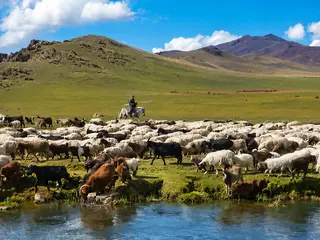
Using KAP and Household Livelihood Surveys for Adaptive SLM and Landscape Restoration [Mongolie]
The Approach combines Knowledge, Attitudes and Practices (KAP) assessments with household livelihood surveys to guide the planning, implementation and adaptive management of sustainable land management (SLM) and landscape restoration in Mongolia. Baseline and follow-up assessments provide evidence for improving stakeholder engagement, capacity development, livelihood support and natural resource management interventions.
- Compilateur:
- Undarmaa Dagvasuren
- Première publication:
- 2026-08-21 09:18
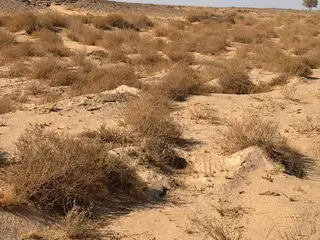
استعادة النظام البيئي القابلة للتكرار عبر وحدات بيئية – محمية الملك سلمان الملكية [Arabie Saoudite]
استعادة النظام البيئي القابلة للتكرار استناداً إلى تقسيم المناطق إلى وحدات بيئية في المناطق القاحلة من خلال تكرار نموذج بشكل متكرر في عدة مواقع لضمان توسيع نطاق التأثير وتحقيق إعادة تأهيل الأراضي في هذه الوحدات البيئية
- Compilateur:
- Ahmed Elkhouly
- Première publication:
- 2026-08-17 13:58
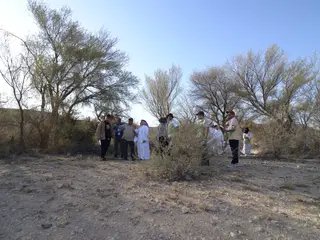
نهج استعادة المواطن البيئية في منتزه حريملاء الوطني القائم على إدارة المنتزه والمشاركة المجتمعية [Arabie Saoudite]
نهج مؤسسي تشاركي لاستعادة المواطن البيئية في منتزه حريملاء الوطني، يجمع بين إدارة المناطق المحمية، والتخطيط القائم على الأدلة، وإشراك المجتمع، والتشجير بالأنواع المحلية، والحماية والرصد المستمر، بهدف استعادة وظائف النظام البيئي وتعزيز استدامة الأراضي في البيئات الجافة.
- Compilateur:
- Awadallah Dafaallah
- Première publication:
- 2026-08-17 12:50
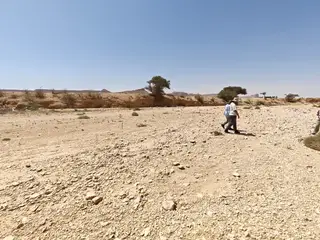
نهج الاستعادة البيئية الذكية التكيفية للنظم البيئية الجافة في منتزه القصيم الوطني [Arabie Saoudite]
نهج مؤسسي تشاركي للإدارة التكيفية لاستعادة النظم البيئية في البيئات الجافة، يقوم على التخطيط القائم على تقييم الموقع، وتنسيق أدوار الجهات المعنية، وتوجيه تنفيذ تقنيات الإدارة المستدامة للأراضي، وربط الرصد والتقييم باتخاذ القرار لتحسين التدخلات وتعزيز استدامة نتائج الاستعادة وإمكانية توسيع نطاقها.
- Compilateur:
- wafa alharbi
- Première publication:
- 2026-08-17 09:19
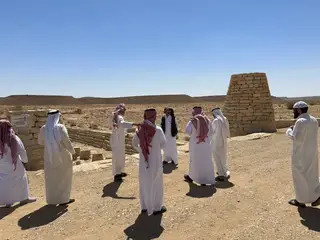
استعادة الغطاء النباتي المحلي وإدارته بمشاركة المجتمع المحلي في منتزه ثادق الجيولوجي (ثادق جيوبارك) [Arabie Saoudite]
نهج تأهيل قائم على المشاريع ومتأصلاً محليًا، بقيادة المركز الوطني لتنمية الغطاء النباتي ومكافحة التصحر في حديقة ثادق الوطنية/حديقة شمال الرياض الجيولوجية، يجمع بين تجميع مياه الأمطار، وزراعة النباتات المحلية، والري التكميلي، والحماية، وتقديم المشورة الفنية، ومشاركة المجتمع المحلي، بهدف استصلاح الأراضي القاحلة المتدهورة، مع دعم جهود الحفاظ على البيئة، والتعليم، والسياحة، وفرص كسب العيش المحلية.
- Compilateur:
- Ibrahim Nasr
- Première publication:
- 2026-08-17 09:16
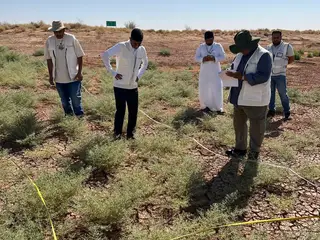
نهج الاستعادة البيئية التشاركية القائم على الحماية وتعزيز التجدد الطبيعي في متنزه أبا سمري الوطني [Arabie Saoudite]
نهج استعادة بيئية تشاركي قائم على الحماية وتعزيز التجدد الطبيعي في متنزه أبا سمري الوطني، يدمج بين التدخلات الفنية منخفضة التكلفة (التسييج، الحماية، التشجير المحدود، حصاد المياه) وآليات إشراك المجتمع المحلي في الحماية والإدارة، بما يعزز استدامة الغطاء النباتي واستعادة وظائف النظام البيئي في البيئات الجافة.
- Compilateur:
- Awadallah Dafaallah
- Première publication:
- 2026-08-17 09:15
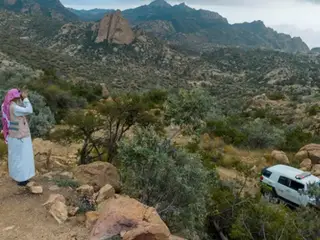
نهج الاستعادة البيئية التفاعلية لإعادة تأهيل النظم البيئية في منتزه البهيتة الوطني [Arabie Saoudite]
نهج متكامل للاستعادة البيئية يهدف إلى إعادة تأهيل النظم البيئية المتدهورة في منتزه البهيتة الوطني من خلال الحماية، والتشجير بالأنواع المحلية، وتحسين إدارة الموقع، والرصد باستخدام الاستشعار عن بُعد والتحقق الميداني، بما يعزز التنوع الحيوي واستقرار التربة وخدمات النظام البيئي واستدامة الأراضي.
- Compilateur:
- Awadallah Dafaallah
- Première publication:
- 2026-08-17 09:14
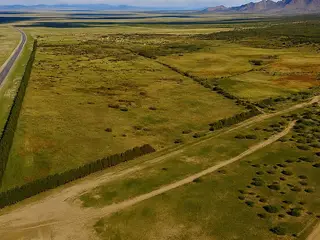
Living Laboratory Approach for Testing and Scaling Dryland Restoration Solutions [Mongolie]
The Elsentasarkhai living laboratory approach integrates long-term field testing, monitoring, training and multi-stakeholder knowledge exchange to validate locally adapted technologies for dryland restoration and desertification control. Proven practices are demonstrated and shared to support their replication and scaling across Mongolia’s degraded drylands.
- Compilateur:
- Undarmaa Dagvasuren
- Première publication:
- 2026-08-07 15:15
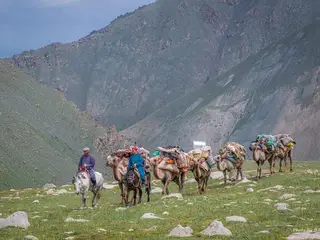
Traditional Seasonal Mobility of Zereg Pastoralists [Mongolie]
The Traditional Seasonal Mobility of Zereg herders is a community-based approach that promotes sustainable pasture management through seasonal livestock migration based on traditional knowledge, collective planning, and adaptive decision-making. It enhances rangeland conservation, livestock productivity, and climate change adaptation while preserving traditional nomadic culture and strengthening local cooperation.
- Compilateur:
- Undarmaa Dagvasuren
- Première publication:
- 2026-08-07 09:47
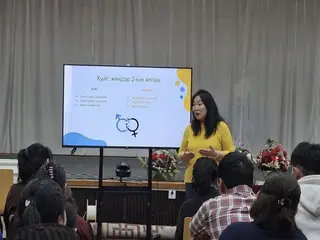
Gender responsive capacity building and mentoring for climate-resilient rural livelihoods [Mongolie]
This project based approach strengthens climate-resilient rural livelihoods among women and young herders in Khovd and Zavkhan provinces through gender-responsive online and face-to-face training, practical demonstrations, and post-training mentoring. It builds skills in low-waste cutting and sewing of Mongolian ger covers and insulation, and in the use of leather and rawhide for value-added products, supporting household use, income generation, and more efficient use of local livestock resources.
- Compilateur:
- Undarmaa Dagvasuren
- Première publication:
- 2026-08-06 13:15
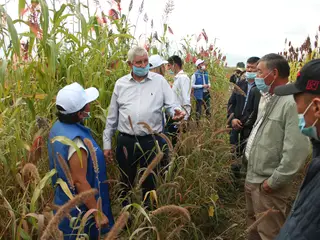
Распространение практик устойчивого землепользования путем организации демонстрационных участков и проведения дней поля [Kazakhstan]
Организация пилотных демонстрационных участков и проведение Дней поля - мероприятия для региональных заинтересованных сторон, в основном фермеров, для получения информации о технологиях УЗП, приемах восстановления деградированных земель и пастбищ, перспективных для региона засухо- и солеустойчивых культурах и технологиях их выращивания, демонстрации результатов проекта ИСЦАУЗР-2 по расширению практики борьбы с засолением и реабилитации деградированных орошаемых земель.
- Compilateur:
- Kulyash Iskandarova
- Première publication:
- 2023-04-11 15:14
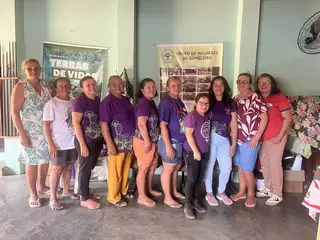
Rede de Mulheres Produtoras do Pajeú [Brésil]
Abordagem de Gestão Sustentável de Terras que organiza e articula grupos de mulheres rurais para implementar práticas produtivas agroecológicas sustentáveis no Sertã do Pajeú do Pernambuco. Desde 2005, oferece apoio técnico, formação política e econômica, assessoria em agroecologia e economia solidária, além de mobilizar parcerias para fortalecer a autonomia das agricultoras. Atua como estrutura de suporte que facilita a adoção de tecnologias sustentáveis pelas usuárias da terra, por meio de organização coletiva de perspectiva feminista, através dos processos educativos de geração de renda e intervenção nas políticas públicas.
- Compilateur:
- Anny Catarina Nobre de Souza
- Première publication:
- 2026-08-13 10:27
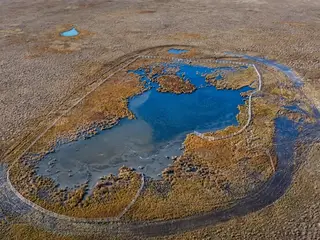
Participatory habitat protection for the white-naped crane [Mongolie]
A participatory habitat protection initiative safeguards key wetlands for the critically endangered white-naped crane. It combines participatory planning, herder-led grazing agreements and youth eco-club monitoring. The initiative restores wetland health, reduces trampling impacts, strengthens local stewardship and awareness, and provides a scalable model for biodiversity conservation.
- Compilateur:
- Tserendulam Tseren-Ochir
- Première publication:
- 2026-06-25 17:06
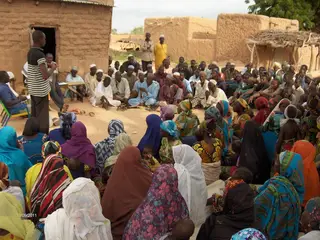
Aménagement consensuel de l'aire de paturage de Guidan Issa [Niger]
L'aménagement consensuel de l'aire de Guidan Issa consiste à récupérer cette ressource pastorale de manière participative et inclusive en prenant en compte les différents acteurs impliqués dans l'exploitation et la gestion de cette aire de pâturage.
- Compilateur:
- Judith Macchi
- Première publication:
- 2017-11-01 09:42
Valley floor paddey cultivation through traditional system [Bangladesh]
The traditional approach of valley floor terraced rice cultivation at individual household level for their subsistance.
- Compilateur:
- Niaz Ahmed Khan
- Première publication:
- 2017-08-03 08:44
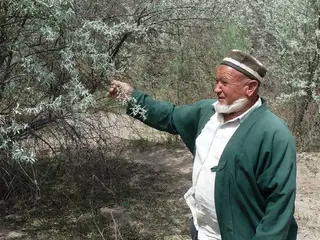
Tugai forest management through village committees [Tadjikistan]
The described approach facilitates the establishment of contracts between village committees and local authorities for decentralised management of Tugai forest areas on State Reserve Land.
- Compilateur:
- Firdavs Faizulloev
- Première publication:
- 2017-07-06 14:38
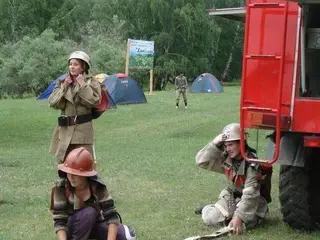
Establishment of educational ranger stations to involve youth in nature protection activity [Kazakhstan]
Establishment and activity of educational ranger stations on the basis of forestry units and secondary schools to involve youth in nature protection activity to conserve, restore and study unique natural features of the Kazakh Altai (in the frame of CACILM).
- Compilateur:
- Azhar Yeszhanova
- Première publication:
- 2017-08-03 16:28
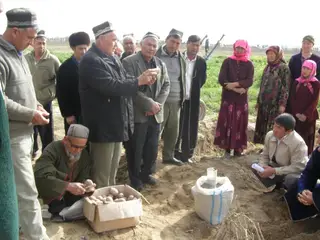
Central Asian Countries Initiative for Sustainable Land Management (CACILM) [Tadjikistan]
Farmer Field Schools (FFS) are held to fill farmer's gaps in knowledge on the use of sustainable agricultural technologies, efficient irrigation water use and prevention of land degradation using trials tailored to local conditions.
- Compilateur:
- Firdavs Faizulloev
- Première publication:
- 2017-07-06 10:51
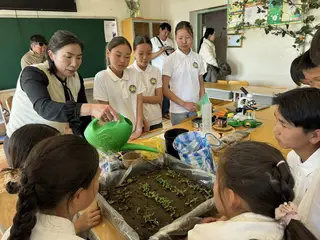
From Seed to Grove: Student-Led Bird Cherry Nursery [Mongolie]
Through “learning by doing” students have propagated bird cherry seedlings, established a grove within the school grounds, and distributed seedlings to local households. This ecological education initiative has been put into practice though the “Thank you, Moilhon” programme initiated by a “Green Island” school Eco-Club.
- Compilateur:
- Tserendulam Tseren-Ochir
- Première publication:
- 2026-06-08 10:59
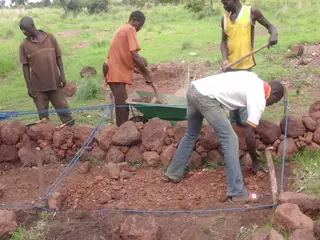
Projet lutte contre l‘erosion, recuperation et mise en valeur des terres degradées; Adaptation au changement climatique (Projet EKF) [Burkina Faso]
Une approche intégrée et multipartite au Sud Ouest du Burkina Faso, basée sur l’aménagement des bassins versants et sur la gestion durable des terres avec un fort accent sur la participation locale. Elle réalise des mesures physiques et biologiques de lutte contre l’érosion, d’adaptation au changement climatique et exécute des activités diverses de renforcement de capacités.
- Compilateur:
- Rebecka Ridder
- Première publication:
- 2016-12-15 14:27
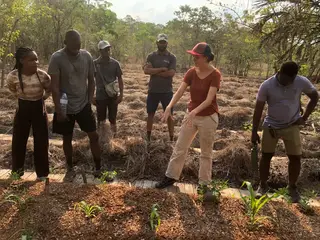
Miombo Restoration and FIAT Metric Validation in Chimanimani National Park [Mozambique]
This approach combines ecological restoration of degraded Miombo woodlands and montane forests with the application of scientifically validated forest integrity assessment tools in Chimanimani National Park. It integrates participatory planning, establishment of permanent monitoring plots, assisted natural regeneration, and enrichment planting with native species, while using Miombo ecosystem metrics and the Forest Integrity Assessment Tool (FIAT) to monitor forest recovery and guide conservation management.
- Compilateur:
- Silveira Manuessa
- Première publication:
- 2026-05-07 16:45
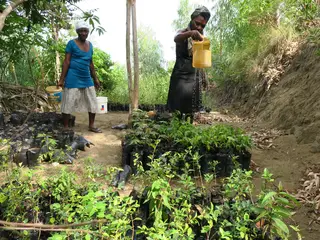
Reforestation des collines en participation communautaire [Haïti]
Dans les mornes à Léogâne, la Croix Rouge Suisse (CRS) pratique la reforestation en participation communautaire.
- Compilateur:
- Joana Eichenberger
- Première publication:
- 2019-02-16 20:37
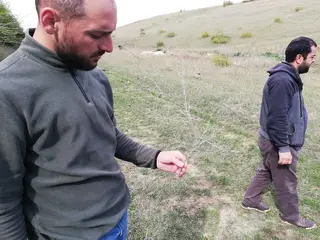
Participatory Grassland and Rangeland Assessment (PRAGA) [Géorgie]
The Participatory Rangelands and Grasslands Assessment Methodology (PRAGA) is a rapid, cost-effective framework for the integrated assessment of rangeland ecosystems, incorporating diverse data sources and participatory approaches. PRAGA facilitates stakeholder engagement through consultations and workshops, underpinned by community-based mapping of grazing areas, land use dynamics, and trend analyses.
- Compilateur:
- Nicholas Euan Sharpe
- Première publication:
- 2025-12-16 08:26
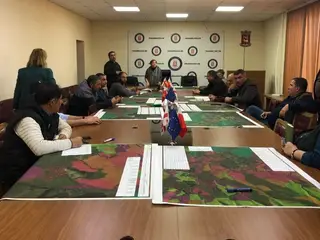
Municipal Pastureland Planning [Géorgie]
The Municipal Pastureland Planning approach was developed collaboratively with key national and local stakeholders to establish a structured, evidence-based decision support framework for sustainable rangeland governance. This system consolidates and presents data from diverse stakeholder groups in a format fully compatible with the Land Degradation Neutrality Framework, ensuring that planning aligns with both environmental and socio-economic objectives.
- Compilateur:
- Nicholas Euan Sharpe
- Première publication:
- 2025-12-16 08:26
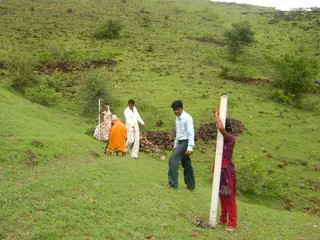
Participatory Net Planning for Sustainable Watershed Management [Inde]
Participatory Net Planning (PNP) is a practical methodology that actively engages landowners and local stakeholders in planning and implementing measures for land use, soil conservation, water harvesting, and biomass development. It aims to regenerate ecosystems and improve the sustainability of watersheds through site-specific resource management. PNP emphasizes the conservation, productivity enhancement, and sustainable use of natural and biological resources. It involves assessing the current condition and use of land, water, and vegetation, and preparing detailed plans—with estimated costs and timelines—to achieve the desired outcomes. In Participatory Net Planning (PNP), the term “Net” represents a complete and interconnected planning framework where every land parcel within a watershed is individually assessed and linked to the larger watershed system. It highlights a network-based approach that integrates soil, water, vegetation, and community needs, ensuring that interventions on one farm support resource conservation and productivity across neighboring and downstream lands. Overall, it signifies a holistic and coordinated system where all stakeholders and resources are planned collectively for sustainable and long-term watershed management.
- Compilateur:
- Arun Bhagat
- Première publication:
- 2025-12-06 16:34
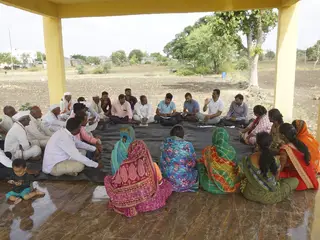
Ecosystem based Adaptation (EbA) through Farmers’ Collectives for Sustainable Management of Natural Resources [Inde]
The Ecosystem-based Adaptation (EbA) with Farmer Collective (henceforth Farmer Producer Organisations (FPOs)) approach strengthens farmers’ resilience to climate change by integrating sustainable water- and land management, biodiversity enhancement and resources governance within farmers’ collectives. Implemented in semi-arid regions of Maharashtra and Telangana, the approach combines capacity building, improving soil health, through women-led green business aiming at enabling eco-sensitive and economically viable FPOs.
- Compilateur:
- Arun Bhagat
- Première publication:
- 2025-11-30 12:40
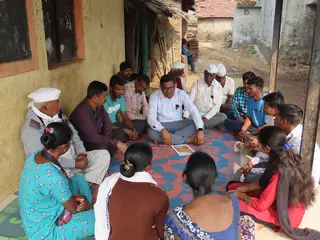
Capacity Building Process for Participatory Watershed Development [Inde]
The Capacity Building Process for Participatory Watershed Development is a structured approach to strengthen the technical, managerial, and social skills of Non-Governmental Organizations (NGOs), Partner Implementation Agencies (PIAs), and Village-level Institutions (VIs). It includes orientation, training, participatory tools, mentoring, exposure visits, monitoring, and institutionalization. The process enhances competencies, fosters creativity and confidence, promotes community ownership, and ensures effective, sustainable planning, implementation, and management of watershed-based natural resource management and climate-resilient interventions.
- Compilateur:
- Arun Bhagat
- Première publication:
- 2025-11-21 17:54
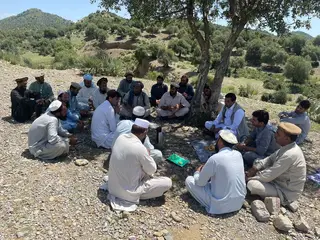
Stakeholder collaboration for building Learning Site for landscape restoration [Afghanistan]
To raise awareness and ensure clear role delineation, a series of consultations were held with the local community, the Forest Management/Rangeland Management (FM/RM) association, and other key stakeholders. Memorandum of Understanding (MoU) that formally outlined the roles and responsibilities of each party was signed. Additionally, the FM/RM association issued a letter of guarantee to support the establishment of a learning site dedicated to promoting best practices in forest and rangeland management. (e.g. cumin) through community’s own contributions.
- Compilateur:
- Mohammad Arif
- Première publication:
- 2025-10-17 14:46
Experiential Learning Tools for Sustainable Water Management [Inde]
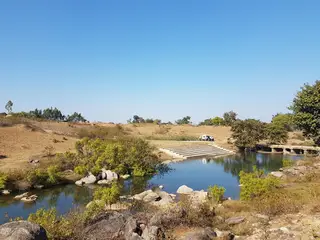
The project “Scaling up experiential learning tools for sustainable water governance in India” aimed at enhancing sustainable water management at scale by improving the capacities of 1,500 rural communities covering 105,000 households directly and 2,000 communities covering 140,000 households indirectly in six Indian states to manage water more sustainably. This was achieved through experiential learning from collective action games, structured community debriefings, and participatory water planning tools that contribute to greater awareness and improved governance, inducing behavioural change toward more sustainable water governance and management. The work was jointly conducted by the Foundation for Ecological Security, India (FES), the International Food Policy Research Institute (IFPRI) and the International Crops Research Institute for the Semi-Arid Tropics (ICRISAT).
- Compilateur:
- Vishwambhar Duche
- Première publication:
- 2025-03-26 23:13
Mentorship programme on conservation agriculture [Mongolie]
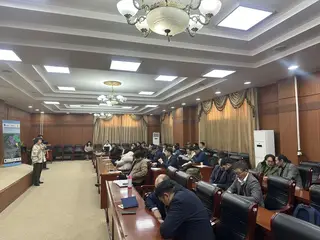
The Approach aims to ensure the sustainability of the agricultural sector by training and mentoring young farmers in conservation agriculture to improve soil fertility and health and maintain productivity.
- Compilateur:
- Otgontsetseg Davaanyam
- Première publication:
- 2024-06-26 18:52
Awareness Raising for SLM Using Conservation Agriculture [Kazakhstan]
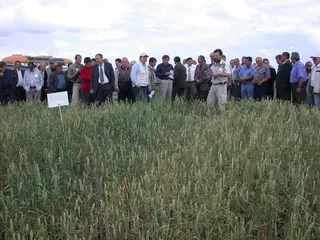
Raising awareness and strengthening the capability and skills of farmers, agriculture specialists and researchers in developing and adoption resource-saving, profitable and environmentally friendly cereal production through Conservation Agriculture practices.
- Compilateur:
- Kulyash Iskandarova
- Première publication:
- 2020-03-10 09:39
The approach of groove fastening sandy loam and sandy soils of the Aral sea's drained bottom [Kazakhstan]
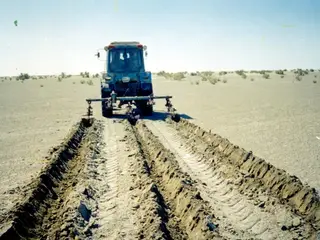
The approach of groove fastening sandy-loam and sandy soils of the Aral sea's drained bottom
- Compilateur:
- Vladimir Kaverin
- Première publication:
- 2017-07-17 15:04
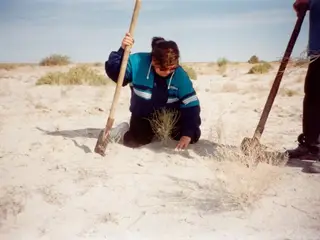
Principle of the excavated disposition of phytomeliorants on a pasturable lands of desert zone [Kazakhstan]
Principle of the excavated disposition of phytomeliorants on a pasturable lands of deserted zone of the Kazakhstan with the purpose of accumulation of an additional moisture and protection of territory against wind erosion
- Compilateur:
- Unknown User
- Première publication:
- 2017-07-17 15:21
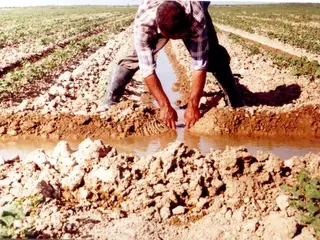
Watering through furrow [Kazakhstan]
Watering through furrow
- Compilateur:
- Unknown User
- Première publication:
- 2017-07-17 15:39
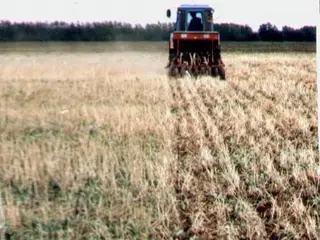
Crop on the stubble background [Kazakhstan]
Stubble crop for cultivation of grain crops (spring wheat).
- Compilateur:
- Ervin Gossen
- Première publication:
- 2017-07-17 16:04
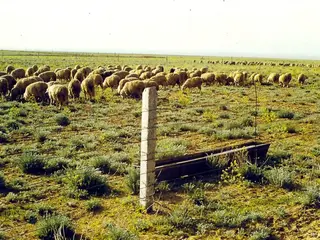
Creation of sowed pastures from subshrubs and forbs able to use maximally the scanty water resources [Kazakhstan]
Increase of use effectiveness of limited resources of soil moisture in desert with sowing xerophyte fodder plants
- Compilateur:
- Irina Skorintseva
- Première publication:
- 2017-07-17 17:38
A Decision Support Tool for integrating stakeholder perspectives through WEFE Nexus [Ouzbékistan]
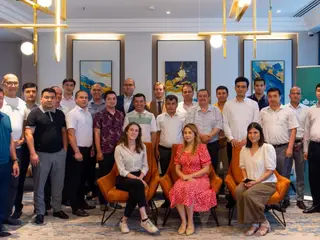
The Decision Support Tool helps decision-makers prioritize sustainable land management practices using the Water-Energy-Food-Ecosystem Nexus, fostering collaboration, facilitating social learning, and balancing diverse stakeholder interests.
- Compilateur:
- Joren Verbist
- Première publication:
- 2024-11-28 11:40
Participatory Understanding of Groundwater Dynamics: Threats and Responsive Management [Inde]
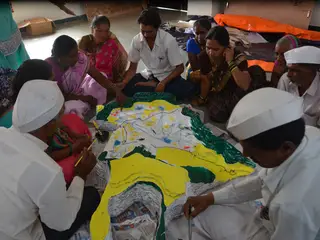
CoDriVE-VI is a participatory approach that integrates local knowledge with scientific data through 3D visual modelling to assess groundwater vulnerability and support sustainable, community-based groundwater management. It overlays surface and subsurface features, enabling villagers to visualize aquifer systems and develop informed water use plans.
- Compilateur:
- Pratik Ramteke
- Première publication:
- 2025-06-16 09:27
Approche 4L (Land management, social Learning, resilient Landscape, sustainable Livelihoods) pour la restauration des paysages et des écosystèmes forestiers [Madagascar]
L’approche 4L intègre la gestion des terres, l'apprentissage social, la résilience des paysages et les moyens de subsistance durables pour une gestion équilibrée des ressources naturelles. Elle favorise une gouvernance participative et adaptative afin d’assurer la durabilité environnementale et socio-économique.
- Compilateur:
- Dimby RAHERINJATOVOARISON
- Première publication:
- 2025-05-08 08:21
- . . .